
Contract Manufacturing for Injection Molded Plastic Products in North America
(800) 824.0607

RFQ / CONTACT
Contract Manufacturing for Injection Molded Plastic Products in North America | (800) 824.0607

2026 Top Automatic Water Spray Steam Retort Sterilizer

In 2026, choosing an Automatic Water Spray Retort Steam system means looking beyond cycle speed. Process consistency, load configuration, and reliable temperature control matter more than a polished specification sheet. These retorts use heated water sprays to transfer heat around packaged products; equipment designs and operating methods can differ. Buyers should confirm how each model handles circulation, come-up time, cooling, and data recording.

The scale of the preservation challenge is substantial. The FAO’s 2019 State of Food and Agriculture report estimated that about 14% of food is lost between harvest and retail. Retort sterilization cannot solve every source of loss, but dependable thermal processing can support shelf-stable products and reduce reliance on continuous refrigeration. In the United States, FDA requirements for low-acid canned foods call for established scheduled processes and careful control. A machine alone is not a validated process.

Food-engineering researcher Juming Tang’s published work on thermal processing highlights the need to balance microbial safety with product quality. That is an expert insight, paraphrased here—not a verified direct quotation. No source text was supplied for an attributable verbatim quote, so inventing one would be misleading. Still, specifications deserve scrutiny. A spray pattern that looks uniform may behave differently with dense loads, pouch layers, or cold spots. Small details count. The strongest 2026 comparison should weigh documented performance, service support, and process validation, while admitting one uncomfortable truth: no “top” retort fits every product or plant.
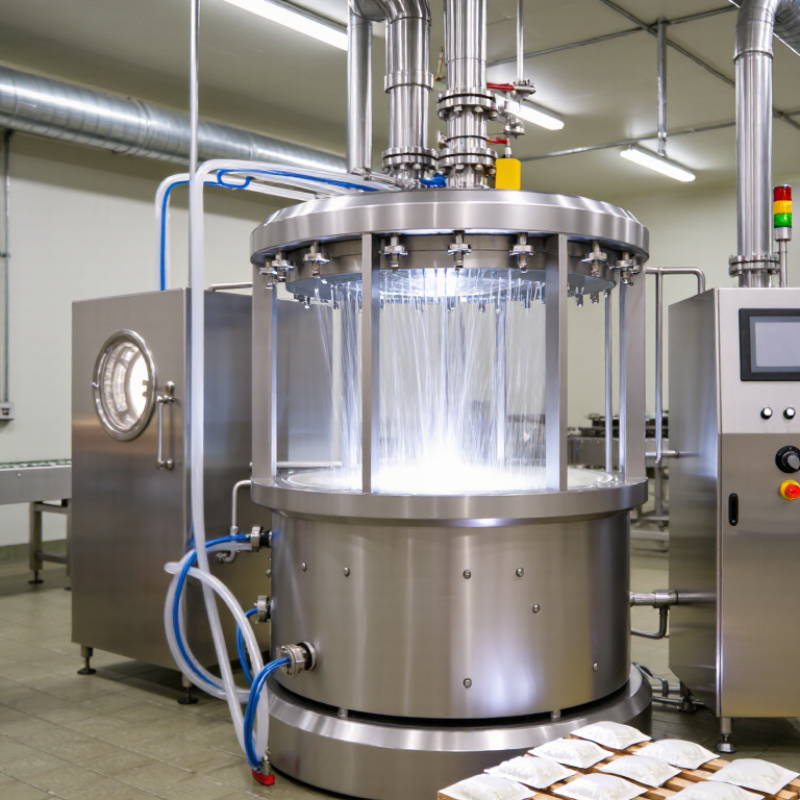
2026 Top Automatic Water Spray Steam Retort Sterilizer

Automatic Water-Spray Steam Retorts: Scope and Role in Canned-Food Processing

Automatic water-spray steam retorts support the controlled heating and cooling of sealed canned foods. Recirculated hot water distributes heat across the load, while automated controls track temperature, pressure, circulation, and processing time. This matters because cans at the center of a full retort may heat differently from those near the spray outlets. The scheduled process must be validated for the specific food, container, and load pattern; FDA 21 CFR Part 113 sets requirements for low-acid canned foods and process controls.

Retorts also serve a wider preservation role. FAO’s The State of Food and Agriculture 2019 estimated that 14% of food is lost between harvest and retail worldwide. Shelf-stable processing can help extend product availability, though it is not a cure for every supply-chain loss. One assumption deserves questioning: even spray coverage does not, by itself, prove that every can received the intended thermal treatment. Instrument checks and documented process records remain essential.

Tips: Confirm spray nozzles are clear, verify sensor calibration, and record the cold-spot study for each product and pack format. Small gaps matter.

2026 Top Automatic Water Spray Steam Retort Sterilizer

Automatic Water-Spray Steam Retorts: Scope and Role in Canned-Food Processing

This illustrative cycle shows retort temperature rising to 121.1°C, remaining at the example set point during the holding stage, and then cooling. Water-spray retorts circulate heated water to support even heat distribution. Actual scheduled processes and holding times must be established and validated for the specific product, container, and equipment.

Heat-Transfer Cycle: Saturated Steam, Water Spray, and Package Overpressure

In an automatic water spray steam retort, heat transfer depends on coordinated stages, not temperature alone. Saturated steam condenses on cooler package surfaces, releasing heat. IAPWS-IF97 steam-property data place saturated-steam pressure near 205 kPa absolute at 121.1°C, with latent heat near 2,200 kJ/kg. These values explain why steam can deliver substantial heat, but they do not define a safe process for every product or package.

Water spray circulates heat around containers and helps reduce temperature differences across the load. Watch the spray pattern: a blocked nozzle or uneven basket spacing can leave cooler zones.

Package overpressure helps resist internal expansion during heating and cooling, especially in flexible packs. Too little may cause swelling or seal stress; too much may deform the package. The correct balance depends on package material, fill, headspace, and validated process settings. Not a fixed recipe.

FDA guidance for low-acid canned foods stresses that scheduled thermal processes must be established by qualified process authorities. In practice, operators should verify temperature sensors, pressure readings, circulation, and recorded come-up times.

One detail is easy to overlook: a stable display does not prove uniform heat delivery. IAPWS data describe steam properties, not retort performance; real loads still need validation.

Sterilization Targets: 121.1°C Reference Temperature and F₀ Lethality

For a water-spray steam retort, 121.1°C is a reference point, not a universal recipe. F₀ expresses accumulated lethality as equivalent minutes at 121.1°C, commonly using a z-value of 10°C. At that convention, one minute at the reference temperature contributes one F₀ minute. FDA’s 21 CFR Part 113 requires scheduled processes for low-acid canned foods to be established by qualified authorities. Codex CXC 23-1979 also emphasizes controlled thermal processing and reliable records.

The retort’s display temperature does not reveal the cold spot inside every pouch or can. Package size, fill weight, viscosity, and loading pattern all affect heat penetration. Sensors should track come-up, holding, and cooling phases, while validated studies establish the required F₀ for the specific product. Small differences matter. A higher F₀ is not automatically better; excess heating can soften texture and dull color. Still, a clean number can mislead. Water circulation may vary around a dense load, so operators need calibrated instruments, consistent loading, and documented checks. FDA and Codex guidance support process control, but product-specific validation remains essential.

System Design: Spray Distribution, Temperature Sensors, and Process Controls

An automatic water spray steam retort depends on more than heat. Its spray system must distribute water evenly across the load, including containers near the chamber walls and corners. Nozzles should be positioned to limit shadowed areas, while unobstructed drains help maintain steady circulation. A simple visual check can catch residue or blockage, but it cannot prove uniform heating. Process testing matters.

Temperature sensors provide the evidence behind control decisions. Place them where testing shows heating may be slow, and compare readings with a calibrated reference. Sensors need regular calibration and clear identification in maintenance records. Small differences can matter. A display showing the target temperature is not enough if the load itself heats unevenly. Load arrangement, container size, and fill level can all change heat transfer.

Process controls should record temperature, pressure, spray operation, and cycle timing in a traceable format. Alarm limits and approved recipes help operators respond consistently when readings drift. Controls should also prevent a cycle from being treated as complete when required conditions were not met. Still, automation is not a substitute for review. Retort layouts and loads vary, so process validation must reflect actual operating conditions. Even a well-designed system can have weak points that routine checks overlook.

2026 Top Automatic Water Spray Steam Retort Sterilizer – System Design: Spray Distribution, Temperature Sensors, and Process Controls

Design reference: The values below are representative engineering considerations, not a universal process schedule or equipment specification. Final settings must be established for the product, package, load pattern, and retort through documented thermal-process validation and review by a qualified process authority.

System Area Design Dimension Typical Reference or Design Approach Purpose and Control Consideration
Spray distribution Nozzle layout and coverage Arrange spray headers and nozzles to provide coverage across the loaded basket; avoid blocked spray paths. Validate distribution with the intended basket, package arrangement, and operating conditions. Confirm that loading patterns do not obstruct circulation.
Spray distribution Water circulation Use a recirculation pump, distribution headers, and a return path sized for the retort and load. Monitor circulation during the process. Flow or pressure indication can help detect pump, filter, or nozzle problems, but does not replace thermal validation.
Spray distribution Water-flow verification Establish a minimum acceptable flow or differential-pressure limit during commissioning and validation. Use a defined alarm or process-abort response when circulation falls outside the validated operating range.
Heating system Steam and spray-water mixing Control steam admission and recirculated-water heating to achieve the validated retort temperature profile. Confirm stable heating and adequate mixing under the maximum and minimum validated load conditions.
Temperature sensors Retort control sensor Install a calibrated temperature sensor in a representative retort location; RTD sensors such as platinum resistance thermometers are commonly used. Sensor location and control response should be established during commissioning. Calibration limits and intervals should be documented in the quality system.
Temperature sensors Independent monitoring sensor Provide a separate calibrated measurement channel where required by the applicable process, equipment design, or regulatory requirements. Compare readings and define an allowable difference and corrective action. Do not rely on an unverified control display as the sole process record.
Temperature sensors Product-temperature measurement Use instrumented packages or product probes during heat-distribution and heat-penetration studies. Determine the slowest-heating location and product response for the specific formulation, package, and loading configuration.
Process controls Process phases Define and record come-up, process, cooling, and any applicable pressure-control phases. Set phase transitions and timing according to the approved scheduled process. Record actual process conditions for each cycle.
Process controls Temperature setpoint and hold For low-acid canned foods, 121.1°C (250°F) is a commonly referenced sterilization temperature, but it is not a universal setpoint or schedule. The required time and temperature depend on the product and package. Use only a process established by a qualified process authority; do not infer a safe schedule from this reference value.
Pressure control Overpressure and package support Where required by the container and process, coordinate compressed-air or other overpressure control with retort temperature and cooling conditions. Establish limits for the specific package to prevent unacceptable deformation, leakage, or seal damage. Monitor and record pressure throughout relevant phases.
Cooling system Cooling-water quality and delivery Specify cooling-water treatment, filtration, flow, and temperature according to the facility water program and process design. Manage post-process contamination risks and verify that cooling conditions remain within the validated operating range.
Alarms and interlocks Critical deviations Define alarms for temperature, pressure, circulation, sensor faults, and interrupted cycles. Document operator actions, product disposition, and restart rules for each deviation. Protect process records from unauthorized changes.
Data and records Cycle recording Record time-stamped temperature, pressure, process phase, alarms, and operator or batch identifiers. Ensure records are legible, retrievable, and retained in accordance with applicable regulations and the facility’s record-retention procedures.
Validation Distribution and penetration studies Evaluate retort temperature distribution and product heat penetration using the intended retort, load, package, and operating range. Repeat or reassess studies after changes that may affect heat transfer, such as product formulation, package, loading pattern, or equipment configuration.

Process Validation: FDA 21 CFR Part 113 and Scheduled-Process Records

An automatic water-spray steam retort is only as dependable as its validated scheduled process. For low-acid foods in hermetically sealed containers, FDA 21 CFR Part 113 requires a scheduled process established by qualified experts (21 CFR 113.83). Validation should document formulation, container size, fill weight, initial temperature, and retort loading pattern. Small changes matter.

During heat-distribution and heat-penetration studies, record sensor locations, come-up conditions, water flow, spray coverage, and cold-spot temperatures. A qualified process authority sets critical limits; operators compare each production cycle against them. Under 21 CFR 113.100, records include product and code, retort identification, processing time, and temperature readings. Keep logs legible, traceable, and linked to any corrective action.

CDC estimates that foodborne illness causes 48 million illnesses, 128,000 hospitalizations, and 3,000 deaths annually in the United States (CDC, Estimates of Foodborne Illness, 2011). That scale makes incomplete records more than an administrative concern. Review calibration, alarm history, and deviations before releasing affected lots. A record can look complete yet miss a sensor-placement flaw. That deserves scrutiny.