2026 Top IP68 Metal Cable Gland Manufacturers Guide
Choosing the right IP68 Metal Cable Gland Manufacturer requires more than comparing prices or browsing polished product pages. Industrial buyers must examine sealing performance, metal quality, thread accuracy, strain relief, and documented testing. A gland may look solid on a workbench, yet fail when vibration, oil, salt spray, or repeated temperature changes enter the picture.
Dr. Martin Klose, a cable-entry systems specialist with practical experience in industrial enclosure design, states, “IP68 protection is not created by metal alone; installation determines whether that protection survives.” His observation deserves attention. The best gland can still leak when the cable diameter falls outside its clamping range, the locknut is under-tightened, or the sealing ring is damaged during assembly. Small details matter.
This 2026 guide examines manufacturers that serve demanding applications, including outdoor control cabinets, renewable-energy equipment, marine systems, railway enclosures, and factory automation. It considers material choices such as nickel-plated brass, stainless steel, and aluminum. It also reviews ingress ratings, operating temperatures, certification records, customization options, delivery capability, and technical support.
Some comparisons remain imperfect. Manufacturer data is not always presented in the same format. Testing conditions can differ. Buyers should verify current certificates and installation instructions before making a final decision. Still, a careful shortlist can reduce leakage risks and maintenance costs. The strongest IP68 Metal Cable Gland Manufacturer is not necessarily the largest supplier. It is the partner that provides consistent components, transparent evidence, and practical support when field conditions become difficult.
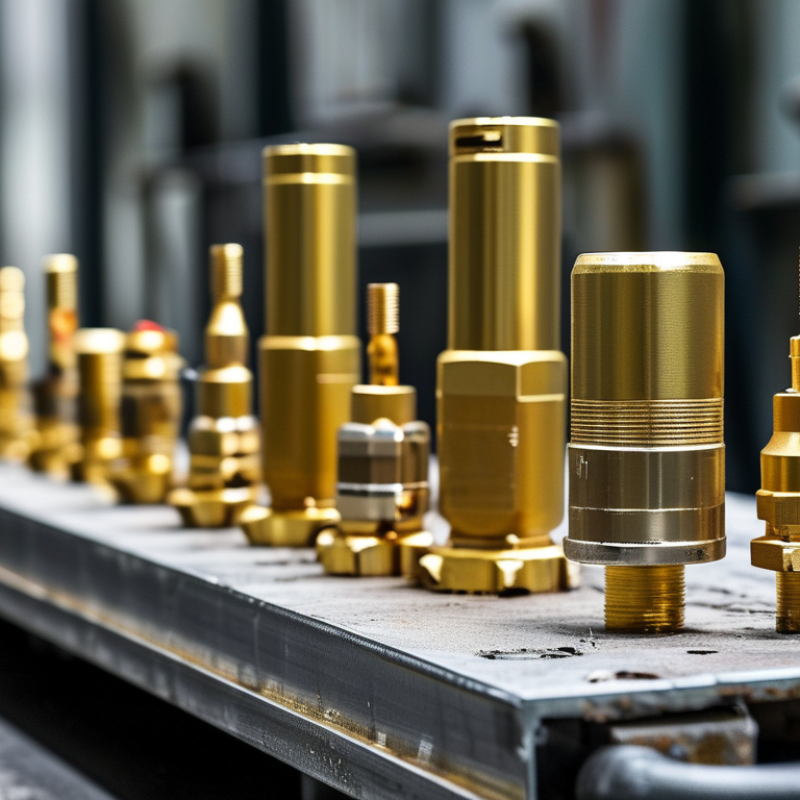
What Is an IP68 Metal Cable Gland?
What Is an IP68 Metal Cable Gland?
An IP68 metal cable gland is a mechanical sealing device for cables entering enclosures. It combines a metal body, compression seal, locknut, and strain-relief structure. Under IEC 60529, IP6X means dust-tight protection. IPX8 means protection during continuous water immersion under manufacturer-defined conditions. The depth and duration are not automatically identical between products.
This distinction matters in factories, outdoor cabinets, marine equipment, and underground control systems. A nickel-plated brass or stainless-steel gland can resist impact, vibration, and corrosion better than many polymer alternatives. However, metal strength alone does not create IP68 protection. The seal must match the cable’s actual outer diameter, and installers must apply the specified torque. Too little compression may allow water entry. Too much can deform the seal.
A 2024 cable-gland market analysis estimated the global market at roughly USD 2.3 billion in 2023, with continued growth driven by industrial automation, renewable energy, and infrastructure upgrades. That growth reflects practical demand, not just product marketing. IP68 glands are also selected for electrical continuity, especially where shielding and bonding require a conductive entry point.
Still, certification can be misunderstood. A gland tested with one cable size may perform differently with another. Field dirt, damaged threads, and uneven enclosure surfaces create weak points. Engineers should review the test report, cable range, material grade, and installation instructions together. A stronger gland is not always a better installation.
2026 Top IP68 Metal Cable Gland Manufacturers Guide - What Is an IP68 Metal Cable Gland?
The chart compares the two protection digits used in IEC 60529 IP codes. The first digit measures protection against solid foreign objects and dust on a scale from 0 to 6. The second digit measures protection against water on a scale from 0 to 8.
An IP68 metal cable gland uses the highest solid-particle protection level, represented by digit 6, and water protection level 8. Under IEC 60529, level 8 indicates protection during continuous immersion under conditions specified by the manufacturer, including depth and duration.
How to Evaluate IP68 Metal Cable Gland Manufacturers
When evaluating IP68 metal cable gland manufacturers in 2026, look beyond catalog claims. An experienced manufacturer should explain how its glands maintain sealing under dust, water pressure, vibration, and temperature changes. Ask for recent test reports, material certificates, dimensional drawings, and clear testing conditions. “IP68” is not one universal performance level. The specified immersion depth and duration matter.
Inspect the manufacturing process closely. Reliable suppliers use controlled machining, consistent thread gauges, and traceable sealing materials. Stainless steel, nickel-plated brass, and other metals should match the installation environment. Check corrosion resistance, clamp strength, cable diameter range, and strain relief performance. Request samples from different production batches. Small differences in gasket fit can become serious problems during field installation. This is where many evaluations become too optimistic.
Tips: Compare samples, not only documents. Confirm the exact IP68 test conditions. Review inspection records and corrective-action procedures. Ask how rejected parts are separated. A factory visit or live video audit can reveal storage issues, poor labeling, or rushed assembly. Technical support also matters; a capable team should help select threads, seals, and accessories for your application. Still, do not treat confident answers as evidence. Even a well-organized supplier can miss a weakness, so test the gland with your actual cable, enclosure, and installation tools before approving regular orders.
Top 2026 Manufacturers and Their Product Capabilities
2026 Top IP68 Metal Cable Gland Manufacturers Guide
Top 2026 manufacturers compete through sealing reliability, machining accuracy, and documented testing. Market reports from Grand View Research indicate steady growth in cable management demand, with industrial applications supporting a projected annual growth rate above 6% through 2030. The figure varies by region and product definition, so it should not be treated as absolute.
Leading manufacturers typically offer nickel-plated brass, stainless steel, and corrosion-resistant metal glands. Strong product lines include metric, PG, and NPT threads, armoured cable options, EMC protection, and strain relief. Their IP68 capability should be supported by test records under IEC 60529, not only by catalog claims. Some factories also use automated thread inspection, torque testing, salt-spray testing, and batch traceability. These details matter near outdoor control cabinets, where rain, dust, and vibration work together.
Tips: Ask manufacturers for IP68 test conditions, cable diameter ranges, gasket materials, and temperature ratings. Check whether testing covers the complete gland assembly. A sealed gland can still fail when installation torque is wrong. I would also compare production consistency, not just the lowest quotation. Industry reports often simplify supply chains, while real purchasing decisions involve tooling control, inspection capacity, and response time. One overlooked detail is replacement availability. A technically excellent gland becomes inconvenient when spare seals or matching locknuts are difficult to obtain.
2026 Top IP68 Metal Cable Gland Manufacturers Guide - Top 2026 Manufacturers and Their Product Capabilities
| Capability Profile | Primary Metal Construction | Typical IP Rating | Common Cable Diameter Range | Thread Options | Sealing Material | Typical Temperature Range | Relevant Standards | Product Strengths |
| Profile 01 — General Industrial | Nickel-plated brass body with stainless-steel locknut | IP68, commonly tested for temporary immersion | 3–48 mm | Metric, PG and NPT | Nitrile rubber or EPDM | Approximately −40°C to +100°C | IEC 60529; EN 62444 | Broad size coverage, fast assembly and general equipment protection |
| Profile 02 — Corrosion-Resistant | 316L stainless steel | IP68 | 4–50 mm | Metric and NPT; custom thread lengths available | Silicone or EPDM | Approximately −60°C to +120°C | IEC 60529; EN 62444; material-grade documentation | Suitable for marine, coastal, chemical and outdoor environments |
| Profile 03 — Hazardous-Area Focused | Nickel-plated brass or stainless steel with certified barrier components | IP66/IP68, depending on the assembly | 6–55 mm | Metric, NPT and ISO pipe threads | Nitrile rubber, neoprene or silicone | Approximately −60°C to +130°C | IEC 60079 series; IEC 60529; applicable hazardous-area certification | Flameproof, increased-safety and armoured-cable configurations |
| Profile 04 — Armoured Cable | Nickel-plated brass with armour clamping cone and locknut | IP68 when correctly installed | 8–76 mm | Metric, NPT, PG and other industrial threads | EPDM or nitrile rubber | Approximately −40°C to +100°C | EN 62444; IEC 60529 | Mechanical retention, armour continuity and strain relief |
| Profile 05 — EMC and Shielded Cable | Nickel-plated brass with spring-finger or contact-cone shielding | IP68 | 3–48 mm | Metric and NPT | Nitrile rubber or silicone | Approximately −40°C to +100°C | IEC 60529; EN 62444; EMC performance tested by application | 360-degree cable shielding contact and improved electromagnetic compatibility |
| Profile 06 — High-Temperature | 316 stainless steel or nickel-plated brass | IP66/IP68, subject to seal selection | 4–50 mm | Metric and NPT | High-temperature silicone or fluorocarbon elastomer | Approximately −60°C to +180°C | IEC 60529; EN 62444; application-specific temperature testing | Stable sealing performance in ovens, engines and high-heat equipment |
| Profile 07 — Large-Size Infrastructure | Nickel-plated brass or stainless steel | IP68 | 40–110 mm | Large metric, NPT and custom thread forms | EPDM, nitrile rubber or silicone | Approximately −40°C to +100°C | IEC 60529; EN 62444 | Large cable entry sizes, robust strain relief and heavy-duty construction |
Note: Performance depends on the exact product design, cable construction, thread engagement, sealing range and installation method. IP68 depth and duration should always be confirmed in the applicable test report or technical datasheet.
Selection Criteria for Different Industrial Applications
Choosing an IP68 metal cable gland starts with the application, not the catalogue image. In food-processing rooms, select stainless steel with smooth surfaces and cleaning-agent resistance. For outdoor control panels, check UV stability, temperature range, and sealing performance after repeated weather exposure. Mining equipment needs impact resistance, strong strain relief, and reliable sealing around thick-armoured cables.
Thread compatibility deserves careful attention. A metric thread fitted to an unsuitable entry can damage the enclosure seal. Ask manufacturers for thread gauges, torque guidance, material certificates, and current IP test reports. The test method matters. A gland tested with one cable diameter may perform differently with another. Experienced suppliers should explain these limits clearly, not hide them in small print.
Chemical plants require seals that resist oils, solvents, and temperature cycles. Marine installations may need corrosion-resistant metal and verified salt-spray performance. In hazardous industrial areas, use products with the required application approvals and installation instructions. IP68 does not automatically prove suitability for every environment. It only addresses defined dust and water protection conditions. A practical trial is often useful: install the gland on the actual enclosure, apply the planned torque, and inspect the cable jacket afterward. Even skilled teams sometimes overlook jacket compression. That mistake can appear months later. I would also question vague claims such as “heavy duty” without measurable test data, traceable production records, and accessible technical support.