
Contract Manufacturing for Injection Molded Plastic Products in North America
(800) 824.0607
In 2026, global buyers will face a wider range of Waterproof Switchgear for factories, infrastructure projects, renewable energy sites, and coastal facilities. The right choice depends on voltage, installation conditions, maintenance access, and certified enclosure protection. A product that survives heavy rain may still fail under salt spray, condensation, dust, or poor cable sealing. Water resistance is not a single feature.
This guide examines practical switchgear types, including outdoor low-voltage assemblies, medium-voltage ring main units, sealed distribution boards, and weatherproof control cabinets. It also considers stainless steel, powder-coated steel, and engineered polymer enclosures. IP ratings, insulation coordination, short-circuit performance, temperature rise, and testing records deserve close attention. Buyers should request test certificates, installation drawings, material specifications, and evidence of routine quality control. Supplier experience matters, especially when equipment must operate beside roads, ports, mines, or solar farms.
Field experience shows that enclosure design often determines long-term reliability. Small details matter, such as downward-facing cable glands, raised mounting bases, drainage paths, and protected door hinges. Yet no specification is perfect. An IP rating does not guarantee correct installation or permanent protection. Local climate data and service practices can change the final decision. Global buyers should compare lifecycle cost, spare-part availability, warranty terms, and technical support, not only the purchase price. This overview offers a careful starting point, while encouraging engineers to verify every claim against applicable standards and site conditions. Mistakes remain possible. Good documentation reduces them.
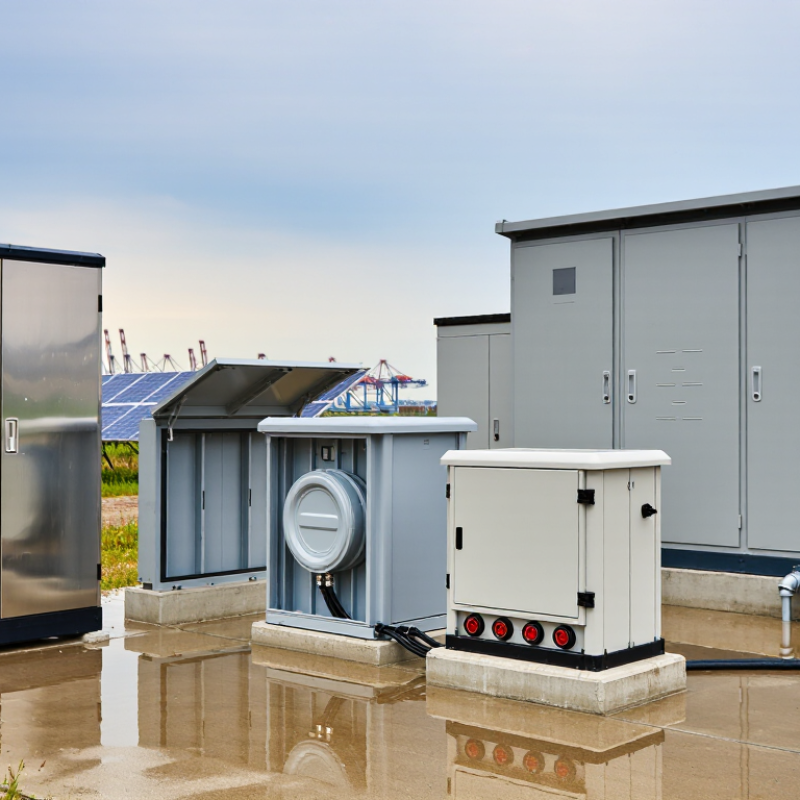
Waterproof switchgear protects electrical circuits from rain, dust, humidity, and accidental water exposure. It combines circuit breakers, disconnectors, busbars, and protection relays inside a sealed enclosure. The enclosure’s IP rating follows IEC 60529. IP65 resists dust and water jets, while IP67 allows temporary immersion under defined conditions. A high rating is not magic. Cable glands, door seals, and drainage paths can still become weak points.
The main types include outdoor metal-enclosed switchgear, stainless-steel units for corrosive areas, compact insulated assemblies, and submersible designs for flood-prone installations. Outdoor units suit substations, solar farms, construction sites, and coastal infrastructure. Compact assemblies work well in factories and commercial buildings where floor space is limited. Submersible equipment requires careful engineering, because pressure and prolonged immersion exceed ordinary rain protection.
Its core functions are isolation, overload protection, short-circuit interruption, and safe maintenance access. In practice, technicians inspect gasket compression, torque terminal connections, condensation, and surface corrosion. Small errors matter. The International Energy Agency reported that annual grid investment must rise above 600 billion dollars by 2030 to support expanding electricity systems. This growth increases demand for reliable outdoor distribution equipment. The IEA’s Electricity 2024 report also identifies grid resilience and weather exposure as growing operational concerns. However, product selection should not rely on the enclosure rating alone. Engineers must match voltage, fault current, temperature, altitude, drainage, and local installation rules. A supposedly waterproof cabinet may fail if water enters through an overlooked cable route.
In 2026, waterproof switchgear is not one single product. It includes outdoor metal-enclosed switchgear, compact modular units, vacuum circuit breaker panels, and solid-insulated systems. Each type addresses a different exposure risk. IP54 protects against limited dust and splashing water. IP66 offers stronger protection during heavy rain and washdown operations. However, IP ratings do not automatically permit immersion.
The enclosure matters as much as the switching technology. Stainless-steel cabinets suit coastal substations, where salt spray accelerates corrosion. Powder-coated steel works well in industrial yards with controlled drainage. Submersible-rated units require sealed cable entries, pressure-tested joints, and corrosion-resistant hardware. These details are often missed during early procurement.
The International Energy Agency reported that global electricity demand may grow by about 3.4% annually from 2024 to 2026. This increase supports investment in reliable distribution equipment. MarketsandMarkets estimates the global switchgear market could rise from approximately USD 103.1 billion in 2023 to USD 143.1 billion by 2028. Those figures indicate strong demand, but market forecasts remain assumptions, not guarantees.
For wet locations, vacuum interruption and solid insulation can reduce maintenance concerns. Gas-insulated designs may save space, yet buyers should examine gas handling and environmental requirements. IEC 60529 testing is essential, but factory testing cannot replace site drainage checks. A highly rated enclosure can still fail through poor cable installation. That uncomfortable lesson deserves more attention.
Main waterproof switchgear types available in 2026, compared by typical water-protection level under IEC 60529 IP coding.
Higher IP water-protection digits indicate stronger resistance to water ingress: IP65 withstands water jets, IP66 withstands powerful water jets, IP67 protects against temporary immersion, and IP68 is designed for continuous immersion under manufacturer-defined conditions. Actual ratings vary by configuration, cable entries, doors, ventilation, and installation method.
2026 Top Waterproof Switchgear Types for Global Buyers?
How to Compare Enclosure Ratings, Materials, and Protection Levels
For global buyers, waterproof switchgear selection starts with a clear enclosure comparison, not a product photograph. IP ratings under IEC 60529 describe resistance to solids and water. IP65 blocks dust and water jets. IP66 handles stronger jets. IP67 permits temporary immersion, but it does not guarantee safe operation while submerged. Check the test conditions. A rating label alone is not enough. NEMA classifications may use different criteria, so direct number-for-number conversion can mislead procurement teams.
Material choice changes performance at the installation site. Powder-coated steel suits protected industrial rooms, while stainless steel resists washdown and many corrosive environments. Polycarbonate reduces weight and avoids rust, yet ultraviolet exposure can embrittle some grades. Aluminum is light, but galvanic corrosion needs attention around dissimilar metals. Inspect hinges, gaskets, cable glands, drain plugs, and fasteners. These small interfaces often decide whether water reaches terminals.
Protection level also includes electrical safety, not only enclosure sealing. Compare short-circuit withstand, insulation coordination, temperature rise, creepage, and clearance data. In coastal sites, salt deposits can defeat a well-rated box. In dusty plants, blocked vents can raise internal temperature. Ask for test reports, material specifications, and maintenance instructions. Then compare the same operating conditions across suppliers. A practical weakness remains: buyers often accept an IP claim without checking gasket compression after installation. Field reality is less tidy. Leave room for inspection and replacement.
| Switchgear Type | Typical Voltage / Current Range | Common Enclosure Ratings | Recommended Enclosure Materials | Typical Protection Functions | Suitable Installation Environments | Key Buying Considerations |
|---|---|---|---|---|---|---|
| Outdoor Isolator or Load-Break Switch Enclosure | Low voltage up to 1,000 V AC; commonly 16–630 A | IP65 IP66 IP67 | UV-stabilized polycarbonate, glass-reinforced polyester, powder-coated steel, or 316 stainless steel | Isolation, switching under specified load conditions, short-circuit withstand when correctly coordinated with upstream protection | Outdoor machinery, pumps, rooftop equipment, agricultural sites, utility and industrial installations | Confirm whether the stated IP rating applies to the complete installed assembly, including cable glands, hinges, locks, and operating handles. |
| Low-Voltage Waterproof Distribution Board | Up to 1,000 V AC; typically 63–1,600 A | IP54 IP55 IP65 IP66 | Powder-coated galvanized steel, 304 stainless steel, 316 stainless steel, GRP, or polycarbonate | Overcurrent protection, residual-current protection, surge protection, isolation, metering, and feeder distribution | Commercial buildings, process plants, outdoor utilities, construction sites, coastal areas, and washdown zones | Check heat dissipation, internal segregation, cable-entry direction, available short-circuit rating, and accessibility for maintenance. |
| Motor Control Center with Sealed Compartments | Up to 1,000 V AC; commonly 400–6,300 A busbar systems | IP31 IP42 IP54 IP55 | Formed and galvanized steel with epoxy-polyester powder coating; stainless steel may be used for corrosive locations | Motor starting, overload protection, short-circuit protection, earth-fault protection, variable-speed control, and interlocking | Factories, water-treatment plants, HVAC systems, mining facilities, and heavy industrial process areas | Higher IP protection can reduce natural ventilation. Verify temperature-rise limits, derating, arc-fault requirements, and internal separation form. |
| Outdoor Feeder Pillar or Cable Distribution Cabinet | Up to 1,000 V AC; commonly 100–1,250 A | IP54 IP55 IP65 | Hot-dip galvanized steel, aluminum, GRP, 304 stainless steel, or 316 stainless steel for severe coastal exposure | Feeder isolation, fuse or circuit-breaker protection, cable termination, metering, and surge protection | Roadside networks, renewable-energy sites, residential developments, ports, farms, and public infrastructure | Evaluate corrosion category, foundation and drainage, vandal resistance, condensation control, clearances, and cable-bending space. |
| Automatic Transfer Switch Enclosure | Low voltage up to 1,000 V AC; commonly 40–3,200 A | IP54 IP55 IP65 | Powder-coated steel for general use; stainless steel or GRP for humid, corrosive, or outdoor locations | Automatic source transfer, mechanical and electrical interlocking, undervoltage monitoring, phase-loss detection, and emergency bypass options | Data centers, hospitals, emergency systems, generator installations, telecom facilities, and critical infrastructure | Verify transfer time, neutral switching arrangement, short-circuit rating, controller operating temperature, and manual bypass provisions. |
| Photovoltaic DC Combiner or String Protection Box | Typically up to 1,500 V DC; current depends on the number of strings and fuses | IP65 IP66 IP67 | UV-resistant polycarbonate, polyester, aluminum, or powder-coated stainless steel | String fusing, DC isolation, Type 1 or Type 2 surge protection, reverse-current protection, and monitoring | Rooftop solar systems, utility-scale solar fields, agricultural installations, and battery-supported PV systems | Use components rated specifically for DC voltage and photovoltaic duty. Check maximum system voltage, temperature derating, polarity, and arc-risk control. |
| Waterproof Battery Energy Storage Distribution Cabinet | Low voltage DC or AC sections; voltage and current vary by battery architecture | IP54 IP55 IP65 | Powder-coated steel, aluminum, 304 stainless steel, or 316 stainless steel; thermal insulation may be required | DC isolation, overcurrent protection, insulation monitoring, surge protection, temperature monitoring, and emergency shutdown interfaces | Outdoor energy-storage compounds, microgrids, renewable-energy plants, commercial facilities, and remote power systems | Ingress protection does not replace fire, thermal-runaway, ventilation, spacing, or battery safety requirements. Review the applicable local installation rules. |
| Medium-Voltage Ring Main Unit or Compact Switchgear | Typically 3.3–36 kV; current commonly 200–1,250 A | IP4X IP54 IP55 | Sealed or welded painted steel; stainless steel external panels may be selected for severe outdoor or coastal conditions | Load switching, circuit isolation, earth-fault protection, overcurrent protection, cable testing access, and transformer feeder protection | Distribution substations, commercial complexes, wind and solar plants, industrial sites, and utility networks | IP rating is only one part of medium-voltage selection. Also verify insulation level, internal-arc classification, making and breaking capacity, earthing, and service continuity. |
| Waterproof Control and Instrumentation Panel | Control circuits typically 24–240 V AC/DC; power feeders may be included up to 1,000 V AC | IP65 IP66 IP67 | Polycarbonate, GRP, aluminum, 304 stainless steel, or 316 stainless steel | PLC control, signal isolation, low-voltage distribution, sensor interfaces, alarm circuits, and communication equipment protection | Food and beverage facilities, wastewater plants, marine environments, outdoor process skids, and washdown areas | Consider condensation, cable-gland sealing, transparent-door durability, electromagnetic compatibility, heat load, and access to display devices. |
Selection begins with the operating environment, not the enclosure label. Outdoor metal-enclosed switchgear suits exposed substations, while compact insulated units fit restricted urban spaces. Modular assemblies can simplify maintenance in industrial plants. However, “waterproof” is too general. Buyers should verify the IP rating under IEC 60529, especially for rain, dust, and temporary water exposure.
Coastal sites need corrosion-resistant materials, sealed cable glands, and protected hardware. Salt spray can damage ordinary steel faster than expected. Tropical installations require ventilation control, anti-condensation heaters, and careful drainage. In dusty mines or dry regions, an IP54 enclosure may be insufficient around fine particles. Flood-prone locations need raised mounting, sealed entries, and a documented water-resistance limit. Do not assume an outdoor cabinet survives immersion.
Cold climates demand low-temperature seals and heaters for moving parts. High-altitude projects may require insulation adjustments because air loses dielectric strength. Strong sunlight also accelerates gasket aging and surface deterioration. Experienced buyers should review fault level, rated voltage, service continuity, maintenance access, and local certification requirements together. A high IP number cannot correct poor installation. I have seen well-rated equipment fail because cable entries were tightened unevenly. That detail matters. Site testing, thermal inspection, and periodic seal replacement improve reliability, although maintenance plans are often underestimated.
Outdoor switchgear in 2026 should match the site, not just the weather forecast. Common choices include sealed metal enclosures, compact molded-case assemblies, and modular medium-voltage panels. An IP rating shows resistance to water and dust, but it does not mean permanent submersion. Check the required IP level against local conditions, cleaning methods, and flood risks.
Installation quality decides long-term reliability. Mount the enclosure above likely standing water, provide a slight cable-entry slope, and use correctly rated glands. Keep drain openings clear. Tighten terminals with a calibrated torque tool.
Poor sealing often begins with one damaged gasket. Maintenance should include visual checks, thermal scanning, insulation testing, and condensation inspection. Do not ignore salt deposits near coastal sites. They can hide corrosion. Records matter.
Tips: Ask suppliers for test reports, installation instructions, and compliance declarations. Confirm whether testing follows IEC 60529, IEC 62271, or relevant national requirements. Requirements differ by voltage and location. Compare spare-part access, service space, warranty limits, and delivery times. A cheaper enclosure may require more frequent inspections. That cost is easy to miss. Specify ambient temperature, altitude, fault level, cable size, and control voltage before ordering. Recheck every figure. Some purchasing mistakes look minor, yet they can delay commissioning or reduce protection during heavy rain.