What Is an Anchor Chain Used For?
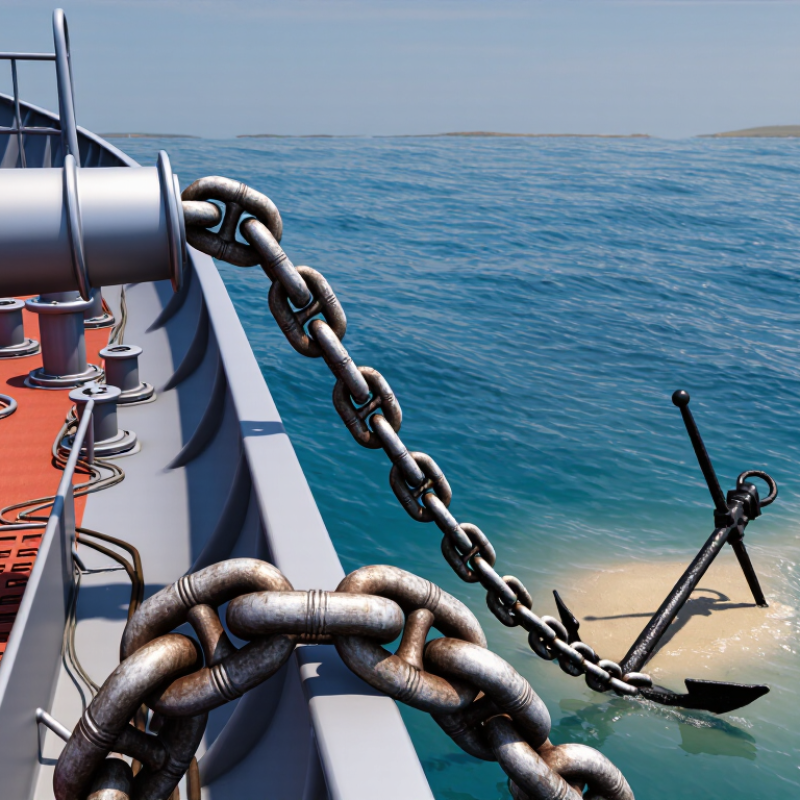
An Anchor Chain does more than connect a vessel to its anchor. It helps keep the anchor working by adding weight and allowing the pull to reach the seabed at a lower angle. That matters when wind presses against the bow or a wake nudges the hull. On deck, the chain runs through a hawse pipe, links clinking as the windlass lowers it. Small details matter: chain size, length, condition, and compatibility with the windlass all affect safe, dependable use.
Marine systems author Nigel Calder has written extensively about practical boat systems and seamanship. A concise paraphrase of the principle behind his guidance—not a verbatim quotation—is this: “An anchor works as part of a system, and the chain is one of its essential links.” The phrase is simple. The decisions are not always. A short chain may leave the anchor pulling upward; an oversized chain may exceed the windlass’s rating. Rust, stiff links, and worn connections also deserve attention. This guide explains what an Anchor Chain is used for, how it supports anchoring, and what to inspect before relying on it. The right setup depends on the vessel and conditions. There is no single answer for every boat.
What an Anchor Chain Is and How It Is Built
An anchor chain is the steel connection between an anchor and a vessel’s rode. It is built from repeated links, usually formed from steel bar, bent into shape, and welded closed. Larger ship chains commonly use stud links: each link has a crossbar that helps resist distortion and keeps links from twisting together. Smaller craft may use studless chain, which is simpler and easier to handle. Small links matter.
Chain is specified by nominal diameter, grade, and construction—not diameter alone. The International Association of Classification Societies’ Unified Requirement W22 identifies five offshore chain grades: R3, R3S, R4, R4S, and R5. Its tables set proof and breaking-load requirements by grade and size; higher grades are designed for greater loads. After manufacture, chain sections undergo mechanical testing, and their markings help identify grade and size. Those details are more useful than a heavy-looking link.
In use, chain weight helps the anchor remain low against the seabed, while the links absorb rubbing against sand, rock, and the bow roller. A galvanized finish helps limit corrosion, but scratches and rust still deserve inspection. Measure link diameter at several points; wear can make a chain uneven. A thicker chain is not automatically safer if the windlass, fittings, or anchor cannot handle its load. ISO 4565 covers anchor-chain requirements for small craft, while vessel-specific sizing still depends on displacement, conditions, and equipment. Charts help, but they cannot inspect a worn link.
What Is an Anchor Chain Used For? How It Is Built
Anchor chain connects an anchor to a vessel, helping it hold position and reducing shock loads by adding weight and catenary. Stud-link chain is made from steel links, commonly with a crosspiece called a stud. The bars show indicative mass per meter for typical stud-link chain; actual values vary by chain standard and specification.
How the Chain Connects a Vessel to Its Anchor
An anchor chain links the anchor to the vessel’s bow, transferring the pull of wind and current through the anchoring system. At the bow, the chain passes over a roller and runs to a windlass, which raises or lowers it. A chain stopper or similar fitting can secure the loaded chain, so the windlass does not carry the full force while the vessel lies at anchor.
The chain does more than hold two pieces of equipment together. Its weight helps keep the pull on the anchor low and steady, while the curve of chain resting on the seabed can soften sudden loads from waves. The amount paid out matters: too little chain can create a steep pull that makes an anchor less likely to hold. Too much can increase the risk of dragging across the bottom or fouling nearby gear. Conditions, water depth, and seabed type all affect the choice.
Small details matter. The chain must match the vessel’s windlass, and its connecting shackle must be properly secured and checked. Crew members should inspect links for wear, corrosion, and distortion, especially near the anchor end, where movement and abrasion accumulate. A worn link may look ordinary at a glance. That is the uncomfortable part: inspections can miss things. Clear chain markings also help crew estimate how much has been deployed, particularly when visibility is poor.
How Chain Weight and Length Help Hold a Vessel
What Is an Anchor Chain Used For?
An anchor chain connects a vessel to its anchor, but it also helps the anchor hold. Its weight makes the chain hang in a curve between the boat and the seabed. When conditions are suitable, this curve keeps the pull on the anchor closer to horizontal, helping it stay set. That matters. A taut, steep pull can make an anchor more likely to break free, especially as the boat swings or the wind rises.
Chain length affects how much curve can form. A practical starting point is to consider water depth, the height of the bow roller above the water, weather, and seabed conditions—not depth alone. In deeper water, more chain is generally needed to maintain a useful angle. Too little can leave the boat jerking against the anchor; extra chain can soften those movements. But more is not always better: a heavy chain takes space, adds load, and needs careful handling. Check that the anchor, chain, and vessel are suited to one another. Small differences in setup can matter, and no simple ratio guarantees a secure hold.
Where and When Anchor Chains Are Used
At commercial ports, anchor chains hold ships in position while crews wait for a berth, shelter from weather, or prepare for cargo operations. The chain connects the vessel’s anchor to its windlass and helps keep the anchor seated as wind and current shift. UNCTAD’s Review of Maritime Transport 2024 estimates that seaborne trade reached 12.3 billion tonnes in 2023, up 2.4 percent. Busy port approaches make temporary anchoring a routine part of shipping. Not every anchorage has the same seabed. Mud, sand, rock, water depth, and forecast conditions all affect where and how a vessel anchors.
Chains also appear in offshore mooring systems, including those used to hold floating energy platforms in place. GWEC’s Global Wind Report 2024 records 75.2 gigawatts of cumulative offshore wind capacity at the end of 2023; most installations are fixed to the seabed, while floating units require moorings. These systems may use chain sections near the seabed, where weight and abrasion resistance matter. Conditions matter. Operators assess water depth, seabed type, wind, current, and expected loads before selecting equipment. I’ve seen anchor arrangements treated as interchangeable; they are not. A chain sized for a sheltered harbor may be unsuitable offshore, and inspection for worn or distorted links remains essential.
What Affects the Choice and Safe Use of an Anchor Chain
What Is an Anchor Chain Used For?
What Affects the Choice and Safe Use of an Anchor Chain
An anchor chain connects the vessel to its anchor, helping the anchor set and reducing sudden loads from waves. Choosing one by vessel weight alone is a mistake. IACS Unified Requirement A1 calculates an equipment number using displacement, breadth, deckhouse height, and projected side area:
EN = Δ2/3 + 2B(a + Σhᵢ) + 0.1A.
This technical measure helps determine anchoring equipment for classed ships; it is not a universal sizing rule for every boat. Check the vessel’s class guidance and operating conditions. Windage matters.
Chain diameter and grade affect strength, weight, and compatibility with the windlass. IACS Unified Requirement W18 sets mechanical requirements for anchor chain cables, including proof and breaking-load testing. Match the chain to its certificate, anchor, and gypsy, rather than relying on appearance. For safe use, inspect links for cracks, corrosion, distortion, and worn joining shackles. Pay out enough chain for the water depth and expected conditions, then confirm the bitter end is secured. A short scope or a jammed link can undermine an otherwise sound setup. There is no shame in checking twice. People still miss small details.
