
What Is the Best Battery Laser Welder to Buy?
Choosing the best Battery Laser Welder depends less on a headline power rating and more on the work you need it to perform. A repair technician carrying equipment between sites may value low weight and quick setup. A workshop handling repeated jobs may care more about consistent output, battery runtime, and charging time. There is no single winner for every buyer.
Start with your typical materials and their thickness. Check the manufacturer’s stated welding range, operating settings, and supported applications, then compare those details with your actual jobs. Look closely at battery capacity and whether a spare battery is available. A machine that feels portable in a showroom may become tiring to carry with its case, cables, and protective gear. Small details matter.
A sensible comparison also includes controls, cooling, warranty terms, service access, and the clarity of the user manual. Ask how the unit behaves during sustained use, not just a brief demonstration. Confirm that its safety features and required protective equipment suit the intended workspace. Manufacturer claims are useful, but they are not independent test results. Treat unusually broad promises with caution.
This guide will help you weigh those trade-offs and identify questions worth asking before purchase. The strongest choice may not be the cheapest or most powerful. It should fit your workload, support, and budget without making routine jobs harder. And yes, some specifications can be difficult to compare. That deserves a closer look.
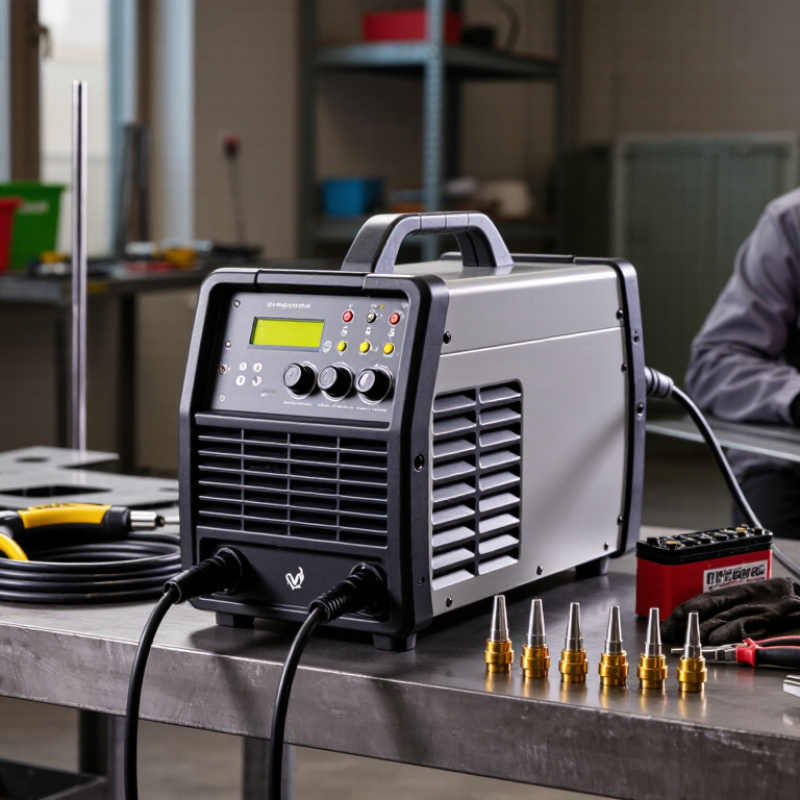
What Is a Battery Laser Welder and How Does It Work?
A battery laser welder is a laser-welding system used to join battery components, such as thin tabs, busbars, or metal cases. The name can be confusing: it does not always mean the machine runs on a battery. Many systems use a standard electrical supply. Their defining feature is the controlled laser process, not the power source.
Inside the machine, a laser source produces a concentrated beam. Optics guide and focus it onto the joint, where the metal heats and fuses. The small heat zone can help limit damage to nearby parts. Settings such as pulse duration, power, and focus need to match the metals and their thickness. A tiny change can leave a weak joint—or burn through a thin tab. That part is less forgiving than it looks.
Operators usually secure the pieces in a fixture and check the first welds for consistency. Battery components need extra care: excessive heat can harm cells or create serious hazards. Follow the cell maker’s process guidance, use suitable shielding and extraction, and have qualified personnel assess the setup. I would not judge a machine by its advertised speed alone; joint quality and repeatability matter more.
What Is the Best Battery Laser Welder to Buy? — What Is a Battery Laser Welder and How Does It Work?
| Welder Type | Typical Laser Output | How It Works | Suitable Battery Work | Advantages | Buying Considerations |
|---|---|---|---|---|---|
| Pulsed fiber laser welder | Typically tens to several hundred watts of average power; pulse energy and duration vary by system. | Delivers brief, controlled pulses that melt a small area and form a localized weld. | Small tabs, thin connectors, precision joints, and work where limiting heat spread is important. | Fine heat control; suitable for small welds; can reduce the heat-affected area when properly set up. | Check pulse energy, pulse duration, spot size, repeatability, and whether the system is configured for the specific material and thickness. |
| Continuous-wave fiber laser welder | Common industrial systems range from several hundred watts to multiple kilowatts. | Emits a continuous beam while the workpiece or welding head moves along the joint. | Longer seams and higher-throughput production, when the joint design and battery materials are suitable. | Fast welding over longer joints; well suited to automated production lines. | High power can cause excessive heat or damage thin cell components if poorly controlled. Evaluate fixturing, motion control, shielding, and process validation. |
| Handheld laser welding system | Many industrial handheld systems are rated around 1–3 kW, although configurations differ. | An operator guides a laser welding head along a joint; some systems use a wobble pattern to widen the weld area. | Larger battery enclosures, busbar joints, and accessible seams—not usually the first choice for tiny cell-tab welds. | Flexible for varied joint shapes and larger parts; can be quicker to set up than a dedicated automated line. | Confirm that the system is designed for the intended battery task. Include operator training, guarding, fume control, and appropriate laser safety measures. |
| Automated or fixture-based laser welding cell | Power is selected according to material, thickness, joint geometry, and production rate. | Uses controlled positioning, clamping, and programmed laser parameters to make repeatable welds. | High-volume cell, module, or pack production with consistent part locations. | Improves process consistency and supports inspection and traceability when properly integrated. | Assess cycle time, fixture design, extraction, interlocks, quality monitoring, and compatibility with the required production workflow. |
| Battery laser welder: key process factors | There is no universal power rating that suits every battery weld. | Focused laser light heats and melts the joined surfaces; the molten material solidifies to form the joint. | Joining compatible battery materials such as nickel, copper, or aluminum, subject to validated parameters and joint design. | Non-contact heat input and precise placement can support small or repeatable joints. | Material reflectivity, thickness, surface condition, fit-up, focus, shielding, and heat-sensitive nearby components all affect weld quality. |
Practical buying rule: For small battery tabs and precision joints, start by evaluating a pulsed system and test samples made from your actual materials. For long seams or larger structures, compare continuous-wave or automated systems. Specifications and suitable applications vary by machine; validate weld strength, electrical resistance, and heat effects before production.