
Contract Manufacturing for Injection Molded Plastic Products in North America
(800) 824.0607

RFQ / CONTACT
Contract Manufacturing for Injection Molded Plastic Products in North America | (800) 824.0607

What Are the Best High Mast Lighting Types in 2026?

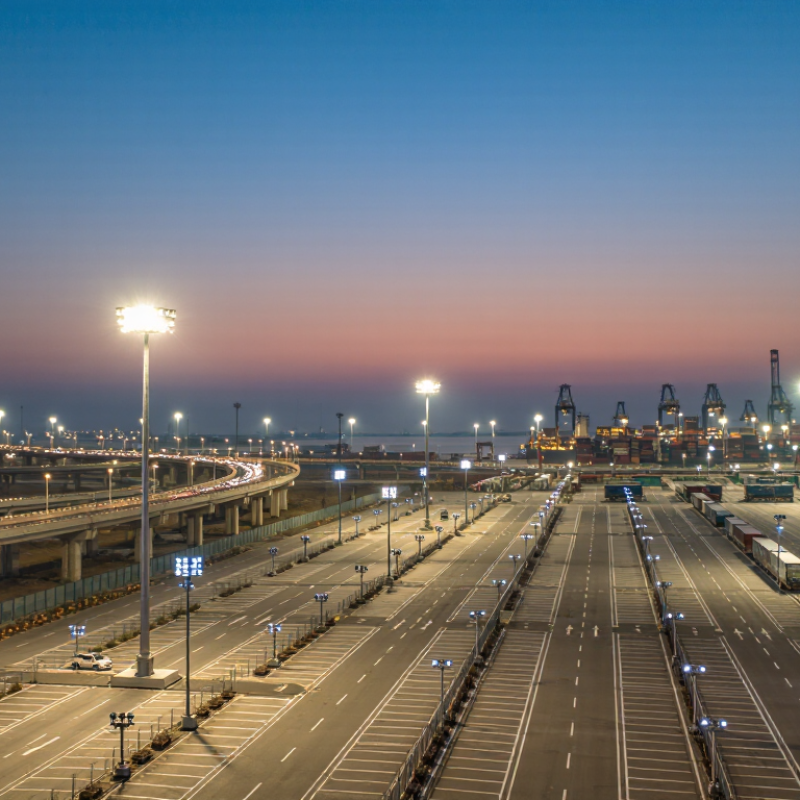
Choosing the best High Mast Lighting in 2026 means balancing visibility, energy use, maintenance access, and site conditions. A port apron, stadium car park, and highway interchange do not need identical equipment. Each has different mounting heights, beam requirements, operating hours, and weather exposure. Small details matter.

The International Energy Agency has estimated that lighting uses about 15% of global electricity. That figure covers lighting broadly, not high-mast installations alone. It still explains why efficiency deserves attention. The U.S. Department of Energy’s guidance on solid-state lighting also emphasizes evaluating performance in the actual application, rather than comparing wattage alone. For high-mast projects, useful measures include delivered light on the ground, glare control, color quality, driver reliability, and the cost of servicing fixtures at height.

This guide compares LED systems, legacy high-intensity discharge options, and solar or hybrid configurations. It also considers optics, controls, and maintenance—not just the fixture label. LED is often the strongest starting point for new projects, but it is not an automatic winner. Poorly selected optics can leave dark patches, while an ambitious control system may add complexity without meaningful savings. That trade-off is easy to miss. The right choice depends on verified photometric plans, operating schedules, local conditions, and lifecycle costs. Treat product claims as a starting point, then check them against project data.
What Are the Best High Mast Lighting Types in 2026?

How High Mast Lighting Systems Are Classified

High mast lighting systems are commonly classified by how their luminaires are mounted and maintained. Fixed-head systems place floodlights on a crown near the top of the pole. A lowering system brings the luminaire ring down for inspection, often using a winch and cable. This can reduce work at height, but the mechanism itself needs regular checks. Some poles use fixed platforms or access ladders instead. The right arrangement depends on site access, maintenance resources, and the surrounding environment.

Optics provide another useful classification. Symmetric floodlights spread light broadly around an area, while asymmetric optics direct more light toward a road, yard, or apron. Choosing between them involves more than brightness. A lighting designer should consider pole spacing, mounting height, surface reflectance, and unwanted spill. Small aiming errors can leave dark patches beneath a tall mast.

Systems can also be grouped by light source and control method. LED luminaires are widely used for efficient operation and flexible dimming; older installations may use discharge lamps. Controls range from basic photocells to scheduled or remotely managed dimming. These categories overlap. A tidy label can hide practical trade-offs, and sometimes the simplest setup is easier to maintain. Check the actual light distribution and service plan before comparing system types.

Which Light Sources Lead High Mast Lighting in 2026

In 2026, LED is the leading light source for new high mast projects. It starts instantly, supports dimming, and directs light more precisely than older HID systems. That matters when crews need consistent illumination across a wide road junction or a busy freight yard. The U.S. Department of Energy’s 2020 U.S. Lighting Market Characterization estimated that LEDs made up about 47% of installed lighting stock. This figure covers many lighting applications, not high mast systems alone, so it is useful context rather than a sector-specific verdict.

Metal-halide and high-pressure sodium lamps still appear on existing towers. They can remain practical where equipment is serviceable and replacement costs are high. But their warm-up time, color quality, and relamping needs can complicate maintenance at heights. LED optics can also reduce spill light, though poor aiming still creates glare. Small details matter: check the pole’s structural capacity, measured road luminance, and the actual maintenance schedule before choosing a source. A tidy energy estimate can mislead. For many sites, the best comparison is a photometric plan plus lifecycle costs, not lamp efficacy alone.

How Fixture Designs Suit Different Applications

High-mast lighting works best when its beam pattern matches the site. At road interchanges, asymmetric Type III or Type IV optics can push light across ramps and shoulders while limiting spill toward nearby homes. Large ports and distribution yards often benefit from Type V optics, which spread light broadly around each pole. The right choice still depends on pole spacing and mounting height.

Sports grounds need tighter aiming and glare control, so players can track a ball without looking into bright sources. For industrial yards, consider service access as well as distribution: fixtures that are difficult to reach can make routine maintenance slow. A common design miss is choosing high output before checking whether light lands where people need it. The spill matters. The layout may need revisiting.

Tips: Request a point-by-point photometric plan before purchase. Check horizontal and vertical illumination, uniformity, and property-line spill. The U.S. Department of Energy’s Energy Saver guidance reports that LEDs use at least 75% less energy and can last up to 25 times longer than incandescent lamps. These are general lamp comparisons, not guaranteed high-mast project savings; optics, controls, and operating hours affect actual results.

What Factors Determine the Best High Mast Lighting Type

The best high mast lighting type depends less on a product label than on the site it must serve. Start with the task: a sports field needs controlled, even light, while a freight yard needs clear visibility across lanes and loading zones. Measure the illuminated area and note pole height, nearby buildings, and any dark pockets. A wide beam may cover more ground, but it can also create glare or uneven brightness.

Optics, output, and mounting height must work together. Compare the spacing between poles, target light levels, and uniformity—not just total lumens. For example, a tall pole beside a warehouse wall may cast sharp shadows unless the fixture’s beam is aimed carefully. LED systems often reduce energy use and simplify controls, but their performance still depends on heat management, driver quality, and the local environment. Salt air, dust, and vibration matter.

Maintenance can change the choice. A fixture that needs frequent access may be costly when poles require specialized lowering equipment or a lift. Check service access, component replacement, and warranty terms before specifying a system. Controls such as dimming can help when activity drops overnight, though poorly planned settings may leave work areas too dim. The first layout is rarely perfect; a nighttime aiming check can reveal glare that drawings missed.

What Are the Best High Mast Lighting Types in 2026? — What Factors Determine the Best High Mast Lighting Type?
Lighting type Energy and light output Color and control Start-up and maintenance Best suited to Key selection factors
LED high mast Typically offers high efficacy and directs light efficiently when paired with suitable optics. Actual energy use depends on fixture output, layout, and operating hours. Available in a range of color temperatures and color-rendering options. Many systems support dimming and controls when compatible drivers and controls are specified. Turns on immediately and generally requires less routine lamp replacement than traditional discharge lighting. Drivers and other components still need to be considered for access and replacement. New installations and upgrades where energy use, controllability, light quality, and reduced routine maintenance are priorities. Photometric layout, glare and spill-light limits, pole and fixture compatibility, surge protection, thermal conditions, controls, and total cost over the service life.
High-pressure sodium (HPS) Historically valued for efficient light production, but its overall suitability should be compared with modern LED systems and the required lighting levels. Produces a yellow-orange appearance and generally has poor color rendering compared with common white-light sources. Requires warm-up after switching on and may take time to restrike after interruption. Lamps and ballasts require periodic maintenance. Existing installations where compatible replacement parts are available and color recognition or frequent switching is not a major requirement. Existing ballast and fixture condition, required color recognition, switching schedule, energy costs, replacement-lamp availability, and upgrade plans.
Metal halide (MH) Provides bright white light, though energy use and maintenance should be assessed against current LED alternatives for the specific application. Usually provides better color rendering than HPS, with color characteristics varying by lamp type and age. Needs warm-up and typically a cooling period before it can restrike after a power interruption. Lamp output and color can change over time. Legacy sites that need white light and have existing MH equipment, particularly where an immediate full-system conversion is not planned. Color requirements, operating hours, restart expectations, lamp and ballast condition, maintenance access, and the cost of a phased conversion.
Induction lighting Can be considered for certain existing systems, but should be evaluated against current LED options for energy performance and practical availability. Produces white light; color quality and system performance depend on the specific equipment. Has no conventional electrode-based lamp structure, but the power supply and other system components still require maintenance. Product availability may be limited compared with LED. Specialized retrofit situations where existing equipment, operating conditions, and available replacement components make it a practical option. Verified photometric performance, compatible equipment, replacement-part supply, service support, energy use, and life-cycle cost.
Best overall choice for many new projects LED is often the leading option when a project needs efficient, controlled lighting, but the result depends on a properly designed system. Offers flexibility in light distribution, color appearance, and control features. Immediate start and reduced routine lamp-replacement needs can simplify operation; component access and electrical protection remain important. Highways, ports, industrial yards, sports areas, and other large sites when the design can meet the task-specific lighting criteria. Confirm illuminance and uniformity targets, pole height and spacing, glare control, environmental conditions, controls, electrical infrastructure, and maintenance strategy before choosing.

Note: Performance varies by product, optical design, installation, and operating conditions. Compare project-specific photometric data and life-cycle costs rather than relying on lamp type alone.

How to Compare Efficiency, Durability, and Maintenance Needs

What Are the Best High Mast Lighting Types in 2026?
How to Compare Efficiency, Durability, and Maintenance Needs

For high-mast sites, compare delivered lumens per watt at the complete fixture, not just the LED package. The U.S. Department of Energy’s 2022 Solid-State Lighting R&D Opportunities report discusses package efficacy reaching about 200 lumens per watt. That figure is not a fixture rating: optics, drivers, and heat reduce real output. Check maintained light levels across the pavement, too. A bright spot beneath the pole can still leave dark gaps between poles.

Durability affects service costs as much as energy use. Look for sealed housings, corrosion-resistant finishes, surge protection, and drivers that can be replaced without changing the entire fixture. IES LM-80 testing and TM-21 projections help assess LED lumen maintenance, but they do not guarantee the lifespan of every component. A spreadsheet can miss awkward access conditions; lowering a high-mast assembly for a small repair may take more time than expected. Compare warranty terms and documented maintenance procedures, not just rated hours.

Tips: Ask for fixture-level efficacy, photometric files, and a maintenance plan. Check how crews reach the luminaires. Include lift access, driver replacement, and cleaning in lifecycle estimates. Keep one doubt: lab performance is not a promise of identical field results.

What Are the Best High Mast Lighting Types in 2026?

LED systems typically offer higher efficacy and longer rated life, which can reduce relamping needs. Metal halide and high-pressure sodium systems may require more frequent lamp replacement. Values shown are indicative industry ranges; actual performance varies with luminaire design, operating conditions, and product specifications. LED rated life is commonly stated as L70 life.