7 Best Hotel Electronic Locks for Global Buyers?
Hotel Electronic Locks now shape more than room access. They influence guest confidence, staff workload, and emergency readiness.
Oracle Hospitality’s 2022 research found that 73% of travelers wanted hotels to use technology for smoother stays. Nearly half preferred contactless experiences. Meanwhile, the American Hotel & Lodging Association’s 2024 industry outlook highlighted persistent labor pressure and rising expectations for operational efficiency. These findings make electronic access practical, not merely fashionable. Still, technology can disappoint. A dead battery, weak wireless signal, or poor property-management integration can interrupt a guest’s evening within seconds.
Hotel security consultant Martin Gill has repeatedly emphasized, “Security is a process, not simply a product.” That principle guides this selection of seven Hotel Electronic Locks for global buyers. The comparison considers encrypted credentials, audit trails, battery endurance, offline operation, emergency override, mobile compatibility, and regional service support. It also examines installation realities, including thick corridor doors, metal frames, humid coastal locations, and older hotel wiring.
Small details matter.
A lock may look premium but lack dependable fallback access. Another may support Bluetooth yet confuse housekeeping teams. Buyers should question marketing claims, verify certifications, and request documented failure procedures. Independent testing and transparent warranties deserve more attention than polished product photos. No single lock fits every property. A boutique hotel, airport tower, and remote resort face different risks, budgets, and maintenance capabilities. This guide therefore compares practical strengths and limitations, helping global purchasers choose systems that remain secure, usable, and supportable after installation.
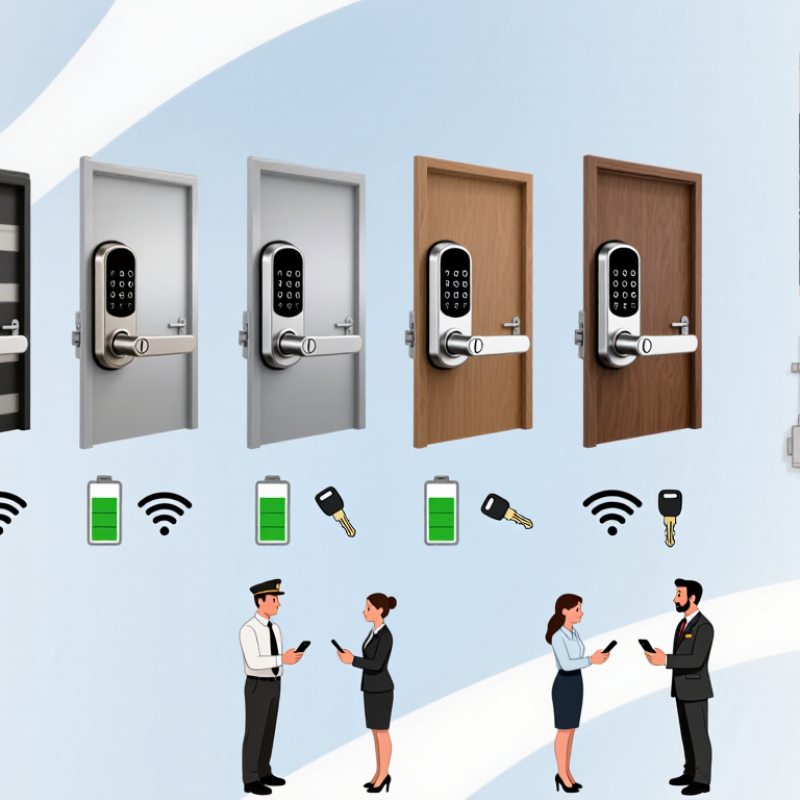
What Are Hotel Electronic Locks and How Do They Work?
Hotel electronic locks are access-control devices designed for guest rooms, staff areas, and service entrances. They replace traditional keys with RFID cards, PIN codes, mobile credentials, or biometric options. In a typical hotel, a guest receives a time-limited credential during check-in. The lock verifies it, records the event, and releases the latch if access is valid.
The process is quick. A reader detects the credential and sends its data to the lock’s control unit. The unit checks permissions, expiry time, and sometimes the room number. Many systems connect with hotel management software through a secure network. Staff can then issue, cancel, or update access without visiting every door. Audit records can show failed attempts, late entries, and emergency openings. Useful evidence.
Battery condition matters more than many buyers expect. A reliable lock should provide low-power warnings and support controlled emergency entry. Fire safety, accessibility, data protection, and local electrical requirements also need review before installation. Global buyers should request testing documents and clear maintenance procedures, not only attractive specifications.
No system is perfect. Wireless connections can fail. Cards can be damaged. A rushed installation may create gaps around the door frame. During evaluations, inspect battery access, manual override controls, software permissions, and replacement support. The best choice depends on building materials, staff routines, climate, and the hotel’s tolerance for downtime.
Which Features Matter When Comparing Hotel Electronic Locks?
When comparing hotel electronic locks, begin with access control, not appearance. A reliable system should support cards, PINs, mobile credentials, or staff keys. Flexible options help hotels serve different guests and operating styles. Ask how quickly access rights can be added, changed, or cancelled. Mistakes happen.
Audit trails are equally important. The lock should record entries, failed attempts, and emergency openings with accurate times. Clear records help managers investigate disputes without relying on memory. Check whether the system works during network interruptions. A door should not become unusable because a server connection fails.
Battery performance also matters. Look for low-power alerts, accessible battery compartments, and a dependable mechanical override. Test these features in a real room, not only in a showroom.
Physical durability deserves close attention. A busy hotel door may open dozens of times each day, while humidity and cleaning chemicals create extra stress. Choose materials and seals suited to the building environment.
Installation quality can affect security as much as the lock itself. Staff should receive practical training, including battery replacement and emergency procedures.
Do not assume every smart feature improves operations. Mobile access may reduce key-card handling, but it can also create support calls for guests with weak phone batteries or limited technical confidence. Compare total maintenance effort, software costs, privacy controls, and service response times. A polished interface is useful, but dependable daily performance matters more.
Seven Leading Hotel Electronic Lock Types for Global Buyers
Seven Leading Hotel Electronic Lock Types for Global Buyers
Global hotel demand requires more than one access method. UN Tourism reported 1.4 billion international tourist arrivals in 2024, increasing pressure on reliable guest entry systems. Grand View Research also identifies hospitality as a major smart-lock application, with double-digit market growth expected through 2030.
Magnetic-stripe locks remain familiar in older properties, but cards can demagnetize. RFID locks offer better durability and quick replacement. NFC and mobile-key locks use smartphones, reducing plastic cards and front-desk queues. Bluetooth locks can work through short-range phone communication, even when internet service is unstable. PIN keypad locks suit small hotels and serviced apartments. They remove card handling, but guests may forget codes.
Biometric locks use fingerprints or facial recognition, offering strong identity control. However, privacy management and sensor hygiene need careful planning. Wi-Fi or PoE-connected locks provide live monitoring, remote permissions, and faster incident reviews. They also depend on network quality and backup power. Hybrid locks combine offline credentials with online management, making them practical for mixed building conditions.
A proper buying test should measure unlocking speed, battery life, emergency access, audit records, door thickness, and local support. Check this in real rooms, not only in a showroom. The perfect lock does not exist. A low-cost keypad may outperform a premium connected system where connectivity is weak. Global buyers should compare encryption, certification, software compatibility, installation skill, and five-year maintenance costs before choosing.
7 Best Hotel Electronic Lock Types for Global Buyers
Indicative battery service intervals based on common commercial specifications. Actual performance varies with door traffic, battery chemistry, temperature, connectivity, and maintenance settings.
Buyer insight: Magstripe and contactless RFID systems generally offer longer service intervals, while biometric and connected BLE systems may require more frequent battery management because of higher processing or communication demands.
How to Evaluate Security, Compatibility, and Guest Convenience
For global buyers, the seven best hotel electronic locks should be judged by security, compatibility, and guest convenience. A polished keypad means little if its audit trail is incomplete. The 2024 Data Breach Investigations Report found that human involvement appeared in 68% of breaches across industries. Therefore, choose locks with encrypted credentials, expiring digital keys, role-based administration, and clear access logs. Offline operation also matters when a mountain resort loses its network connection. Test emergency override procedures in a real guestroom, not only in a supplier demonstration.
Compatibility requires careful measurement. Check door thickness, mortise dimensions, hinge position, battery access, and fire-egress requirements. Confirm support for common RFID cards, mobile Bluetooth credentials, and existing property-management systems. The lock should continue working during brief system outages. Regional radio approvals and data-hosting rules also deserve attention. A 2025 Hospitality in 2025 report found that 73% of travelers were willing to use mobile devices for hotel services. That supports mobile entry, but adoption will vary among older guests and international visitors. Keep a physical card option. Convenience is not universal.
Look closely at the guest journey. A visitor should unlock the door with one clear action, even with luggage in hand. Battery warnings must reach staff before failure. Installation should avoid drilling wherever possible. I would still question fully keyless designs; phones die, applications freeze, and guests forget passwords. Pilot several rooms for thirty days, record failed entries, support calls, and cleaning-team feedback. Supplier claims are useful, but measured hotel evidence is better.
