Contract Manufacturing for Injection Molded Plastic Products in North America
(800) 824.0607
In recent years, the demand for mini plastic injection molding machines has surged among small businesses. Industry reports reveal a growing market, with a projected CAGR of 5.2% from 2021 to 2026. This growth indicates a significant interest in affordable molding solutions. According to Dr. Emily Tan, an expert in injection molding technologies, “A mini plastic injection molding machine can empower small enterprises to innovate without massive investment.”
Small businesses benefit from these machines in multiple ways. They require less space and energy, making them ideal for startups. Additionally, many models are designed for ease of use, enabling quick prototyping of new ideas. However, the selection process can be overwhelming. Not all machines deliver the same quality, and potential buyers often face trade-offs in precision and durability.
Investing in the right mini plastic injection molding machine fosters creativity in product design. Yet, it brings challenges. Companies must assess their long-term needs versus initial costs. The balance between investment and return is crucial, so careful consideration is needed. The insights provided by industry experts can aid in this decision, but ultimately, the outcome varies between businesses.
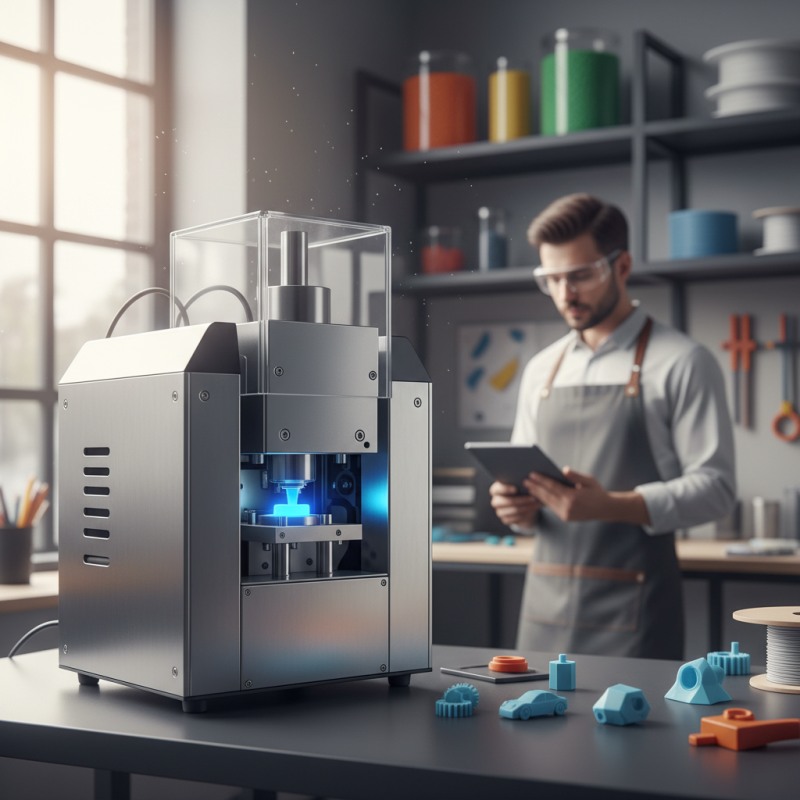
When selecting a mini plastic injection molding machine for a small business, several key features should be considered. The machine's size and footprint matter significantly. A compact design allows for ease of use in limited workspace. Furthermore, attention to the clamping force is crucial. The right clamping force ensures that molds remain stable under pressure during the injection process. Small machines often range from 5 to 20 tons of clamping force, which may suffice for new ventures.
The heating systems of these machines also deserve scrutiny. Efficient heating is necessary for melting plastic uniformly. Consider machines with adjustable temperature controls for improved versatility. Additionally, shot size is another essential specification. It affects how much material can be injected in one cycle. A smaller shot size may limit production but can help manage costs effectively.
While exploring options, it’s vital to assess user-friendliness. Controls should be intuitive, with clear displays. Complex machines may lead to operational confusion, making it harder to train staff. Moreover, some machines might have durability issues. Frequent repairs can disrupt production and increase costs. Reflecting on these features will guide businesses in making informed decisions.
When small businesses consider plastic injection molding, cost-effectiveness is crucial. Investing in a mini injection molding machine can offer various benefits. These machines often come at a lower initial cost compared to larger models. They also save on material and energy expenses. However, the costs don’t stop at just the purchase price. Maintenance and operational costs can add up over time.
Moreover, small businesses must assess their production volume. Producing small batches might not justify a larger investment. A thorough analysis of potential return on investment is essential. It's about more than simply acquiring equipment; it’s about making it work effectively. Regular evaluation of production efficiency can reveal opportunities for improvement. Sometimes, unexpected issues can arise that may affect profitability.
In addition, user training is often overlooked. A poorly trained operator can decrease productivity and increase waste. Proper training ensures that the machine runs optimally. Balancing initial investment with ongoing costs is complex. Companies need to be prepared for occasional setbacks. Adjustments may be necessary as they grow and adapt to market demands.
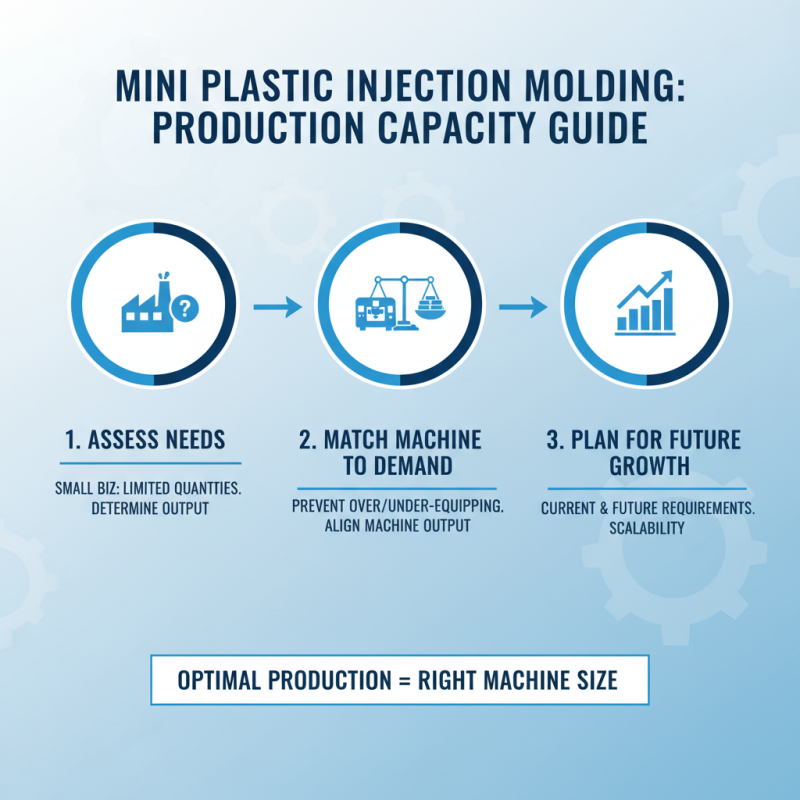
When choosing a mini plastic injection molding machine, understanding production capacity is crucial. Small businesses often produce limited quantities. Knowing your output requirements can prevent over- or under-equipping. Aim to match machine output with your demand. A suitable machine should meet both your current and future needs.
Consider your product design. Shapes and sizes impact the number of parts produced in a single cycle. Complex designs may require more time, reducing overall capacity. Think about the materials too. Some plastics mold quicker than others. Ensuring compatibility can optimize efficiency.
**Tips:** Regularly assess your production goals. It’s essential to adjust as your business evolves. Don’t forget to keep an eye on machine maintenance. Well-maintained equipment tends to perform better. Monitor output closely. If your actual production suddenly dips, reassess workflow or consider upgrading equipment.
When choosing a mini plastic injection molding machine, understanding material compatibility is key. Different plastics have unique properties, impacting the final product quality. Commonly used materials include ABS, PLA, and polypropylene. ABS is durable and resistant to impact, making it ideal for functional parts. PLA offers excellent clarity and biodegradability, suitable for eco-friendly projects. Polypropylene is flexible and chemical-resistant, great for packaging.
Tips for mini injection molding: Always check the machine's temperature control. Certain plastics require specific melting points. An incorrect temperature can lead to defects. Test small batches first. This will help identify any issues before scaling up production. Compatibility doesn’t just depend on the plastic. It also involves the mold design and the machine itself.
Not every plastic will suit every project. It's essential to analyze the requirements thoroughly. Some plastics can be challenging, affecting cycle times. Evaluate the production needs and consider factors like cost and waste. Tracking these details can save time and resources in the long run. Mistakes in material choice can lead to project setbacks. Learning from these challenges is crucial for growth.
| Material Type | Melting Temperature (°C) | Viscosity (Pa·s) | Recommended Machine Size (g) | Applications |
|---|---|---|---|---|
| Polypropylene (PP) | 160-220 | 1.0-3.0 | 50-150 | Containers, Automotive Parts |
| Polyethylene (PE) | 120-180 | 0.8-2.5 | 50-100 | Bottles, Toys |
| Polystyrene (PS) | 200-240 | 1.5-5.0 | 30-80 | Packaging, Electronic Housings |
| Acrylonitrile Butadiene Styrene (ABS) | 210-250 | 1.0-2.0 | 40-100 | Household Goods, Automotive Components |
| Polycarbonate (PC) | 250-300 | 1.0-2.5 | 30-80 | Optical Components, Safety Accessories |
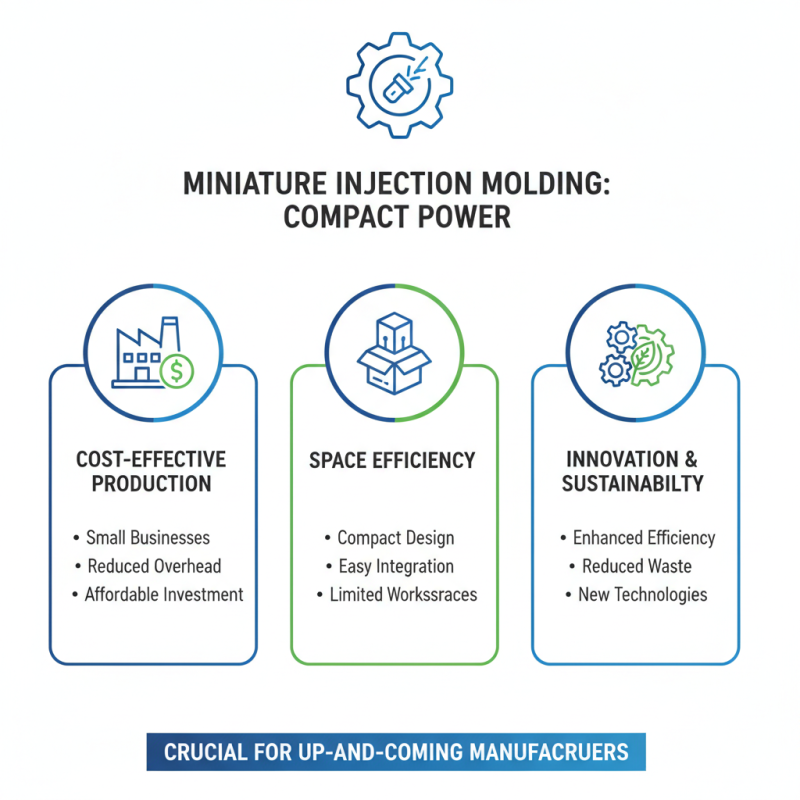
Miniature injection molding equipment is experiencing significant growth and innovation. Many small businesses are now turning to these machines for cost-effective production. Compact designs allow for easy integration into limited workspace. New technologies enhance efficiency and reduce waste. This is crucial for up-and-coming manufacturers.
Many companies are exploring advanced features. Automated processes and smart controls are becoming standard. These features improve reliability and precision in producing small plastic parts. However, the initial setup can be a hurdle for some. Sourcing materials and training staff requires careful planning. Not all machines meet every business's unique needs; flexibility is essential.
As trends evolve, adaptation is necessary. Entrepreneurs must stay informed about the latest developments. The market is shifting quickly, with new innovations emerging regularly. While opportunities abound, understanding market demands can be challenging. Balancing budget constraints with performance is often a point of struggle. This is an ongoing journey for many small manufacturers.