Best Resilient Gate Valve Manufacturers in 2026
A Resilient Gate Valve may look simple on a drawing: a body, a wedge, and a handwheel. In service, its performance depends on materials, dimensions, coating quality, and careful assembly. A small defect on the wedge can become a persistent leak. That is why selecting a manufacturer requires more than comparing prices or catalog claims.
Valve-industry specialist Greg Johnson is often cited for practical guidance on valve selection. A useful buyer’s principle, expressed here as an editorial paraphrase, is: “Choose the valve for its real operating conditions, not just its nameplate.” Buyers should check pressure and temperature ratings, end connections, test documentation, and the intended water or wastewater duty. They should also ask how the manufacturer controls rubber formulation, curing, and final inspection. Details matter. A resilient-seated design can offer dependable shutoff, but only when its construction matches the application and its quality is consistently verified.
This 2026 guide compares manufacturers through those practical criteria, alongside product range, technical support, and available certifications. It does not treat a polished brochure as proof. Instead, it highlights questions worth asking before a specification is finalized. Some supplier details may change; verify current documentation directly. That extra step can feel tedious. It is still cheaper than discovering a mismatch after installation.
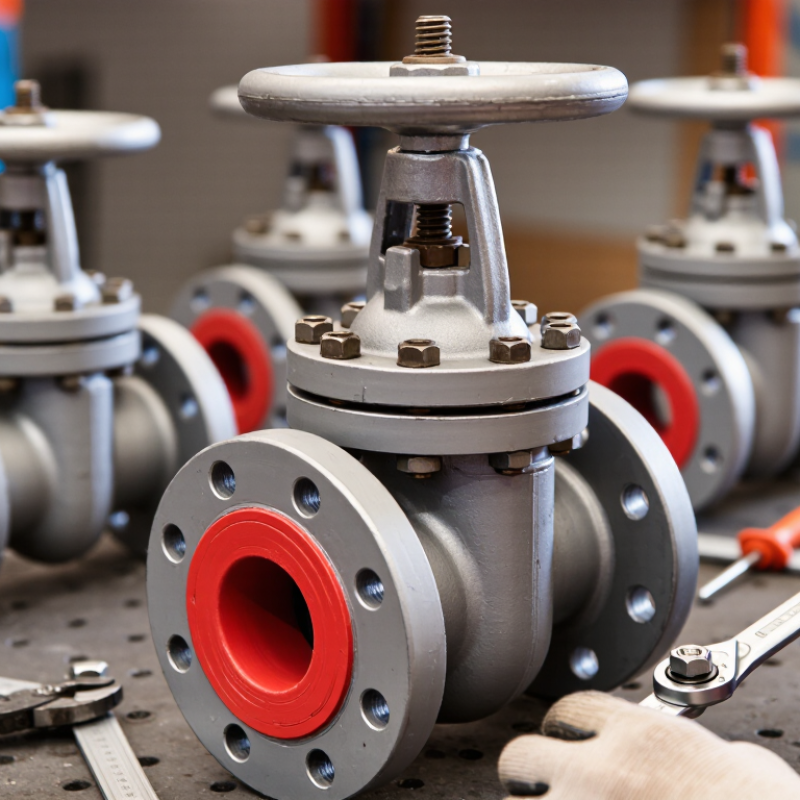
Resilient Gate Valves: Design, Materials, and Operating Principles
A resilient gate valve uses a wedge coated with elastomer to create a tight seal against the body’s seating surfaces. When the stem turns, the wedge rises clear of the flow path; closing it lowers the wedge until the resilient coating compresses against the seat. The passage stays relatively unobstructed when fully open. It is an isolation valve, not a good choice for regulating flow.
The body is commonly made from ductile iron, while the stem may use corrosion-resistant metal. Elastomer selection matters: EPDM and NBR suit different fluids and temperatures, so specifications should match actual service conditions. Check the pressure rating, media compatibility, and operating temperature before choosing a valve. Small details count.
During installation, keep the valve aligned and avoid using it to correct pipe misalignment. A handwheel or actuator applies the force needed to move the gate, but excessive force can damage the stem or seating surfaces. In field maintenance, a slow leak after closure may point to debris, wear, or incomplete travel. Cleaning and inspection help, though they do not solve every problem. Resilient seats can be forgiving, but they are not indestructible. That limitation is easy to overlook.
Criteria for Evaluating Manufacturers in 2026
Evaluating resilient gate valve manufacturers in 2026 requires more than comparing unit prices. Start with documented compliance: ask for test records against the applicable AWWA C509 or C515 requirements and pressure-testing procedures. Check that reports identify the tested size, pressure class, materials, and production batch. A certificate without traceable details is weak evidence. So is a polished brochure.
Material and process controls matter in real installations. Review ductile-iron specifications, elastomer compound data, coating thickness records, and inspection plans. Ask how the manufacturer verifies seat sealing after repeated operation, not only during a single factory test. Request production lead-time history and spare-part availability for the valve sizes your system actually uses. These details can reveal risks that a low bid hides.
Reliability also deserves context. The American Society of Civil Engineers’ 2021 Report Card for America’s Infrastructure estimated a $434 billion drinking-water infrastructure investment gap through 2029. That figure is not a valve failure forecast, but it underscores the cost of weak asset decisions. Compare manufacturers using verifiable quality records, field-service response times, and warranty claim data. No scorecard is perfect. I would still treat unsupported performance claims cautiously, even when the paperwork looks complete.
Best Resilient Gate Valve Manufacturers in 2026
Evaluation criteria and suggested weighting for comparing manufacturers
Suggested evaluation weights prioritize pressure and temperature suitability, material compatibility, and verified quality testing. These percentages are a practical comparison framework, not measured market data; adjust them to match project requirements and applicable standards.
Leading Resilient Gate Valve Manufacturers in 2026
Leading resilient gate valve manufacturers in 2026 earn confidence through repeatable quality, not polished catalogs. Their valves should close reliably after years of service, even when water carries grit or the operating chamber stays damp. Ask how the manufacturer controls rubber formulation, seat bonding, and dimensional tolerances. Small inconsistencies can cause leakage at the gate.
Material and testing details matter. Check whether the body uses documented ductile iron grades, and whether the resilient seat material suits the expected water temperature and treatment conditions. A durable internal coating should cover difficult areas, including corners around the wedge guides. Request pressure-test records, inspection criteria, and traceability for castings and elastomers. Good answers are specific. Vague assurances are not enough.
Manufacturing capacity is only part of the picture. Strong suppliers can explain lead times, spare-part availability, and how they investigate field failures. Ask for references from installations with similar pipe sizes and service conditions, then compare the evidence rather than relying on a single testimonial. No manufacturer is flawless. It is worth asking what went wrong in past production runs and what changed afterward; that conversation can reveal more than a showroom visit.
Comparing Product Ranges, Certifications, and Service Capabilities
Choosing a resilient gate valve manufacturer in 2026 means comparing more than price and nominal diameter. A useful product range should cover the project’s sizes, pressure classes, end connections, and installation conditions. Check whether the supplier offers both buried-service and above-ground configurations, plus clear options for coatings and stem arrangements. Small details matter. A valve that fits the pipe but not the operating environment can create avoidable maintenance work.
Certifications need to match the application, not just appear on a brochure. For water systems, review applicable AWWA requirements and potable-water approvals, such as NSF/ANSI/CAN 61 where required. Ask for current certificates, test records, and product traceability. Paperwork is not performance. Confirm that the documents apply to the specific valve model and manufacturing site, rather than a broader product family.
Service capability is another practical point of comparison. Ask about spare-part availability, technical support, realistic lead times, and help with installation or commissioning. A responsive service team can make a real difference when a valve must be replaced quickly. I would still verify the details directly: a polished catalogue cannot show how a supplier handles a delayed shipment or an unusual specification. That uncertainty matters.
Selecting a Manufacturer for Project and Lifecycle Requirements
A resilient gate valve can look suitable on a data sheet yet perform poorly in the wrong service. Start with the project’s pressure range, fluid, temperature, and operating frequency. Ask manufacturers to explain how the proposed seat and body materials match those conditions. Details matter. For wastewater lines with grit, for example, sealing performance after repeated cycles deserves attention, not just the new-valve test result.
Compare evidence, not broad promises. Request pressure-test records, material traceability, dimensional drawings, and inspection procedures for the valve size and configuration you plan to buy. Check whether end connections and face-to-face dimensions fit existing piping. That is not enough. Also discuss spare-part availability, repair instructions, technical response times, and realistic delivery schedules. A low purchase price may be offset by long waits for replacement seats or difficult maintenance access.
Lifecycle needs can change after commissioning, so ask how the manufacturer supports inspection and repair over time. Clarify warranty terms and which parts are expected to wear under your operating conditions. If a supplier cannot provide relevant service references or clear documentation, treat that as a gap to investigate—not automatic proof of poor quality. Real service varies. Balance verified performance, maintainability, and supply reliability against the project budget, and record any assumptions before approval.