
10 Best Transport Trucks for Sale in 2026
Choosing a Transport Truck in 2026 means balancing payload, operating costs, uptime, and the routes your business actually runs. A tractor pulling long-haul freight faces different demands from a rigid truck making frequent urban deliveries. The stakes are substantial. The American Trucking Associations’ 2024 American Trucking Trends report says trucks carried 72.7% of U.S. domestic freight by weight in 2022. The International Energy Agency’s Global EV Outlook 2024 also reports that nearly 54,000 electric trucks were sold worldwide in 2023, reflecting a market that is changing, though unevenly.
This guide compares ten trucks through practical buying factors: configuration, payload capacity, fuel or energy options, driver comfort, safety technology, and service support. A day’s work can mean climbing a loaded highway grade, squeezing through a warehouse yard, or making repeated stops with a full body. Those details matter more than a polished brochure. We also consider the total cost of ownership, since purchase price alone cannot show what maintenance, fuel, charging, and downtime may add over time. No single ranking fits every fleet; available specifications and equipment can vary by market and model year. That limitation deserves attention. Use the comparisons as a starting point, then confirm current specifications, pricing, and warranty terms with the manufacturer or dealer before buying.
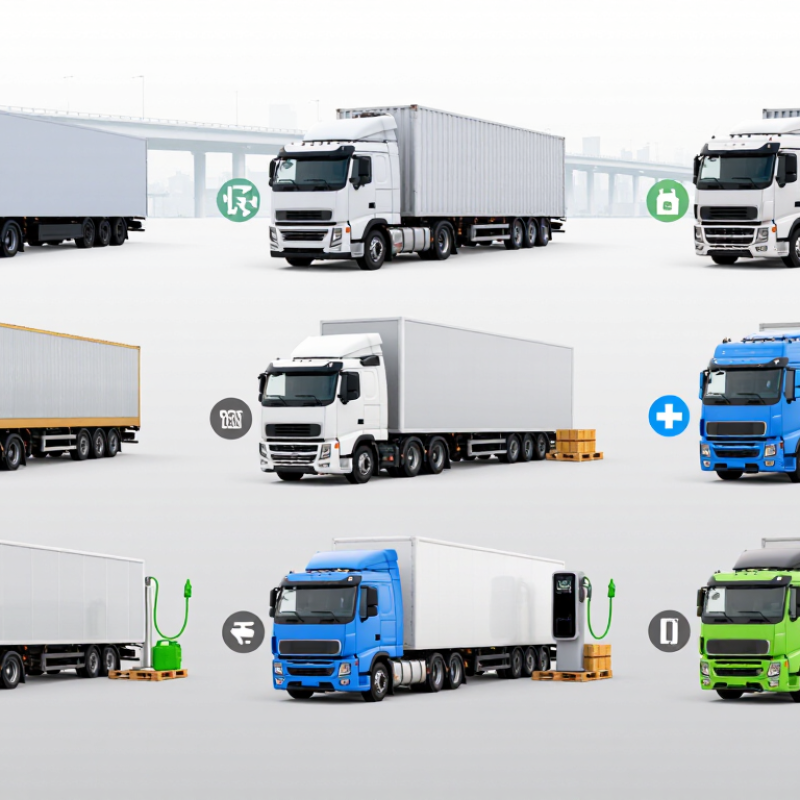
Transport Truck Categories: GVWR Classes 4–8 and Class 8’s 33,001-lb Threshold
Transport truck shopping often starts with GVWR, or gross vehicle weight rating. It is the vehicle’s maximum permitted loaded weight, including the truck, occupants, fuel, and cargo. It does not tell you how much cargo the truck can carry by itself.
In common U.S. classifications, Class 4 covers 14,001–16,000 lb; Class 5, 16,001–19,500 lb; and Class 6, 19,501–26,000 lb. Class 7 runs from 26,001 to 33,000 lb. Class 8 starts at 33,001 lb. That threshold matters, but a higher class does not automatically mean a better fit. Frame size, axle ratings, body equipment, and route conditions all affect real-world suitability. Class labels can make comparisons look simpler than they are.
Tips: Check the certification label and manufacturer’s specifications for the exact truck. Compare GVWR with expected loaded weight, then leave a practical margin. Measure loading-bay height and turning space, too. Small details matter.
A truck near a class boundary deserves extra attention. A heavier body or added equipment can reduce available payload, even when the GVWR stays unchanged. I would not choose by class alone; actual payload figures and the work cycle are more useful. Verify local requirements before purchase, since vehicle rules and definitions can vary by jurisdiction.
10 Best Transport Trucks for Sale in 2026 — Transport Truck Categories: GVWR Classes 4–8 and Class 8’s 33,001-lb Threshold
| Transport Truck Type | GVWR Class | Class GVWR Range | Typical Configuration | Common Transport Work | Key Buying Check |
|---|---|---|---|---|---|
| Light-duty box truck | Class 4 | 14,001–16,000 lb | Cab-and-chassis with an enclosed box body | Local parcel, retail, and small-load delivery | Check body weight, loading access, and remaining payload after the body and equipment are installed. |
| Medium-duty box truck | Class 5 | 16,001–19,500 lb | Enclosed box body, often with a liftgate option | Regional deliveries and heavier palletized goods | Confirm the liftgate’s rated capacity and account for its weight when calculating payload. |
| Urban delivery truck | Class 5 | 16,001–19,500 lb | Low-step or walk-through delivery body | Frequent-stop routes in towns and urban areas | Compare cab entry, door access, turning clearance, and route restrictions. |
| Flatbed work truck | Class 6 | 19,501–26,000 lb | Cab-and-chassis with a flat platform and tie-down points | Building materials, machinery, and loads that are loaded from the side | Verify deck dimensions, axle ratings, securement points, and the weight of any loading equipment. |
| Refrigerated box truck | Class 6 | 19,501–26,000 lb | Insulated box with a refrigeration unit | Temperature-controlled food and other perishable goods | Check the required temperature range, insulation condition, and refrigeration-unit service history. |
| Medium-duty dump truck | Class 6 | 19,501–26,000 lb | Dump body with a hydraulic hoist | Construction, landscaping, and aggregate hauling | Assess body condition, hoist operation, axle limits, and the material’s loaded weight. |
| Heavy-duty straight truck | Class 7 | 26,001–33,000 lb | Single-unit truck with a larger box, flatbed, or specialized body | Regional freight and heavier local transport | Review the truck’s actual axle ratings and body configuration; GVWR alone does not establish legal payload. |
| Class 7 refuse truck | Class 7 | 26,001–33,000 lb | Single-unit chassis with a refuse collection body | Municipal and commercial waste collection | Inspect the collection mechanism, hydraulic system, and maintenance records. |
| Class 8 tractor with semitrailer | Class 8 | 33,001 lb and above | Road tractor configured to pull a compatible semitrailer | Long-distance and high-volume freight transport | Match tractor, trailer, and route requirements; check applicable weight limits, ratings, and licensing rules. |
| Class 8 heavy vocational truck | Class 8 | 33,001 lb and above | Heavy chassis fitted with a dump, mixer, or other vocational body | Heavy construction and specialized transport work | Choose the chassis and body for the intended duty cycle, terrain, load, and equipment requirements. |
Note: GVWR is the manufacturer-rated maximum loaded weight of a vehicle, including the vehicle, occupants, cargo, and equipment; it is not payload capacity. U.S. truck classes are based on GVWR. Class 8 begins at 33,001 lb. Actual specifications and legal operating requirements depend on the vehicle, configuration, and jurisdiction.
FAQS
GVWR is the maximum loaded weight of the truck, occupants, fuel, and cargo. It is not cargo capacity. That distinction matters.
Class 8 starts at 33,001 pounds GVWR. Class 7 covers 26,001–33,000 pounds. Check the truck’s certification label for its exact rating.
Subtract the truck’s actual curb weight from its GVWR. Include the driver, tools, liftgate, and body equipment. I would double-check this calculation.
No. Frame size, axle ratings, equipment, and route conditions affect suitability. A heavier body can reduce available payload. Small details matter.
Compare each truck on the same route and estimated load. Check payload, GCWR, horsepower, gearing, and turning space. Horsepower alone can mislead.
GCWR covers the loaded truck and trailer together. Compare it with their combined expected weight. That matters.
Low-deck urban trucks can suit frequent city stops. Refrigerated trucks need insulation and cooling equipment. Construction tippers often need 6x4 drive for rough access.
Include purchase price, financing, fuel, maintenance, tires, downtime, and resale value. Local repair access can change the total. A spreadsheet may miss things.