China Top 10 Automotive Stamping Tooling Manufacturers
Automotive Stamping Tooling shapes the panels, brackets, and structural parts that define a vehicle’s fit and safety. In China, manufacturers range from focused die shops to large engineering groups serving domestic and international programs. This guide introduces ten companies worth evaluating, not as a universal ranking, but as a practical starting point for buyers. Capabilities matter more than slogans.
A useful supplier review looks closely at engineering depth, die accuracy, press compatibility, and production support. Ask how a team handles springback, complex forming, material changes, and tool trials. Request examples of comparable parts, inspection records, and clear details about project responsibilities. A polished factory tour helps, but real evidence matters more. Shigeo Shingo, a respected manufacturing engineer, is often quoted as saying, “The most dangerous kind of waste is the waste we do not recognize.” That warning fits tooling projects: an overlooked tolerance or unclear change request can become costly rework.
The manufacturers featured here can be compared by their experience, equipment, quality systems, communication, and service after delivery. Look for specifics: measured tryout results, documented revisions, and response plans when a die needs adjustment. A ranking can look neat on paper, yet supplier fit depends on the part, budget, timeline, and required production volume. No shortlist replaces a technical audit. Use these profiles to ask sharper questions and build a more informed shortlist for your next stamping program.
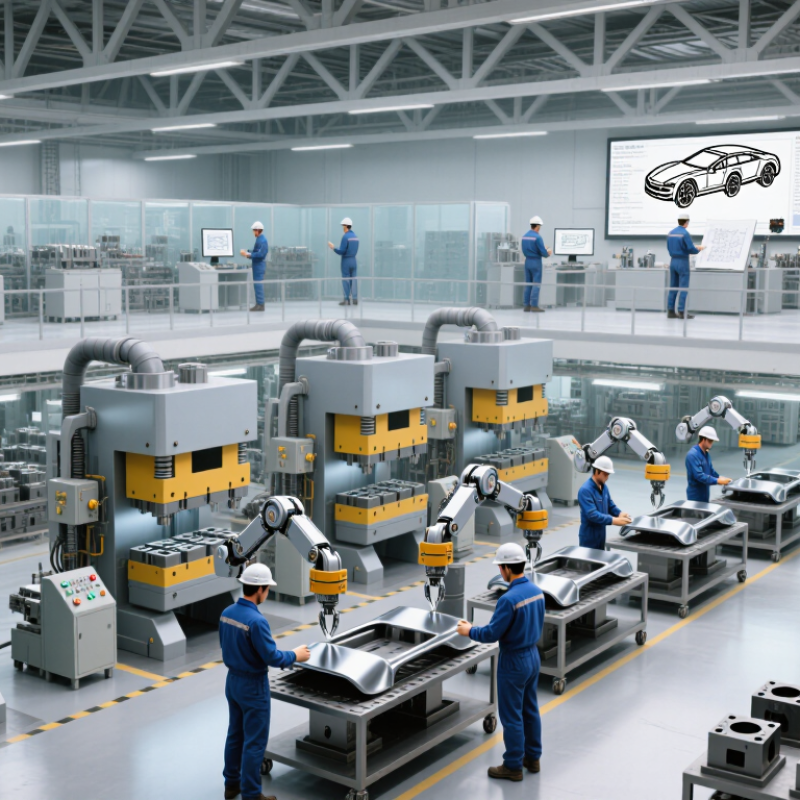
What Automotive Stamping Tooling Includes
Automotive stamping tooling is the equipment and engineering used to cut and shape sheet metal into vehicle parts. Its core is the die: hardened tool-steel sections, punches, cavities, and guides built to produce a specific geometry. A die may blank a flat piece, form a panel, pierce holes, or perform several operations in sequence. Small clearances matter. A fraction of a millimeter can affect burrs, springback, and fit.
A complete tooling package also covers die design, simulation, machining, assembly, and tryout. Progressive dies move a strip through stations; transfer dies move separate blanks between forming stages. Presses, coil feeders, sensors, and inspection gauges support the process, though they are not all dies themselves. Engineers check draw depth, material flow, lubrication, and scrap handling. Real parts can still behave differently from simulations.
Demand for repeatable tooling is substantial. OICA reported 93.5 million motor vehicles produced worldwide in 2023. The IEA’s Global EV Outlook 2024 recorded nearly 14 million electric-car sales that year, around 18% of total car sales. These figures describe vehicle output, not tooling demand directly, but they show the scale and changing mix that suppliers must serve. New materials and tighter panel tolerances add pressure. A clean CAD model is not proof of a stable stamping process. The first coil often reveals what the model missed.
How China’s Automotive Tooling Industry Is Structured
China Top 10 Automotive Stamping Tooling Manufacturers
How China’s Automotive Tooling Industry Is Structured
China’s automotive tooling industry works through a connected chain, not one uniform group of suppliers. Vehicle makers set production and quality requirements. Parts suppliers translate those needs into stamping processes, while tooling companies design and build dies for specific components. Material providers, simulation teams, machining shops, and tryout facilities support the work. Some tooling manufacturers manage the full process; others focus on die design, machining, or production support. That matters.
The structure varies by project. A door panel die may require large presses and careful control of springback, while a smaller bracket needs different tooling and inspection methods. Suppliers often work across several stages, but capability should be checked rather than assumed. Review sample parts, dimensional reports, die maintenance plans, and the supplier’s experience with similar materials and production volumes. A polished presentation is useful, but it cannot replace a practical production trial. Fit varies.
Tips: Ask who owns design changes, who conducts die tryout, and how defects are tracked. Confirm press size, delivery scope, and support after installation. Keep specifications in writing. Small gaps can become costly delays.
China’s Top 10 Automotive Stamping Tooling Manufacturers
China Top 10 Automotive Stamping Tooling Manufacturers
China’s Top 10 Automotive Stamping Tooling Manufacturers
China’s stamping-tooling sector serves an enormous vehicle market. The China Association of Automobile Manufacturers reported 30.16 million vehicles produced in 2023. OICA recorded 93.5 million vehicles produced worldwide that year. These figures help explain demand for dies used in body panels, doors, brackets, and structural parts. They do not, by themselves, measure tooling quality.
When assessing China’s top ten manufacturers, buyers should look beyond production capacity. A useful review includes die-design experience, machining accuracy, tryout facilities, and support after delivery. Ask how a supplier controls springback, surface defects, and dimensional variation across repeated press runs. A well-made die should fit the material, press line, and required cycle time. Small details matter. A poorly managed handoff can create costly delays.
The CAAM and OICA figures describe vehicle output, not stamping-tooling performance, so treat them as market context rather than proof of supplier capability. Request sample inspection records, trial-part measurements, and a realistic maintenance plan. Also check whether engineering teams can respond quickly when a panel changes. No supplier is flawless. That point deserves attention: a polished presentation cannot replace transparent process data and practical production trials.
How to Compare Manufacturers for Automotive Projects
Comparing automotive stamping tooling manufacturers in China takes more than reviewing a quotation. Start with the part geometry, material grade, annual volume, and required press conditions. Ask each manufacturer to explain how its tooling design handles draw depth, springback, trimming, and forming sequence. A useful answer includes drawings, assumptions, and measurable checks—not just a promise of fast delivery. Details matter. Review machining capacity, tryout facilities, inspection equipment, and the experience of the engineers who will support the project. Request sample inspection records and a clear plan for correcting defects found during trials.
Compare suppliers using the same technical brief, so differences in price and lead time are easier to interpret. Ask what is included in the quote: design reviews, tryout parts, spare inserts, shipping protection, and production support. Check how the team records revisions and responds when a tool misses tolerance. A video call from the toolroom can reveal practical details, such as how parts are measured or how die surfaces are maintained. Still, one polished presentation proves little. I would also speak with a recent customer, where possible, and verify the scope of that customer’s project. No scorecard captures every shop-floor surprise; leave room for a technical discussion before making a decision.