
Contract Manufacturing for Injection Molded Plastic Products in North America
(800) 824.0607
Choosing a Wax Flaking Conveyor for global production requires more than comparing prices and motor sizes. Wax behaves differently when temperature, formulation, particle size, and storage conditions change. A conveyor that performs well in a cool European plant may struggle in a humid tropical facility. Small flakes can bridge inside hoppers, melt near warm bearings, or scatter beneath transfer points.
Andrew W. Jenike, a pioneer in bulk-solids handling, famously said, “The flow of bulk solids is a science, not an art.” His warning remains practical. Engineers should examine wax flowability, bulk density, discharge temperature, cleaning routines, and required throughput before selecting equipment. The conveyor frame, belt material, drive system, guarding, and control panel also need careful evaluation. Global production adds documentation, spare-parts availability, operator training, and regional electrical requirements.
Begin with the material. Measure it.
A reliable selection process connects laboratory data with plant experience. Ask whether the Wax Flaking Conveyor can handle continuous operation without damaging flakes or creating excessive dust. Check access doors, inspection points, scraper design, and sanitation needs around the belt. A few centimeters of buildup can become a serious production delay. Still, no specification sheet predicts every factory condition. Initial assumptions may be wrong. Trial runs, site observations, and feedback from maintenance teams can expose weaknesses early. The best choice is not always the fastest conveyor. It is the system that remains stable, serviceable, and safe across changing production environments.
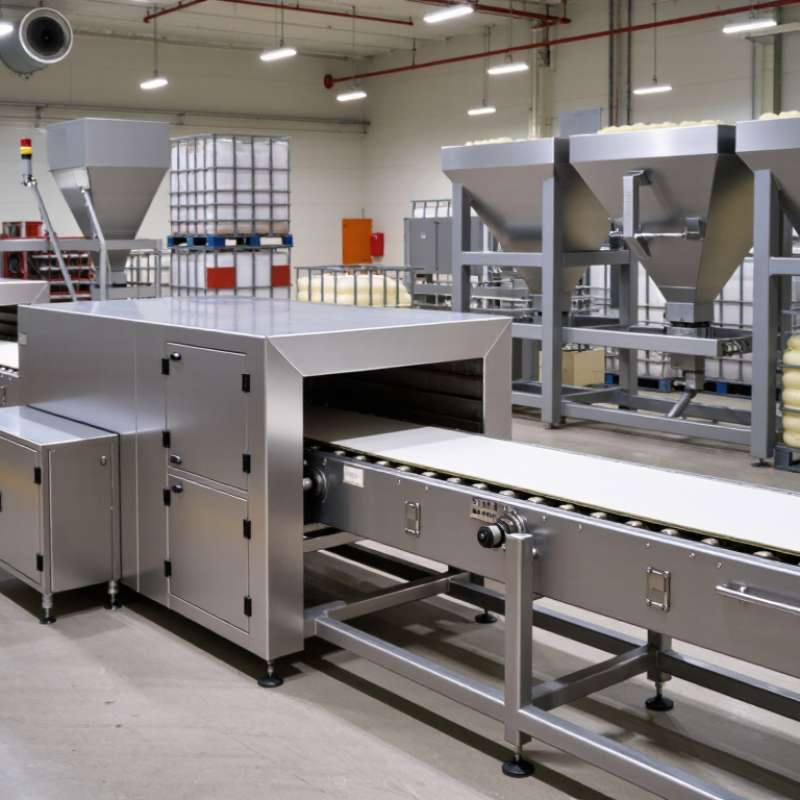
A wax flaking conveyor moves solidified wax from cooling equipment to packing or storage. Its design depends on wax grade, throughput, flake thickness, and cleaning requirements. Common types include belt conveyors, vibratory conveyors, and enclosed screw conveyors. Belt systems suit gentle, continuous transfer. Vibratory models handle brittle flakes with less sticking. Screw conveyors need careful clearance control. They can generate heat and compact soft wax.
The operating principle is simple, but tuning is not. Molten wax enters a cooled drum, belt, or flaking surface. A scraper removes the solid layer at a controlled thickness. The conveyor then carries flakes through synchronized speed zones. Cooling airflow prevents surface softening. An enclosed transfer path also limits dust and foreign material. The U.S. Department of Energy reports that motor-driven systems use about 70% of industrial electricity. Efficient motors and variable-frequency drives therefore matter. The International Energy Agency reports that industry consumes roughly 37% of global final energy. Small conveyor losses can become expensive at scale.
Tips: Measure wax temperature at discharge. Do not rely on one reading. Compare flakes after one hour of running. Watch for buildup near transfer points. A slightly slower belt may reduce breakage, but this assumption needs testing. Select stainless contact surfaces when sanitation and cleaning frequency are critical. Keep scraper pressure adjustable. Excess pressure may create fines, while weak pressure leaves wax on the cooling surface. Data from the U.S. DOE Motor Systems Market Assessment supports checking motor load, standby power, and drive efficiency before final selection.
Choosing a wax flaking conveyor starts with the wax, not the conveyor catalogue. Measure congealing point using ASTM D938 and penetration using ASTM D1321. These tests reveal whether flakes will remain brittle, soften, or compress during transfer. A wax with a narrow softening range may flow well at room temperature but bridge near warm equipment. Record bulk density, flake size, moisture, and temperature at the discharge point. Small differences matter.
Production capacity needs a realistic calculation. Do not size from the nominal flaker output alone. Add start-stop losses, cleaning time, rejected flakes, and seasonal temperature changes. CEMA conveyor guidance recommends checking loading, belt speed, and surcharge angle together, rather than choosing speed first. A useful starting point is a 15–20% capacity margin, although this should be validated through trials. The 2024 MarketsandMarkets conveyor report projects the global conveyor systems market to grow from about USD 9.2 billion in 2023 to USD 12.5 billion by 2028, reflecting stronger demand for automated material handling.
Conveying requirements also include drop height, transfer points, dust control, sanitation, and access for inspection. Shorter drops reduce broken flakes. Enclosed sections protect product quality. But excessive enclosure can trap heat and create unexpected sticking. I would test a full-size transfer point with actual wax, not substitute pellets. That step is often skipped. It should not be. A practical trial should run at minimum, normal, and peak rates, while recording motor load, belt tracking, flake breakage, and blockages. Data from one cool morning may mislead.
| Assessment Dimension | Typical Wax Condition or Requirement | Key Design Data | Recommended Conveyor Configuration | Selection Rationale |
|---|---|---|---|---|
| Fully Refined Paraffin Wax | Solid flakes; melting point commonly 48–68 °C; low surface moisture after cooling | Bulk density: approximately 500–650 kg/m³ Flake thickness: 0.5–2.5 mm | Enclosed belt conveyor or food-grade modular belt conveyor | Gentle conveying helps preserve flake shape and limits dust generation during continuous production. |
| Microcrystalline Wax | More cohesive and elastic than paraffin wax; melting point commonly 60–90 °C | Bulk density: approximately 550–750 kg/m³ Potential for buildup at elevated temperatures | Low-speed belt conveyor with easy-access cleaning sections | Lower belt speed and smooth contact surfaces reduce sticking, smearing, and material accumulation. |
| Synthetic or Fischer–Tropsch Wax | Hard flakes or granules; melting point commonly 80–110 °C; comparatively high hardness | Bulk density: approximately 500–700 kg/m³ Higher impact load during transfer | Heavy-duty belt conveyor with reinforced transfer points | Impact-resistant construction helps manage hard particles and repeated loading from upstream flakers. |
| Oxidized Wax | Flakes or pellets; may contain a small amount of residual surface moisture or acidic components | Typical operating temperature: below the wax softening point Corrosion resistance may be required | Stainless-steel conveyor with sealed bearings and covered discharge | Corrosion-resistant contact parts and enclosed conveying reduce contamination and protect the product. |
| Product Temperature | Conveyor feed temperature should remain sufficiently below the wax softening or melting point | Recommended design margin: commonly 10–20 °C below the softening point, subject to testing | Heat-resistant belt, temperature monitoring, and controlled ventilation | Maintaining a safe temperature margin reduces sticking, deformation, and belt fouling. |
| Small Production Line | Intermittent or batch operation with moderate product flow | Approximate capacity: 0.5–2 t/h Typical conveying distance: up to 15 m | Compact flat belt conveyor with variable-speed drive | Provides flexible speed control and straightforward access for cleaning and product changeover. |
| Medium Production Line | Continuous operation with regular flake discharge from one or more cooling units | Approximate capacity: 2–8 t/h Typical conveying distance: 15–40 m | Enclosed troughed or cleated belt conveyor with centralized tensioning | Supports stable flow over longer distances while reducing material loss and airborne wax dust. |
| Large Global Production Line | High-throughput operation with multiple shifts and limited planned downtime | Approximate capacity: 8–20 t/h or higher Typical conveying distance: 40–100 m | Modular conveyor system with multiple drives, inspection points, and automated controls | Redundant monitoring and modular maintenance features improve uptime and simplify line expansion. |
| Inclined Conveying | Vertical elevation is required between the flaker, buffer hopper, packaging line, or storage area | Typical belt inclination: up to 15–20° for smooth flakes; steeper angles require cleats or pocket belts | Cleated belt or enclosed bucket-style conveyor | Cleats or pockets help prevent rollback and control the product layer during elevation changes. |
| Long-Distance Conveying | Material must travel through several processing or packaging zones | Recommended features: intermediate supports, belt tracking, emergency stops, and transfer chutes | Covered belt conveyor with engineered transfer stations | Proper transfer design limits product breakage, spillage, dust, and uneven loading across the belt. |
| Flake Integrity | Finished flakes must retain their shape and avoid excessive fines | Target belt speed commonly: 0.15–0.50 m/s, depending on capacity and loading width | Wide, low-speed belt with soft loading chutes | Lower speed and reduced drop height help minimize impact, abrasion, and generation of fine particles. |
| Dust and Containment | Fine wax particles may be produced during flaking, transfer, or packaging | Use enclosed covers, sealed transfer points, local extraction, and accessible dust-cleaning areas | Fully enclosed conveyor with dust extraction connections | Containment improves workplace cleanliness and helps reduce the accumulation of combustible dust. |
| Hygiene and Product Purity | Wax is used for pharmaceutical, cosmetic, food-contact, or high-purity applications | Contact surfaces should be smooth, non-porous, corrosion-resistant, and easy to inspect | Stainless-steel frame and belt components with tool-free access where practical | Cleanable construction reduces cross-contamination risks and supports documented sanitation procedures. |
| Climate and Export Conditions | Equipment may operate in humid, hot, cold, coastal, or dusty regions | Specify motor enclosure, corrosion protection, ambient temperature range, and electrical standard | Climate-adapted drive system with sealed electrical enclosures | Regional adaptation improves reliability across different humidity, temperature, and power conditions. |
| Cleaning and Changeover | Multiple wax grades or colors are processed on the same line | Consider belt access, removable scrapers, drain-free dry cleaning, and quick-release guards | Open-access or hygienic conveyor with quick-clean components | Shorter changeover times reduce production losses and lower the chance of product carryover. |
| Control and Safety | Continuous operation requires controlled material flow and rapid fault response | Include variable-frequency drive, belt-misalignment switch, pull-cord emergency stop, and overload protection | PLC-integrated conveyor with level sensors and interlocks | Automated control helps synchronize the flaker, conveyor, hopper, and packaging equipment. |
Choosing a wax flaking conveyor starts with the material, not the catalog speed. In production trials, stainless steel handles heat, cleaning, and moisture with fewer corrosion concerns. Carbon steel costs less, but condensation can expose weak paint and hidden rust. For dry rooms, it may still be practical. Polymer belts reduce sticking and noise, yet they can soften near hot wax. Check the belt’s working temperature, tensile strength, and release behavior. Small details matter.
Configuration controls output stability. A wide belt suits high throughput, while a narrow belt simplifies cleaning and reduces cooling demand. Perforated surfaces improve airflow beneath flakes, but they may allow thin wax pieces to lodge below. Inclined conveyors save floor space, though steep angles can cause sliding and uneven flake thickness. Scrapers, side guides, and variable-speed drives should match the wax formula. Do not size only for peak capacity. Leave room for start-up surges and seasonal production changes.
Cooling can use ambient air, forced air, chilled air, or water-cooled surfaces. Ambient air is simple, but summer humidity may slow solidification. Forced air cools faster and offers better control, although fans add noise and maintenance points. Chilled systems provide stable results, but energy use rises quickly. Direct water contact is usually unsuitable where moisture affects product quality. Validate cooling with temperature logs across the belt, not one sensor. I would revisit the design after a full shift. Short tests can hide buildup, vibration, and cleaning delays. For global sites, specify adjustable controls and document cleaning procedures for local operators.
How to Choose a Wax Flaking Conveyor for Global Production?
Evaluate Hygiene, Safety, Maintenance, and Energy Efficiency
A reliable wax flaking conveyor should match the material, room conditions, and cleaning routine. In production trials, check whether flakes collect around transfer points, rollers, and return belts. These hidden areas can retain dust and residue. Use food-contact-compatible surfaces when required, and confirm the cleaning method with documented hygiene procedures. Smooth welds, sealed bearings, and accessible frames reduce contamination risks.
Safety needs practical testing, not only paperwork. Inspect emergency stops, guarding, belt tracking, and operator access during normal shifts. A conveyor should prevent fingers from reaching nip points. It should also remain stable when wax loads change. Ask for risk assessments, operating instructions, and traceable component records. Requirements differ across markets, so local compliance checks remain essential.
Maintenance affects both output and energy use. Choose modular belts, visible inspection points, and replaceable wear parts. A maintenance team should reach key components without dismantling half the line. I once underestimated cleaning time during a conveyor evaluation. The machine performed well, but downtime became expensive. Measure motor power under full and partial loads, not only the advertised rating. Variable-speed control can reduce energy waste, though poor settings may create uneven flaking. Record temperature, noise, belt tension, and cleaning hours during a realistic trial. Performance data often reveals weaknesses that brochures cannot.
A global conveyor supplier must offer more than a standard machine. Installation experience matters when wax dust, temperature changes, and limited floor space affect performance. During factory trials, inspect belt tracking, scraper access, and emergency-stop visibility. Small details matter.
The International Labour Organization reported nearly 3 million work-related deaths annually in its 2023 safety report. That figure makes guarding, lockout points, and operator training essential design requirements. Ask suppliers for risk assessments, electrical documentation, and country-specific conformity support. Requirements can differ across regions. Do not accept vague compliance claims.
The World Bank’s 2023 Logistics Performance Index highlights how customs quality, shipment reliability, and infrastructure affect international delivery. Choose a supplier that provides export packing, installation drawings, spare-parts planning, and remote diagnostics. Request response-time targets in writing. A local service partner can reduce downtime, but only if technicians receive proper training. Language support also deserves attention.
Wax can build around transfer points.
Ask for documented tests using your actual wax grade, flake size, and production rate. One overlooked issue is cleaning access; engineers often focus on throughput and underestimate routine maintenance. That is a useful warning. A supplier with commissioning records, traceable material certificates, and practical operator training offers stronger evidence of global readiness than polished brochures.