
Contract Manufacturing for Injection Molded Plastic Products in North America
(800) 824.0607
Choosing the right Can Body Making Machine is not simply a question of maximum speed. It is a decision about product quality, line stability, energy use, and future production needs. A machine running at 800 cans per minute may look impressive. However, frequent stoppages, high scrap rates, or difficult tooling changes can quietly reduce its real output. The Can Manufacturers Institute reported a 43% U.S. beverage can recycling rate in 2023, reminding manufacturers that material efficiency and responsible production remain important industry concerns. Smithers’ report, The Future of Metal Packaging to 2028, also highlights continued demand for lightweight, recyclable metal packaging.
Robert Budway, President of the Can Manufacturers Institute, has stated, “The can is a permanent material.” This principle should influence equipment selection. A reliable Can Body Making Machine should support accurate forming, consistent wall thickness, clean trimming, and stable seam-related performance. It should also provide practical access to sensors, dies, lubrication systems, and replacement parts. Small details matter. A misaligned tool can create dents, cracks, or excessive metal waste within minutes.
Experience suggests that buyers should compare complete production performance, not brochure speed. Ask for verified output, average scrap, changeover time, noise levels, and maintenance records. Energy consumption deserves attention too. I would not choose the fastest machine automatically. That assumption can be costly. A slower line with stronger uptime may deliver more saleable cans each day. This guide examines the technical, commercial, and service factors that help manufacturers make a more reliable choice.
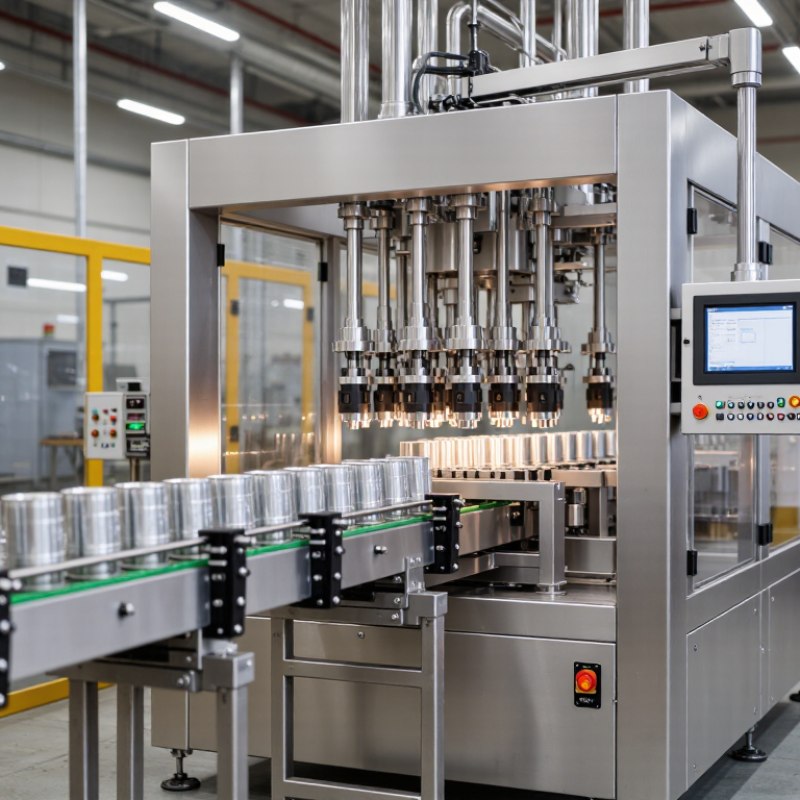
Choosing the best can body making machine begins with understanding the container structure. A 2-piece D&I machine forms the body and base from one metal blank. Drawing shapes the blank, while ironing stretches and thins the wall. The result has no side seam, consistent dimensions, and strong material efficiency. It suits high-volume production, especially when stable can sizes justify specialized tooling. However, tooling alignment matters greatly. Small errors can cause wrinkles, thin spots, or uneven flanges. Sometimes, the material is blamed first. The machine setup may be the real cause.
A 3-piece welded can machine forms a separate body sheet, then welds the side seam before attaching the ends. This design supports flexible dimensions and can simplify changeovers. It may suit varied production schedules or moderate volumes. The welded seam needs careful control, including electrical settings, pressure, cooling, and inspection. Poor alignment can create leaks or visible seam defects. Compared with D&I equipment, it may require less forming complexity, but seam quality becomes a central responsibility.
Tips: Match the machine with your target volume, metal type, diameter range, and maintenance skills. Request sample cans before purchasing. Check wall thickness, flange accuracy, seam strength, noise, and changeover time. Ask operators to test the controls. A clean demonstration can hide difficult daily adjustments. Include spare tooling and inspection equipment in the budget.
For three-piece can production, machine speed must match real demand, not brochure claims. A 60 CPM line produces 3,600 bodies per hour before downtime. At 400 CPM, output reaches 24,000 bodies per hour. That difference changes staffing, inspection, material handling, and maintenance requirements.
PMMI’s 2024 State of the Industry report highlights labor pressure and productivity as major packaging concerns. Therefore, a faster line may reduce unit labor costs, but only when feeding and quality systems keep pace.
Look beyond the maximum CPM. Ask for stable speed during long production runs. A 300 CPM body line can theoretically make 18,000 bodies hourly. With an 80% operating efficiency, practical output falls to about 14,400 bodies. That is still substantial.
The OEE calculation should include changeovers, jams, tooling adjustments, and rejected bodies. Industry research from The Freedonia Group’s World Metal Cans report also links demand with food, beverage, and industrial applications, where formats and volumes vary widely.
A single speed setting rarely fits every order.
I would compare 60, 120, 250, and 400 CPM scenarios using actual order data. Faster is not always better. A line running at 180 CPM with fewer stoppages may outperform a 400 CPM line struggling with thin gauge material.
Request verified trial results, energy figures, scrap rates, and service response times. One overlooked detail can become an expensive lesson.
How to Choose the Best Can Body Making Machine?
Check Material Capability: Support Steel and Aluminum from 0.10–0.40 mm
Material capability should be checked before speed, automation, or quoted output. A suitable can body making machine must process steel and aluminum from 0.10 to 0.40 mm. This range covers demanding thickness changes. It also exposes weak tooling and unstable feeding. Confirm the machine’s tested range, not only its brochure specification.
The World Steel Association reported 1,882.6 million tonnes of crude steel production in 2024. The International Aluminium Institute recorded about 72.8 million tonnes of primary aluminum production in 2023. These figures show strong global material availability, but supply consistency still varies by coil grade. Steel and aluminum behave differently during forming. Aluminum may require careful control of lubrication, punch clearance, and work hardening. Steel often demands higher forming force and precise die alignment.
Request trial production with your actual coils. Measure wall thickness, flange height, wrinkles, split rates, and surface marks. Test at 0.10 mm and 0.40 mm, not only at the middle gauge. That is where problems appear. Ask for tensile strength, yield strength, hardness, coating, and elongation limits. A machine may accept both metals technically, yet perform poorly after several hours. I would also inspect changeover time and spare tooling costs. A wider material range is useful, but it can reduce efficiency. That trade-off is easy to overlook.
How to Choose the Best Can Body Making Machine?
Precision deserves close attention when selecting a can body making machine. A seam alignment target of approximately 0.1 mm can reduce visible defects and improve production consistency. However, the number alone is not enough. Ask how the manufacturer measures it, under which speed, material thickness, and operating temperature.
During a machine trial, inspect several consecutive can bodies, not just one sample. Use a calibrated optical gauge or a suitable dimensional inspection system to check the seam position. Watch for drift after continuous running. A seam may look accurate at low speed, then shift slightly when vibration, heat, or coil tension changes. Small details matter.
Check the forming dies, guide rails, sensors, and adjustment controls. They should support repeatable alignment rather than rely on frequent manual correction. In practical evaluations, record results from startup, steady production, and restart conditions. This exposes weaknesses.
Do not trust a perfect demonstration.
Ask for maintenance records and tolerance data from comparable materials. A rigid frame helps, but it cannot fix poor setup discipline. I have found that operators often correct alignment too late, after scrap has already accumulated. Clear adjustment marks and accessible inspection points can prevent that problem. Still, even a well-designed machine needs regular calibration. The 0.1 mm goal is useful, but real reliability comes from holding it throughout the production cycle.
Evaluate precision by checking whether seam alignment deviation remains within approximately 0.1 mm during production.
The chart compares representative seam alignment deviations at different production speeds with the 0.1 mm evaluation limit. A suitable machine should maintain stable alignment as speed increases, with measurements consistently below the limit.
The purchase price is only the opening line. Build a five-year cost model covering electricity, changeovers, scrap, maintenance, labor, and downtime. The U.S. Department of Energy reports that motor-driven systems consume about 23% of U.S. electricity. Efficient drives and motors can therefore reduce a can line’s hidden operating cost. Measure actual kilowatt-hours per 1,000 cans, not only the supplier’s laboratory figure.
Changeovers deserve close attention. Record minutes lost per tooling change, rejected cans during ramp-up, and operator hours required. A machine saving 20 minutes per shift may recover more value than a small energy improvement. Scrap also needs a realistic price. Include metal, coating, labor, disposal, and lost production time. The true loss is rarely shown on the scrap invoice.
Use ISO 22400 performance indicators to calculate availability, performance, and quality. Then estimate OEE by month across five years, including planned maintenance and seasonal demand. A spreadsheet can still lie. Conservative assumptions are safer than impressive ones. In one assessment, an optimistic 92% OEE hid frequent short stops and unstable feeding. Recheck the model with production records, not promises. Examine the weakest month. That is where the machine earns its decision.