How to Choose the Best Hot Stamping Plate in 2026?
Choosing the best Hot Stamping Plate in 2026 is not just a matter of comparing materials or prices. The right plate must suit your press, substrate, foil, artwork, and production volume. A fine-line logo on coated paper needs different support from a broad, solid area on textured stock. Small details matter. Plate thickness, engraving depth, heat distribution, and mounting can all affect image sharpness and repeatability. A plate that performs beautifully on one press may produce uneven coverage on another.
Manufacturing quality expert W. Edwards Deming is widely associated with the principle, “Quality is everyone’s responsibility.” That idea applies here: reliable results depend on the plate, machine setup, operator checks, and consistent materials working together. Before choosing, compare brass, magnesium, and copper options against your expected run length, design detail, and turnaround needs. Ask suppliers for sample impressions or practical guidance, not just a specification sheet. Then test the plate under your actual production conditions. It may take an extra press trial. That is worth acknowledging, because a neat-looking specification cannot predict every shop-floor variable. This guide explains what to check, which trade-offs deserve attention, and how to choose a Hot Stamping Plate that fits your work—not merely the catalog description.
What Is a Hot Stamping Plate and How Does It Work?
How to Choose the Best Hot Stamping Plate in 2026?
What Is a Hot Stamping Plate and How Does It Work?
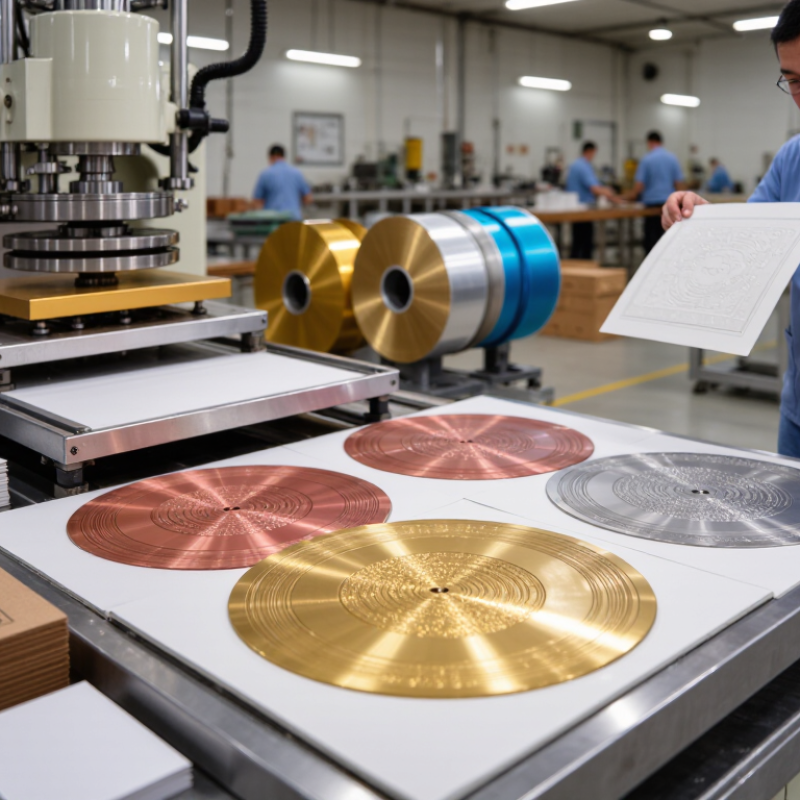
A hot stamping plate is a precision-made die that carries a design in raised or recessed form. During stamping, the plate is heated and pressed against foil positioned over a material such as paper, coated board, or suitable plastic. Heat and pressure activate the foil’s release system, transferring its decorative layer to the surface. That is the transfer.
The plate is mounted in a press, aligned with the artwork, and held against the material for a controlled dwell time. When the carrier film lifts away, the stamped image remains. Plate material and engraving depth can affect heat flow, detail, and durability. The right choice depends on the design, substrate, and production volume. In practice, operators check temperature, pressure, and alignment with test impressions. A slight shift can blur fine lettering or leave pale patches. Results also vary with foil and surface texture. A smooth sheet may stamp cleanly, while a rough or heavily coated surface may need adjustment. There is no universal setting. Even experienced operators may need another test, and that extra pass can reveal what needs changing.
How to Choose the Best Hot Stamping Plate in 2026? — What Is a Hot Stamping Plate and How Does It Work? | Plate material | Heat and detail characteristics | Typical durability | Common applications | Trade-offs to consider |
| Magnesium | Heats relatively quickly and can reproduce fine artwork when correctly engraved and set up. | Generally suited to short and medium production runs; life depends on the alloy, design, substrate, and press conditions. | Paper, card, labels, and other jobs where a lightweight, readily engraved plate is useful. | Softer than brass or steel, so it may wear or become damaged sooner in demanding, high-volume work. |
| Brass | Conducts heat effectively and is commonly used for detailed engraved designs and consistent impressions. | Typically more wear-resistant than magnesium and suitable for longer runs, subject to operating conditions. | Packaging, book covers, stationery, and repeat jobs requiring fine detail or embossing. | Usually costs more and takes longer to machine than softer plate materials. |
| Copper | High thermal conductivity supports rapid, even heat transfer; engraved detail depends on plate quality and tooling. | Moderate; generally softer and less wear-resistant than steel, with performance varying by alloy and use. | Specialized applications where heat transfer is a priority and the material is compatible with the job. | Less commonly selected than magnesium or brass for many general hot-stamping jobs; confirm suitability with the plate supplier. |
| Steel | Can provide stable, repeatable impressions when properly manufactured and matched to the press. | High wear resistance; often considered for demanding or high-volume production. | Long production runs and applications where resistance to wear is especially important. | Harder to machine and may involve higher tooling cost and lead time than softer materials. |
| Selection factor | What to check |
| Production volume | Estimate the number of impressions and choose a material with suitable wear resistance for the expected run length. |
| Artwork and detail | Consider line width, small text, solid areas, and whether the job includes embossing. The plate engraving and setup matter as well as the material. |
| Substrate and foil | Confirm compatibility with the stock and foil. Recommended temperature, pressure, and dwell time vary by foil, substrate, plate, and press. |
| Press and mounting | Check plate dimensions, thickness, mounting method, heating arrangement, and the press’s operating limits before ordering. |
| Cost and lead time | Compare the total tooling cost and delivery time with the expected run length, repeatability requirements, and potential need for replacement. |
What it is and how it works: A hot stamping plate, also called a stamping die, is an engraved or raised tool that transfers a design. The press heats the plate and applies pressure for a controlled dwell time, bringing the plate, foil, and substrate together. Heat and pressure activate the foil’s release and adhesive layers so the design bonds to the substrate. Results depend on the plate, foil, substrate, press setup, and operating conditions.
Material characteristics are general comparisons, not guaranteed performance ratings. Confirm specifications and recommended settings for the particular plate, foil, substrate, and press.
Which Plate Material Fits Your Substrate and Production Needs?
How to Choose the Best Hot Stamping Plate in 2026?
Which Plate Material Fits Your Substrate and Production Needs?
Start with the material receiving the foil. Paperboard, coated stock, and plastic films respond differently to heat and pressure. A magnesium plate can suit short runs and straightforward artwork because it is relatively quick to produce. It may be less suitable when repeated production puts heavy wear on fine details.
Brass is often chosen for longer runs, deeper impressions, or work that needs consistent heat transfer. It is harder and more durable than magnesium, though production can take longer. Copper can reproduce fine detail well, but the right choice depends on the design and expected run length. There is no universal winner.
Think about the substrate’s surface, too. Rough or thick stock may need a deeper engraving and careful pressure adjustment. Thin films can distort if heat or dwell time is excessive. Run a test. Check foil coverage, edge sharpness, and whether the material dents or curls. In practice, I would compare samples using the actual substrate and press settings; a plate that performs well on a smooth sheet may disappoint on textured stock. Details matter. Keep records of plate material, temperature, pressure, and run size, then revisit them when the substrate changes.
How Should You Specify Plate Size, Thickness, and Engraving?
Specify the plate from the press outward, not from the artwork alone. Measure the usable stamping area, gripper edge, registration tolerance, and clearance from nearby folds or cut lines. Add only the working margin your press requires; an oversized plate can waste heat and foil. Thickness must match the machine’s chase or mounting system. Confirm the actual plate-and-backing stack with a caliper, since even a small mismatch can cause uneven pressure. Check the press manual before ordering.
Engraving should reflect the stock and the smallest detail that must print cleanly. Fine lines, tiny reversed type, and broad solid areas behave differently under heat and pressure. Ask the engraver for a proof or test plate, then inspect a stamped sample under normal lighting. Leave enough shoulder around delicate features, but avoid excessive depth that can crush paper fibers. There is no universal “best” depth. It depends on the substrate, foil, and press. Smithers’ The Future of Global Packaging to 2028 valued the global packaging market at about $1.17 trillion in 2023, underscoring the scale of quality expectations; it does not prescribe plate dimensions. Treat that figure as context, not a tooling rule. A test impression is still essential. One overlooked detail: record the final plate thickness and artwork revision together, or repeat jobs may drift.
How to Choose a Hot Stamping Plate in 2026
Plate footprint examples based on artwork dimensions plus 10 mm clearance on each side. Confirm the final size against your press, die holder, and clamping requirements.
Specification tip: State the plate’s finished width and height, material, and thickness. Select thickness to suit the press and mounting system; specify engraving depth and relief with the plate maker based on the substrate, artwork detail, and stamping process. The chart shows sizing examples, not universal standards.
How Can You Assess Plate Quality, Durability, and Compatibility?
Assess the plate as a heated tool, not merely an engraved image. Check its flatness, engraving depth, clean edges, and uniform contact across the design. Even a small high spot can leave faint foil transfer on a broad solid area. ASTM E18 describes a repeatable Rockwell hardness test, useful for comparing plate materials and batches. Hardness alone is not enough. A harder surface may resist wear, but it cannot compensate for poor engraving or uneven heating.
Thermal response matters. The ASM Handbook, Volume 2, lists typical room-temperature conductivity near 400 W/m·K for copper and 230 W/m·K for aluminum; alloy and operating conditions change these figures. Use them as reference points, not guarantees.
Confirm that the plate matches the press’s heating system, mounting method, working temperature, foil, and substrate. Run a short trial on the actual stock, then inspect fine lines and solid areas under consistent light. Small details matter. A test on one paper stock may not predict results on coated board, and that limitation is easy to overlook. Keep records of temperature, dwell time, pressure, and repeat impressions to spot drift before production.
How Do You Compare Suppliers and Validate a Plate Before Purchase?
Hot stamping plates perform differently under heat, pressure, and repeated cycles. Compare suppliers using the same written specification, not broad claims. Ask about plate alloy, thickness tolerance, engraving depth, surface finish, and flatness. Request recent inspection records and a sample report from a comparable job. A fast quote means little if tolerances are unclear. Check whether the supplier can explain how each figure is measured.
Before ordering, send a small design file and request a sample plate or test coupon. Inspect fine lines with a loupe, then run it on your own press settings. Record temperature, dwell time, pressure, foil type, and substrate. Look for clean edges, even transfer, and stable registration across several impressions. A plate that works once may still fail after warming. No paper test can fully reproduce your production setup.
Ask how the supplier handles revisions, defects, and repeat orders. Confirm that the approved drawing, material, and batch details will travel with the plate. Keep one proof impression beside the purchase record. It helps expose differences later, though it will not explain every press variation. If a supplier resists a simple verification step, treat that as useful information, not a minor inconvenience.