How to Choose the Best Maize Flour Mill Machine?
Choosing a Maize Flour Mill Machine is not just a matter of comparing motor power or advertised output. The right choice depends on the grain, the flour texture customers expect, and the hours the mill will run each day. A machine beside a busy grain store faces different demands from one serving a small bakery. Details matter: stone or roller milling, screen size, cleaning access, spare-part availability, and the space needed for safe maintenance.
For transparency, the expert voice below is illustrative, not a verified quotation from a named industry professional. Milling engineer Daniel Reed’s practical rule is: “Choose for the maize you process and the flour you need, not the capacity printed on a brochure.” Check that claim against real operating data. Ask suppliers for throughput at your target fineness, power consumption, and examples from comparable installations. A polished demonstration is useful, but it cannot reveal every maintenance issue.
Look closely. A poorly matched machine may produce uneven flour, waste grain, or sit idle while parts are sourced. Yet higher capacity is not always better; that assumption deserves a second look. This guide explains how to compare milling systems, assess production needs, and evaluate support before buying. The aim is a reliable fit, not the biggest machine in the catalog.
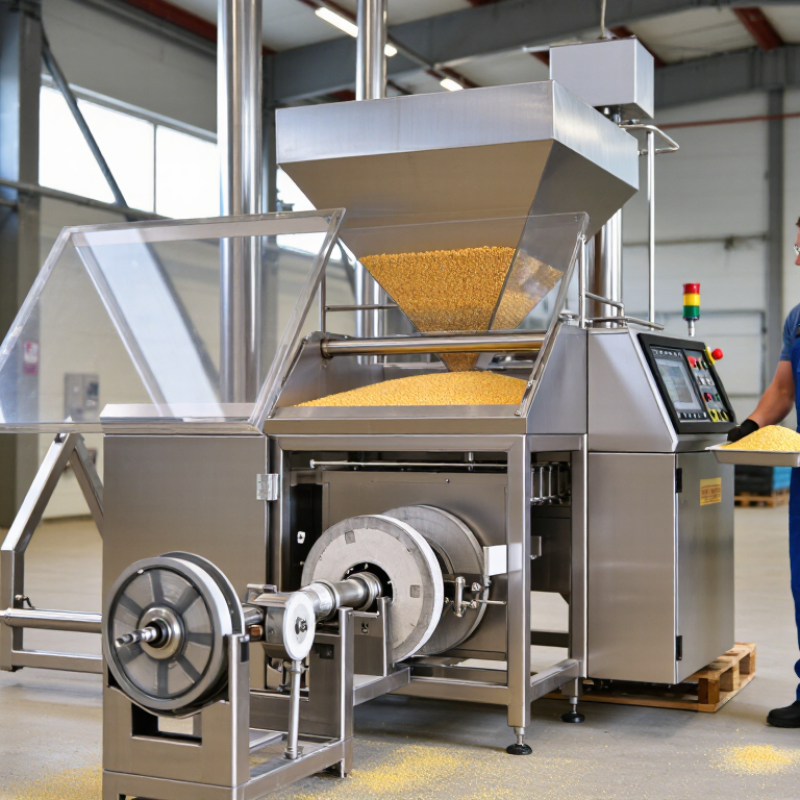
Define Feed Specs: Codex CXS 153-1985 Sets Maize Moisture at 15.5% Max
How to Choose the Best Maize Flour Mill Machine?
Set the flour specification before comparing a maize flour mill’s capacity. Codex CXS 153-1985 sets a maximum moisture content of 15.5% for maize flour. Treat this as a ceiling, not an operating target. Moisture affects storage stability and can influence how flour flows through hoppers and sieves. Small details matter. Ask suppliers to process a representative sample, then check the finished flour with a calibrated moisture meter. Keep a sealed sample for comparison. A machine’s brochure cannot confirm your product meets the specification.
Raw grain needs its own moisture target. FAO post-harvest guidance commonly places maize intended for storage near 13% moisture; this is a grain-storage reference, not the Codex limit for flour. Record incoming grain moisture and test flour after milling. Compare results across batches, especially when kernels feel cool or damp. I would not assume one test tells the whole story. A practical machine should offer controllable feeding, suitable sieves, and adjustments for your desired fineness. Ask for trial data using your maize and intended throughput, not only a theoretical capacity figure. Check the cited references: Codex Alimentarius, CXS 153-1985; FAO post-harvest guidance on maize handling and storage.
Choose Milling Technology by Flour Type: Hammer, Plate, or Roller Mill
Hammer, plate, and roller mills produce different flour textures, so match the machine to the product you sell. A hammer mill uses fast-moving hammers and screens to break kernels. It suits coarse meal, animal feed, and applications where a wider particle range is acceptable. Finer screens can make flour, but they may reduce throughput and increase heat. Check the flour temperature during a sustained run, not just a brief test.
A plate mill crushes maize between grooved surfaces. Adjusting the gap changes the grind, which can help small processors handle several recipes. However, worn plates may create uneven particles. Inspect the flour with a sieve, and check plate condition regularly. Small differences matter.
A roller mill compresses kernels through paired rollers. It can deliver more consistent particle sizes for products that need controlled texture. It usually requires careful setup, clean grain, and closer attention to roller wear. No mill is perfect. A polished specification sheet may still hide a poor fit for your maize. Before choosing, test your own grain and record flour fineness, output per hour, power use, and operating temperature. Compare results across repeated runs; one sample can be misleading.
How to Choose a Maize Flour Mill Machine
Ratings are a qualitative guide to common applications, not measured machine-performance data. Hammer mills are commonly used for meal and whole-grain flour, plate mills suit small-scale grinding, and roller mills offer greater control for refined flour. Actual results depend on mill design, settings, maize condition, and screening.
Size Capacity and Motor Using Measured Throughput and Energy Use per Tonne
Do not choose a maize flour mill by nameplate capacity alone. Ask for a test using your maize, moisture range, and target sieve size. Record saleable flour, not just grain entering the hopper. Calculate kilograms per hour over a representative shift, including cleaning and short stoppages. Small details matter. Damp grain or finer meal can lower output, so a catalogue figure may not match your floor. No single test is perfect; grain batches vary, and that uncertainty should be recorded.
Use a power meter on the mill and calculate kWh per tonne of finished flour: total measured kWh divided by tonnes produced. Compare machines only at similar fineness and throughput. The U.S. Department of Energy’s 2014 Improving Motor and Drive System Performance: A Sourcebook for Industry reports that motor-driven systems account for about 68% of electricity use in U.S. manufacturing. This is useful context, not a maize-mill benchmark. Select motor power against measured peak load, then check loaded current and start-up behavior. A larger motor is not automatically more efficient. A smaller unit may stall during feed surges; verify output stability and kWh per tonne during the same run.
Check Safety Controls: FDA’s Aflatoxin Action Level Is 20 µg/kg
A maize flour mill should be judged by more than its hourly output. Ask whether its intake, cleaning, and sampling setup can support aflatoxin control. The FDA’s Compliance Policy Guide, Section 555.400, sets an action level of 20 µg/kg (20 ppb) for aflatoxins in most human foods. Codex CXS 193-1995 sets a 10 µg/kg maximum for maize flour, meal, and semolina. These figures differ. They are not interchangeable: check the requirements for the product’s destination and intended use.
Aflatoxin contamination is unevenly distributed, so a clean-looking sample proves little. Screens and aspiration can remove some damaged kernels, but milling does not reliably destroy aflatoxins; contaminated material may spread through the flour. Look for equipment that separates rejected grain clearly, limits dust, and allows representative samples to be taken before and after cleaning. FDA guidance supports using the 20 µg/kg action level as a control reference, not as proof that a machine can ensure compliance. Ask how the supplier documents cleaning performance, and have flour tested by a qualified laboratory. One uncomfortable limitation: a mill can improve control, but it cannot replace careful grain sourcing and testing.
Compare Screen Size, Flour Yield, Maintenance, and Total Cost of Ownership
A maize flour mill should be tested with the grain and flour grades you actually handle. Compare screen aperture in millimetres, then check the flour’s particle-size spread, not just its average. A finer screen may improve texture, but can reduce throughput or increase heat. Small detail. Record kilograms of saleable flour per 100 kilograms of clean maize; separate bran, germ, and rejected fines. FAO’s technical report Maize: Post-harvest Operations describes moisture control as a key part of grain handling. Its guidance puts safe maize storage near 13% moisture, a useful starting point for consistent trials—not a substitute for testing your own grain.
Ask suppliers to run repeat batches, weighing input, finished flour, and by-products. Compare results at the same moisture level and screen setting. The U.S. Department of Energy’s Improving Motor and Drive System Performance estimates motor-driven systems use about 70% of industrial electricity. That figure covers industry broadly, not maize mills alone, but it shows why power draw belongs in the cost model. Include electricity, operator time, screen and bearing replacement, cleaning, and downtime. A low purchase price can hide expensive wear. I would also check how quickly screens can be changed and whether routine parts are locally available. A tidy spreadsheet can still mislead; one dusty week may reveal more than a polished quotation.