How to Choose the Right Engine Cylinder Block?
Choosing an Engine Cylinder Block is more than matching a part number. The block supports the crankshaft, cylinders, and cooling passages, so a poor fit can create expensive problems. Start with the engine code, vehicle year, and original specifications. Small differences in bore size, deck height, or mounting points can matter.
Material and condition deserve close attention. Cast iron is common and durable, while aluminum can reduce weight but may need different repair methods. Check for cracks, corrosion, damaged threads, and worn cylinder walls. A clean exterior is not proof of a sound casting. It is easy to miss trouble in a dusty workshop.
The right choice also depends on how the engine will be used. A standard replacement has different needs from a rebuilt engine expected to handle higher loads. Compare oil and coolant passage layouts, bearing dimensions, and compatibility with the cylinder head and crankshaft. Ask a qualified machine shop to measure critical surfaces before assembly. Manufacturer specifications are a safer guide than assumptions based on appearance alone.
There is no perfect shortcut. A block that looks suitable may still require machining, and that changes the real cost. I would pause here and verify fitment twice. Confirm the supplier’s inspection process, return terms, and part history where available. These details may feel tedious, but they help prevent a mismatch and make the final decision more dependable.
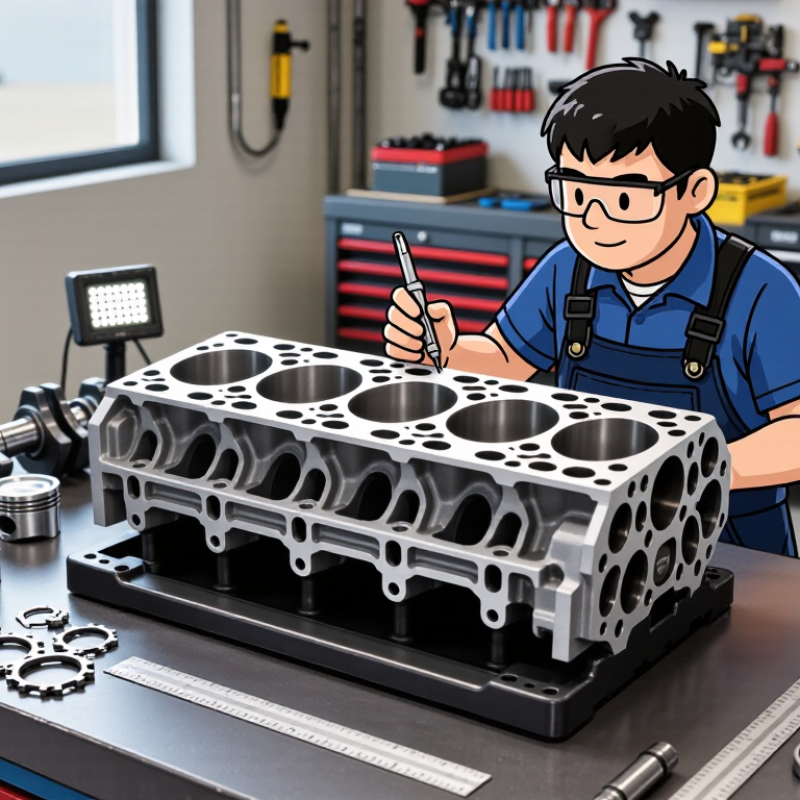
Identify the Engine’s Performance and Application Requirements
Choosing a cylinder block starts with the engine’s real workload, not its peak horsepower. A delivery vehicle that idles for hours faces different heat cycles from a generator running steadily under load. Duty cycle matters. Record operating hours, peak torque, engine speed, ambient temperature, and load changes before comparing block materials or designs. These details affect bore stability, cooling passages, bearing support, and resistance to thermal distortion.
For frequent high-load operation, assess block stiffness and heat management alongside weight. Cast iron can offer durability and vibration damping; aluminum can reduce mass but may need careful reinforcement and cooling design. Neither material is automatically right. The first specification draft often overlooks service access: a block that is difficult to inspect can turn routine maintenance into costly downtime. Match bore spacing, cylinder pressure limits, and cooling capacity to the intended fuel and combustion strategy, then confirm them against measured duty-cycle data.
Emissions targets also shape the application. The U.S. Environmental Protection Agency’s 2024 Phase 3 Heavy-Duty Vehicle Rule sets 2032 carbon-dioxide reductions of up to 25% for vocational vehicles, compared with 2027 standards. That pressure makes efficiency and thermal management relevant even when selecting a replacement block. Ask suppliers for validated operating limits and test conditions, not just a maximum power figure. A specification can still be wrong if its test cycle does not resemble the engine’s actual work.
Compare Cylinder Block Materials and Their Properties
Cylinder block material shapes engine weight, heat flow, stiffness, and service life. Gray cast iron is dense but rigid and naturally damps vibration. ASM Handbook, Volume 1, lists typical densities near 7.0–7.3 g/cm³ for cast irons, compared with about 2.7 g/cm³ for common aluminum alloys. That difference can make an aluminum block substantially lighter, though the finished assembly also depends on liners, fasteners, and design.
Aluminum transfers heat quickly. This can help move combustion heat toward coolant passages, but it also means engineers must manage expansion and local temperatures carefully. Cast iron generally offers greater stiffness and good bore-wear performance, while aluminum blocks may need iron liners or specially treated cylinder surfaces. The Aluminum Association’s Aluminum Design Manual provides alloy-property data, but exact strength and conductivity vary with alloy, casting quality, and heat treatment. Numbers alone can mislead.
Look at the actual operating conditions. A heavy-duty engine with high cylinder pressure may benefit from iron’s rigidity; a weight-sensitive design may favor aluminum. Check the block’s deck thickness, main-bearing support, cooling layout, and cylinder-surface construction. A lighter block is not automatically more efficient. Nor is iron automatically longer-lasting. Even experienced builders can overlook how much liner design changes the comparison.
Evaluate Block Design, Cylinder Layout, and Cooling Features
Choosing an engine cylinder block starts with how the engine will be used. A compact inline layout can simplify access and packaging, while a V layout may fit more cylinders into a shorter space. Boxer layouts sit low, but can require more room across the vehicle. Check the block’s deck design, bearing support, and service access. Small details matter.
Cooling features deserve close attention. Coolant jackets must carry heat away evenly, especially around exhaust-side cylinder walls, where temperatures can rise quickly. A closed-deck design often supports the cylinder tops more firmly, while an open deck may allow greater coolant flow. Neither is automatically better. Consider expected loads, operating temperature, and whether the block can be inspected or machined locally. Look for casting flaws, corrosion, and damaged coolant passages.
Material affects weight, heat transfer, and repair options. Aluminum blocks are lighter and shed heat readily, but their greater thermal expansion can influence clearances. Cast iron is heavier, though it can offer durable cylinder support. There is no perfect choice. Compare the block’s layout and cooling path with the engine’s real duty cycle, not just a specification sheet. A detail easy to overlook is access to replacement parts and qualified machining. I might still miss something. A specialist’s inspection can reveal problems hidden beneath a clean exterior.
Verify Compatibility with Engine Specifications and Components
A cylinder block must match the exact engine code, model year, displacement, and configuration—not just the vehicle name. Compare the block’s bore, stroke, deck height, main-bearing dimensions, and bolt locations with the engine’s service specifications. Measure each cylinder at the top, middle, and bottom, in two directions. That gives six bore readings per cylinder and can reveal taper or out-of-round wear. Small differences matter. A piston that looks right may still have the wrong clearance.
Check every connected component before ordering: crankshaft, pistons, connecting rods, cylinder head, timing drive, and oil pan. Confirm bearing-journal sizes, head-bolt pattern, oil and coolant passages, and sensor openings. AERA’s engine-rebuilding technical resources emphasize using measured dimensions and documented specifications during machining and assembly. SAE International’s J1349_202104 procedure standardizes engine-power testing under controlled conditions; it is useful for comparing output, but it does not establish block fitment. Use the engine maker’s service data for fit. Keep a written measurement sheet, including units and measuring-tool calibration. I would not assume two blocks with the same displacement are interchangeable. That shortcut can be costly.
Assess Manufacturing Quality, Durability, and Total Cost
Choosing an engine cylinder block starts at the inspection bench, not the price tag. Ask for material specifications, machining tolerances, and inspection records. A clean surface matters, but it cannot reveal hidden porosity. Check the deck, cylinder bores, and threaded holes for consistent workmanship. Request dimensional reports, pressure-test results, and traceability for the production batch. Useful evidence. If records are vague, treat the uncertainty as a real cost.
Durability depends on the engine’s duty cycle, cooling system, and service history. A block for steady road use may not suit repeated heavy loads or high temperatures. Compare wall thickness, coolant passages, and compatibility with the intended crankshaft and cylinder head. Ask how defects are screened and what the warranty actually covers. Total cost includes installation, machining, gaskets, downtime, and access to replacement parts. A cheaper block can become expensive after extra machining or delayed repairs. One easy mistake is trusting appearance too much. Even a complete report cannot predict poor maintenance or future overheating. Look closer.