How to Choose the Right EV Fast Charger for Your Business?
As the electric vehicle (EV) market grows, selecting the right Ev Fast Charger for your business becomes crucial. An appropriate charger boosts customer satisfaction and enhances your business image. However, the wide range of options can be overwhelming. This decision requires careful evaluation of your specific needs.
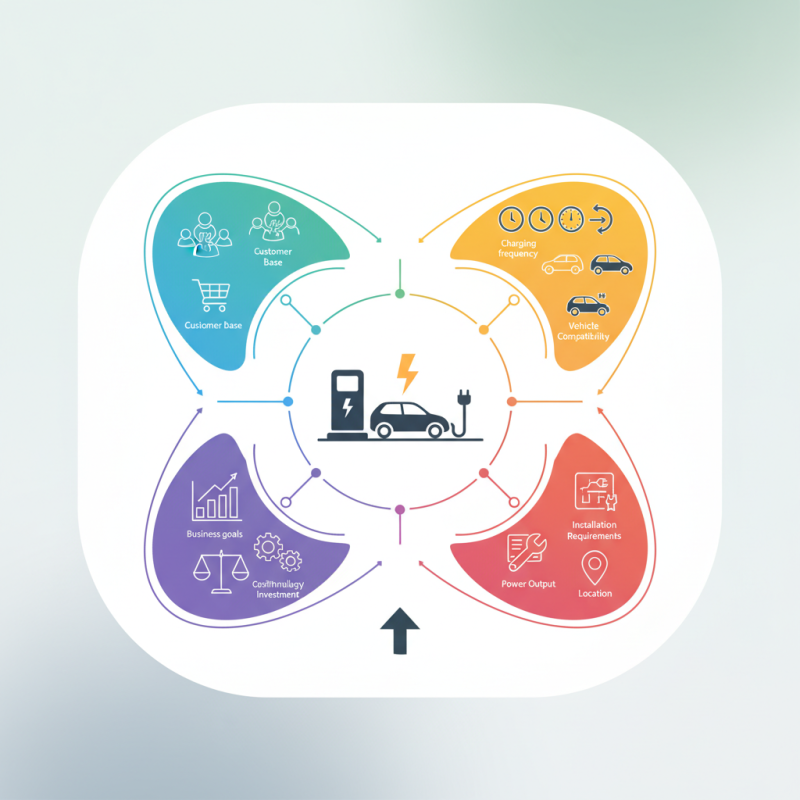
Understanding the distinct features of different EV fast chargers is vital. Fast chargers vary in power output, installation requirements, and compatibility with various vehicle models. Each feature influences overall efficiency and user experience. Business owners must consider their customer base, charging frequency, and location.
Choosing the right EV fast charger also involves reflection. Are you investing in technology that aligns with your business goals? Mistakes in selection can lead to inefficiencies and unsatisfied customers. Striking a balance between cost and value is essential. Ultimately, a well-chosen EV fast charger can drive your business forward and support the growing needs of electric mobility.
Understanding the Different Types of EV Fast Chargers Available
When choosing an EV fast charger, understanding the types available is crucial. Level 2 chargers are common. They provide a good balance of speed and cost. These chargers typically deliver 10 to 60 miles of range per hour, making them suitable for businesses. However, they may struggle in high-traffic situations.
DC fast chargers are the go-to for rapid charging. They can provide up to 80% charge in around 30 minutes. This is ideal for quick turnaround times. But installing a DC charger can be expensive and requires more electrical infrastructure. Assess your site’s energy capacity before adding one of these chargers.
Consider the connector types too. Not all EVs use the same plug. Knowing the popular standards will help you serve more customers. Installation is another layer of complexity. Not all sites have the space or resources for fast chargers. Reflect on your business needs and assess potential usage. Balancing speed, cost, and infrastructure is key.
Assessing Your Business's Charging Needs and Requirements
Choosing the right EV fast charger for your business can be daunting. Assessing your charging needs is essential. Start by evaluating how many electric vehicles (EVs) you expect to charge daily. Consider peak business hours when these vehicles will need charging. This will help you determine the number of chargers required.
Think about the charger’s power output. Different EVs require varying charging speeds. Fast chargers can significantly reduce charge time, keeping your business running smoothly. If you have a larger fleet, investing in high-capacity chargers may be necessary.
**Tips:**
Make sure to consult with professionals who understand EV infrastructure. They can guide your decision. Evaluate potential location constraints, such as space for installation and access to power sources. Consider future expansions too; your needs may grow as electric vehicle adoption increases.
How to Choose the Right EV Fast Charger for Your Business? - Assessing Your Business's Charging Needs and Requirements
| Charging Capacity (kW) | Charging Time (hours) | Number of Ports | Connectors Type | Ideal for |
| 50 | 1 - 2 | 2 | CCS, CHAdeMO | Fleet Operations |
| 100 | 30 - 60 min | 1 | CCS | High Traffic Areas |
| 150 | 20 - 30 min | 2 | CCS, CHAdeMO | Retail Locations |
| 350 | 10 - 15 min | 1 | CCS | Quick Charge Stations |
Evaluating Location and Accessibility for Charger Installation
When considering the installation of EV fast chargers for your business, location and accessibility are crucial factors. Data from the U.S. Department of Energy indicates that 80% of EV charging occurs at home or work. This highlights the importance of situating chargers where they will be most convenient for users. Accessibility is not just about physical reach; it also involves making sure that the site is easy to find and navigate. Poorly marked or difficult-to-access locations can deter users, decreasing the utilization of installed chargers.
Analyzing foot traffic is essential. A study from ChargePoint found that strategic placement near major commuter routes can increase usage by 30%. Additionally, ensuring that your chargers are accessible to all, including individuals with disabilities, is vital. Accessibility compliance not only meets legal requirements but also enhances your brand’s reputation.
You should constantly reevaluate your charging station's placement and usage statistics. This ensures that the locations remain favorable over time. Some businesses may overlook these factors, leading to decreased efficiency and user dissatisfaction. Engaging with your local community and mapping out high-traffic areas can provide valuable insights for your installation strategy.
Comparing Features and Pricing of Various Charger Brands
When selecting an EV fast charger for your business, features and pricing can vary widely among different brands. Look for chargers that support multiple charging standards. Features like smart connectivity can allow for remote monitoring. This is useful for managing charging sessions effectively. Consider how many vehicles you anticipate servicing at peak times. A charger with multiple ports might suit a busy environment better.
Pricing is another crucial element. Initial costs can be high, but weigh them against long-term savings. Some brands offer subscription models for software updates. This can lead to better performance over time. Assess the warranty and support services offered. These aspects can impact your total cost of ownership significantly.
While researching, you might feel overwhelmed by the choices. Not every feature is necessary for every business. Reflect on your needs and usage patterns. Sometimes, simpler options can function adequately without excessive costs. Seek feedback from industry peers when possible, as their experiences can guide your decision-making process.
Comparison of EV Fast Charger Features and Pricing
Considering Future Scalability and Technology Upgrades
When choosing the right EV fast charger for your business, consider future scalability. The rapid growth of electric vehicle adoption means your needs may change quickly. Will your charging infrastructure support increased demand? Invest in scalable solutions. A strong foundation allows for upgrades as technology evolves.
Evaluate charging speed and compatibility. The best chargers can adapt to new vehicles. Look for modular designs that allow for easy expansion. As your business grows, you can add more units or increase power levels without a complete overhaul. This foresight preserves your initial investment and avoids costly replacements.
Technology upgrades are another crucial aspect. The EV market is dynamic, with frequent advances. Fast chargers should have the capability to integrate new features easily. This flexibility can enhance user experience and increase operational efficiency. Keeping abreast of industry trends ensures your infrastructure remains relevant. Be aware that waiting too long to upgrade can lead to missed opportunities.