How to Choose a Power Inverter for Home in 2026?
Choosing a Power Inverter For Home in 2026 starts with a simple question: which appliances must keep running when the grid goes down? A refrigerator, Wi-Fi router, and a few lights need different capacity from an electric kettle or water pump. Check each device’s running watts, then account for the higher surge some motors need at startup. The label’s peak-watt figure is not the whole story.
Electrical-safety educator Mike Sokol is a useful reference for thinking carefully about household power systems. A practical summary of that approach is: “Size for the real load, and treat safe installation as part of the system.” This is an editorial summary, not a verified verbatim quotation. It captures an important point: a powerful inverter cannot compensate for undersized wiring, poor ventilation, or an unsuitable battery. Details matter.
This guide will compare pure sine wave and modified sine wave models, explain continuous and surge ratings, and outline battery compatibility. It will also consider transfer switches, charging options, noise, and realistic backup time. A 2,000-watt rating sounds reassuring, but it does not tell you how long your refrigerator will run. That depends on the battery, the appliance’s duty cycle, and conversion losses. Start with your essential loads and a measured estimate of their energy use. Then compare models against those needs, their safety documentation, and the manufacturer’s installation instructions. One detail is easy to overlook: planned loads often grow. Leave reasonable headroom, but do not buy capacity you cannot support.
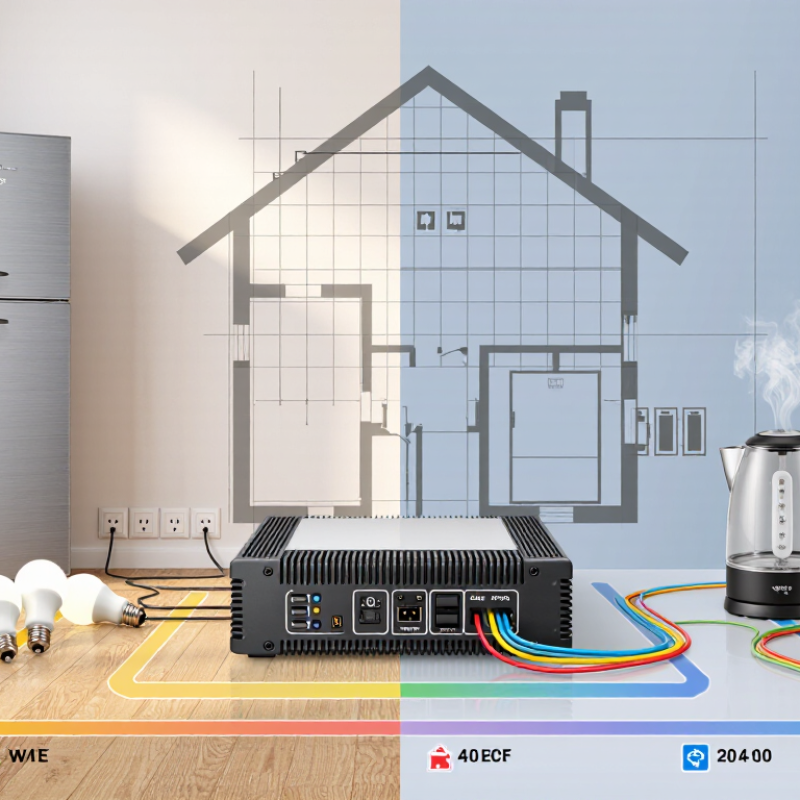
Map Essential Loads and Apply a 20–30% Capacity Reserve
How to Choose a Power Inverter for Home in 2026?
Map Essential Loads and Apply a 20–30% Capacity Reserve
Start with a room-by-room list of essential appliances, then record each device’s running watts from its nameplate. Add only the loads you may use at the same time: perhaps a refrigerator, modem, several LED lights, and a sump pump. Check motor-driven appliances for startup surge; their brief demand can exceed running watts. The U.S. Energy Information Administration’s 2020 Residential Energy Consumption Survey reports average household electricity use of 10,566 kWh per year. That annual figure offers context, but it cannot tell you the inverter’s peak load.
Not annual usage.
Add the simultaneous running watts, then multiply the total by 1.20 to 1.30 for a practical capacity reserve. For example, a 1,000-watt essential-load plan points to roughly 1,200–1,300 watts of continuous inverter capacity, subject to surge needs. NREL’s End-Use Load Profiles for the U.S. Building Stock provides 15-minute demand profiles, illustrating why household loads vary over time. Still, a modeled profile cannot replace your own appliance labels and usage habits. This estimate is imperfect: people often overlook a pump or kettle until both are switched on. Keep the surge rating separate from the reserve, and confirm that the inverter, battery, and wiring can support the planned load.
Size Continuous and Surge Output for Motor Starts, Often 2–3×
Choose an inverter by checking both continuous watts and short-duration surge watts. A refrigerator may run quietly at 600 watts, then demand much more as its compressor starts. A pump can do the same when pressure is high. The U.S. Department of Energy’s Improving Motor and Drive System Performance sourcebook notes that induction motors can draw roughly five to seven times full-load current during startup. That is current, not a direct watts multiplier, but it shows why running watts alone can mislead. Check the appliance nameplate or measure startup demand when possible.
For a first estimate, allow surge capacity around two to three times the combined running load of motor-driven appliances that may start together.
For example, a 900-watt load suggests a 1,800–2,700-watt surge target, before adding other simultaneous loads.
Check the inverter’s surge duration, too: a rating lasting only milliseconds may not start a compressor. NEMA MG 1 motor documentation includes locked-rotor information that can help identify demanding starts. Check the label. I would still leave extra headroom; appliance age, low battery voltage, and long cables can all complicate a clean calculation.
Not always predictable.
Choose 12 V, 24 V, or 48 V Based on System Power and Current
How to Choose a Power Inverter for Home in 2026?
Choose the battery voltage to match the inverter, battery bank, and expected load. Higher voltage generally means lower current for the same power, which can reduce cable heating and make high-power systems easier to manage. As a rough example, a 1,200-watt load may draw about 111 amps from a 12-volt battery, 56 amps at 24 volts, or 28 amps at 48 volts, assuming 90% inverter efficiency. Real current can be higher when battery voltage drops. That matters. A 12-volt setup can suit modest loads and shorter cable runs, while 24 or 48 volts may be more practical for larger loads. Check appliance startup surges, too; a refrigerator can briefly demand much more than its running wattage.
Tips: Estimate simultaneous loads, then check the inverter’s continuous and surge ratings. Confirm that every component supports the same DC voltage. Use the inverter manual to select suitable cable and overcurrent protection, and keep cable runs short. A neat calculation is only a starting point.
For instance, add the running watts of the devices you expect to use together, then divide by battery voltage and inverter efficiency to estimate DC current. This estimate helps compare system voltages, but it does not size the battery or wiring by itself. Battery chemistry, temperature, cable length, and future expansion all affect the final choice. I would not choose 12 volts just because it seems familiar; for a growing system, that decision may need revisiting.
How to Choose a Power Inverter for Home in 2026? — Choose 12 V, 24 V, or 48 V Based on System Power and Current
| Continuous AC Load | Approx. DC Current at 12 V | Approx. DC Current at 24 V | Approx. DC Current at 48 V | Practical Battery Voltage Guidance |
| Up to 500 W | About 46 A | About 23 A | About 12 A | 12 V can suit a small system; 24 V or 48 V reduces current and may simplify wiring. |
| 1,000 W | About 93 A | About 46 A | About 23 A | 24 V is often a practical starting point; consider 48 V for longer cable runs or future expansion. |
| 2,000 W | About 185 A | About 93 A | About 46 A | 48 V is generally the more practical choice for this power level; 24 V requires high-current components. |
| 3,000 W | About 278 A | About 139 A | About 69 A | Use a 48 V system where supported by the inverter, battery, and other system components. |
| 5,000 W | About 463 A | About 231 A | About 116 A | A compatible 48 V system is typically more practical; confirm battery discharge and inverter input limits. |
How the estimates are calculated: DC current ≈ AC load ÷ (nominal battery voltage × 0.90), assuming 90% inverter efficiency. Actual current varies with battery voltage, inverter efficiency, load, and operating conditions. These figures are estimates, not cable or fuse sizing instructions. Check the inverter and battery manufacturers’ specifications, including surge ratings, and follow applicable electrical codes.
Compare Pure-Sine Output, <5% THD, and 90–95% Efficiency
Pure-sine output is a sensible target for home backup. It produces a smoother AC waveform than modified-sine output, helping motors, audio equipment, and sensitive electronics run more predictably. The waveform label alone is not enough. Check the stated total harmonic distortion (THD), and ask whether it was measured at rated load.
A practical target is below 5% THD. IEEE 519-2022 addresses harmonic limits at the point of common coupling; it is not a universal certification for an inverter’s outlets. Treat the 5% figure as a purchasing benchmark, not proof of compliance. Look for test conditions, too. A reading at light load may not describe performance when a refrigerator compressor starts. Check the fine print.
Efficiency affects runtime. NREL’s PVWatts Version 5 documentation uses 96% as its default inverter-efficiency assumption. That is a modeling benchmark, not a promise for every household unit. A quoted 90–95% can be reasonable, but efficiency often changes with load. A 500-watt load may perform differently from a 50-watt load. I would compare efficiency curves, not one peak number; manufacturers do not always make this easy. Also allow for conversion losses when estimating battery runtime, especially if the inverter will run overnight.
Check Inverter Certification and Interconnection Rules: UL 1741 and NEC 705
How to Choose a Power Inverter for Home in 2026?
Check Inverter Certification and Interconnection Rules: UL 1741 and NEC 705
For a grid-connected home inverter, check its certification before comparing wattage or display features. UL 1741 covers inverter safety and, where applicable, grid-support functions. Look for certification details on the equipment label and in its documentation. A seller’s claim alone is not enough. Confirm that the exact model and configuration meet the requirements accepted by your local authority and utility.
NEC 705 addresses connecting power sources, such as an inverter, to a building’s electrical system. Its requirements can affect wiring, overcurrent protection, disconnects, labels, and how the inverter connects to a panel. The adopted code edition and local rules matter; requirements can differ by location. A compliant inverter does not automatically make the whole installation compliant. Have a qualified electrician review the panel rating, connection method, and utility approval process. A small detail, like where a warning label goes, can be overlooked during planning.
Tips: Ask for the inverter’s certification documentation and installation instructions. Confirm interconnection approval with the utility and local inspector before purchase. Keep those records with your electrical plans. It may feel like extra paperwork, but skipping this check can mean costly changes later.
