
Contract Manufacturing for Injection Molded Plastic Products in North America
(800) 824.0607

RFQ / CONTACT
Contract Manufacturing for Injection Molded Plastic Products in North America | (800) 824.0607

How to Choose the Right Mud Pump Piston?

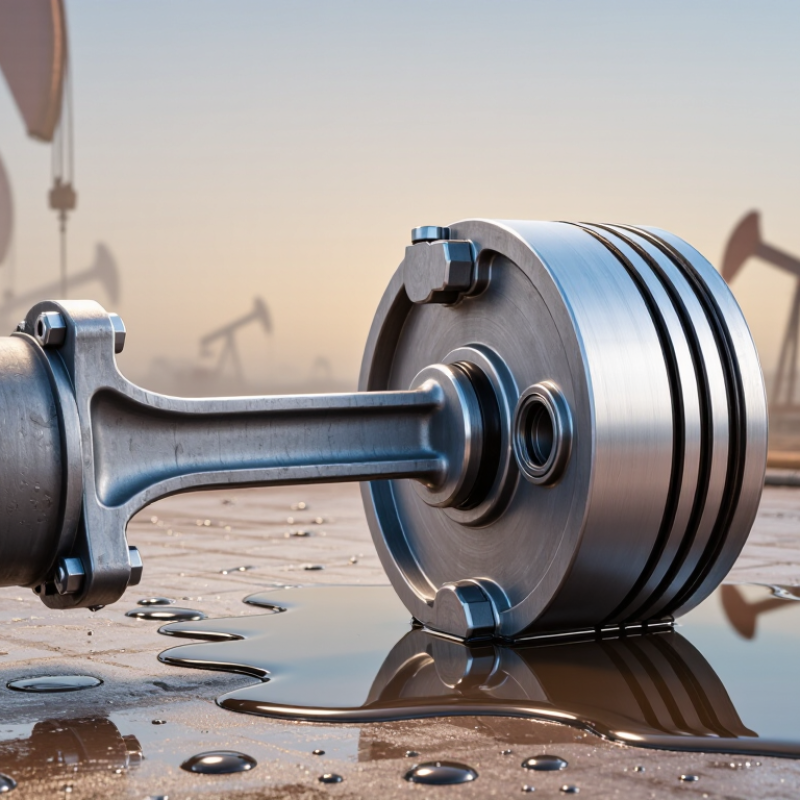
Choosing the right Mud Pump Piston starts with the work it must do, not the lowest quoted price. A piston moving through abrasive drilling fluid faces pressure, heat, and repeated contact with the liner. Small mismatches can show up as leakage, uneven wear, or an early trip to the maintenance bench. The consequences are practical: more downtime, replacement work, and uncertainty about the next run.

Industry reports help frame the operating context. The International Association of Drilling Contractors’ industry reporting tracks changes in drilling activity, while the U.S. Energy Information Administration’s Drilling Productivity Report follows regional oil and gas trends. Neither provides a universal piston-life benchmark. That matters: performance depends on mud chemistry, solids, pressure, liner condition, and operating practice. Pump engineer Igor J. Karassik’s general definition captures the mechanical principle: “A pump is a machine for converting mechanical energy into hydraulic energy.” His work is not a piston-selection guide, but it reminds us that the piston is part of a larger system.

The useful questions are specific. What fluid is being pumped? Which elastomer suits its chemistry and temperature? Does the piston match the liner and pump model? Check the manufacturer’s specifications, then compare wear records from similar jobs. Look closely at the sealing surface; a thin scoring line can be easy to miss. There is no perfect choice. Even a well-matched piston can wear sooner than expected when conditions shift. This guide explains how to weigh fit, material, service life, and cost without treating any single specification as the whole answer.
How to Choose the Right Mud Pump Piston?

Understanding Mud Pump Piston Types and Operating Requirements

How to Choose the Right Mud Pump Piston?

Mud pump pistons differ in construction, sealing method, and elastomer material. Common designs include bonded pistons and replaceable-insert pistons. Bonded styles provide a fixed seal, while replaceable inserts can simplify routine maintenance. Neither is automatically better. The right choice depends on the pump model, liner dimensions, fluid, and duty cycle.

Check the manufacturer’s operating limits for pressure, temperature, and piston speed. Then consider the mud itself. Abrasive solids can accelerate wear, while oil-based fluids may require a compatible elastomer. A piston that fits the liner but mismatches the fluid can swell, harden, or leak. Small details matter. Look for uneven wear on removed pistons, and inspect the liner for scoring before installing a replacement. A clean selection sheet can still miss changing conditions at the rig. For example, a fluid formulation may shift, or a pump may run longer at high pressure than planned. Review operating records, confirm dimensions, and reassess the choice when wear patterns change. A perfect match on paper is not always a perfect match in service.

Matching the Piston to Pump Model and Liner Size

How to Choose the Right Mud Pump Piston?

Matching the Piston to Pump Model and Liner Size

A mud pump piston must match both the pump’s fluid-end design and the liner’s nominal size. Check the pump model, piston assembly drawing, and liner specification before ordering. A piston that fits the rod may still be wrong for the liner. Small mismatches matter. They can cause uneven wear, leakage, or poor sealing under pressure.

Confirm the piston hub and retention method against the pump documentation. Then verify the liner size from its markings or service records; do not rely on appearance alone. Also consider the drilling fluid, temperature, and operating conditions when selecting piston material. In the field, a worn liner can distort measurements, so inspect it before treating the piston as the only cause of a sealing problem. That detail is easy to miss.

Tips: Record the pump model and liner size together. Compare the new piston’s dimensions with the service manual, and inspect the liner for scoring before installation. If the specifications conflict, pause and confirm the correct assembly with a qualified technician.

Comparing Piston Materials and Sealing Designs

Mud-pump piston choice starts with the fluid, temperature, pressure, and solids—not the catalogue description. Nitrile rubber is a common, economical option for water-based mud and moderate temperatures. HNBR generally offers better heat and abrasion resistance, while polyurethane can resist wear but may be less tolerant of heat or certain chemicals. ASM Handbook material-property data place many standard NBR compounds near a 100°C continuous-use limit; HNBR grades may reach about 150°C. These are indicative ranges, not guarantees. Compound formulation and fluid chemistry matter.

Sealing design changes how those materials behave. A lip-style cup can flex against the liner and maintain contact as pressure rises, but abrasive solids may cut its edge. A bonded or molded piston can provide firm support, yet a damaged bond may let mud work beneath the sealing surface. API Specification 7K provides equipment requirements and rating context; verify the piston against the pump’s rated pressure rather than relying on material hardness alone. In the field, inspect the liner for scoring and check for heat, swelling, and uneven wear. Small clues count. A polished strip on one side may signal misalignment, not poor rubber. I would also treat published wear-life figures cautiously: solids concentration, particle size, and flushing conditions can make test results hard to compare.

Assessing Fluid Conditions, Pressure, and Service Life

Choosing a mud pump piston starts with the fluid, not the catalog. Measure density, temperature, chemical additives, and abrasive solids under actual operating conditions. API RP 13B-1 describes a field sand-content test using a 200-mesh sieve, with results reported by volume. That gives crews a practical warning: gritty fluid can accelerate wear at the piston and liner contact surface. Match piston material to the fluid chemistry and heat; a material that handles abrasion well may still swell or harden in incompatible fluids.

Pressure deserves equal attention. Check the pump’s rated working pressure against normal loads and pressure spikes, rather than relying on an average gauge reading. API Spec 7K provides equipment requirements, but compliance alone cannot predict piston life in a specific mud system. Track strokes, leakage, washout marks, and fluid temperature between inspections. Compare those records across jobs. There is no universal service-life number; solids, pressure cycles, and maintenance habits change the result. I have seen clean-looking pistons fail early after unnoticed pressure surges. That assumption needs checking.

Tips: Keep a simple log of pressure peaks, mud properties, and piston changes. Inspect the liner for scoring, too. Replace a piston when sealing degrades, not just when a calendar interval arrives. Be cautious: field records can be messy, but they are still more useful than guesswork.

How to Choose the Right Mud Pump Piston? - Assessing Fluid Conditions, Pressure, and Service Life

Use this guide to compare common operating conditions and piston-selection considerations. Material suitability and service life depend on the complete fluid formulation, pump design, operating practice, and the piston manufacturer's specifications.

Operating Condition What to Assess Selection Considerations Service-Life Outlook Practical Checks
Water-based mud with low solids Fluid chemistry, lubricity, temperature, and any treatment chemicals. A compatible elastomer piston is often a practical starting point. Confirm that the elastomer is suitable for the complete mud formulation, not just the base fluid. Often favorable when the fluid is compatible and the piston is correctly fitted and lubricated. Inspect for swelling, hardening, cracking, leakage, and uneven wear.
Abrasive mud with elevated sand or drilled solids Solids concentration, particle size and hardness, and fluid circulation practices. Consider an abrasion-resistant piston material, such as a suitable polyurethane or reinforced elastomer design. Confirm compatibility with the mud and operating temperature. Wear may increase substantially as abrasive solids rise; life is strongly influenced by solids control and operating conditions. Check the sealing surface and liner for scoring, excessive clearance, and abrasive wear.
Oil-based or synthetic-based mud Base-fluid type, additives, temperature, and exposure time. Verify chemical compatibility before selecting an elastomer. Some compounds tolerate particular oil-based fluids better than others; compatibility cannot be assumed from the base-fluid category alone. Highly dependent on compound compatibility and fluid formulation. Incompatible fluids can cause swelling, softening, or loss of sealing performance. Review fluid and piston material compatibility data; inspect dimensions and sealing condition after operation.
Saline or chemically treated fluid Salt content, pH, treatment chemicals, and changes in fluid composition. Select a piston material approved for the actual fluid chemistry. Consider chemical exposure alongside temperature and abrasion. Variable; chemical attack or deposits may shorten service life even when mechanical wear is low. Check for surface degradation, deposits, swelling, and changes in piston fit.
Elevated operating temperature Continuous and peak fluid temperatures, including temperature changes during operation. Choose a compound with a documented temperature range that covers actual conditions. Temperature limits vary by material formulation and piston design. Heat can accelerate elastomer aging and reduce sealing performance; actual life depends on exposure and material compatibility. Use measured operating temperatures and check for hardening, cracking, softening, or distortion.
High-pressure or frequent pressure-cycling service Normal and peak pressure, pressure fluctuations, pump speed, and liner dimensions. Pressure capability is determined by the complete piston, liner, and pump arrangement. Use a piston specified for the pump and operating pressure; pressure alone does not determine the best material. Pressure cycling, poor fit, or operation beyond the specified limits can increase wear and risk of seal failure. Confirm pressure and speed limits, piston-to-liner fit, and installation requirements against equipment documentation.
Mixed conditions: abrasive solids, heat, and chemical exposure Which condition is most damaging, and whether the fluid composition varies during a run. Prioritize a material compatible with the fluid while meeting abrasion and temperature requirements. Seek application-specific guidance when trade-offs are significant. Usually less predictable than service in a single, stable condition; monitor wear and adjust replacement intervals using field observations. Record fluid properties, temperature, pressure, operating hours, and wear at each inspection.

Important: No universal pressure rating or service-life figure applies to all mud pump pistons. Follow the pump and piston specifications, verify chemical compatibility for the complete fluid, and base replacement intervals on inspection and operating history.

Checking Fit, Installation, and Maintenance Requirements

Choosing a mud pump piston starts with the fluid-end dimensions, not a guess based on the old part. Check the piston diameter, liner size, rod connection, seal arrangement, and the pump manual’s tolerances. Even a small mismatch can cause leakage, uneven wear, or unstable pressure. Measure clean components with suitable tools, and record the readings before ordering. Measure twice.

Before installation, shut down the pump and confirm that pressure has been relieved. Clean the rod and seating surfaces, then inspect them for burrs, scoring, or corrosion. Fit the piston straight and never force it into place; resistance may signal misalignment or an incorrect size. Use the specified lubricant and tightening procedure. Reusing a seal that looks serviceable is tempting, but hidden damage can cause an early leak.

After startup, watch for leakage, unusual heat, vibration, or changes in pressure. These clues can reveal a poor fit before damage spreads. Set inspection intervals around operating hours and mud conditions, since abrasive solids can accelerate wear. Keep a simple record of measurements and replacements. A log helps. The maintenance schedule should follow the pump manual and be adjusted when service conditions change.

How to Choose the Right Mud Pump Piston?

Common nominal mud-pump liner bore sizes and their metric equivalents

Select a piston designed for the pump model and liner bore. These are nominal bore sizes, not piston measurements; confirm the required fit and fluid-end specifications before installation. Check the piston, seals, and liner for wear or damage, install according to the equipment procedure, and inspect regularly during operation.