
Contract Manufacturing for Injection Molded Plastic Products in North America
(800) 824.0607
Choosing the right Mud Pump Pulsation Dampener can protect equipment, stabilize pressure, and improve drilling performance. However, the decision is rarely based on pump size alone. Flow rate, discharge pressure, fluid properties, liner diameter, and operating temperature all influence the correct selection.
A practical evaluation begins at the pump skid. Observe pressure-gauge movement during acceleration, inspect connection sizes, and check whether the dampener matches the pump manufacturer’s specifications. A unit designed for a smaller pressure range may appear economical, yet it can suffer premature diaphragm wear. Confirm the working pressure, test pressure, volume, shell material, and compatible elastomer before purchase.
Precharge pressure also deserves careful attention. It should follow the manufacturer’s procedure, not a guess from a previous installation. Mud density, abrasive solids, and temperature changes can alter performance over time. Field technicians should record pressure readings, inspection dates, diaphragm condition, and maintenance findings. These details make later troubleshooting more reliable.
Look for more than a product brochure. Review verified test data, traceable materials, service guidance, and the supplier’s experience with comparable drilling systems. Ask how the dampener performs under pulsating loads, not only under steady pressure. A qualified supplier should explain limitations clearly.
No choice is perfect.
Budget restrictions may create compromises, but pressure stability should not be treated as an afterthought. Even experienced teams can overlook piping layout or incorrect precharge. Therefore, selection should combine engineering calculations, field observations, and documented maintenance requirements. This guide explains the key factors, practical checks, and common mistakes involved in choosing a dependable Mud Pump Pulsation Dampener.
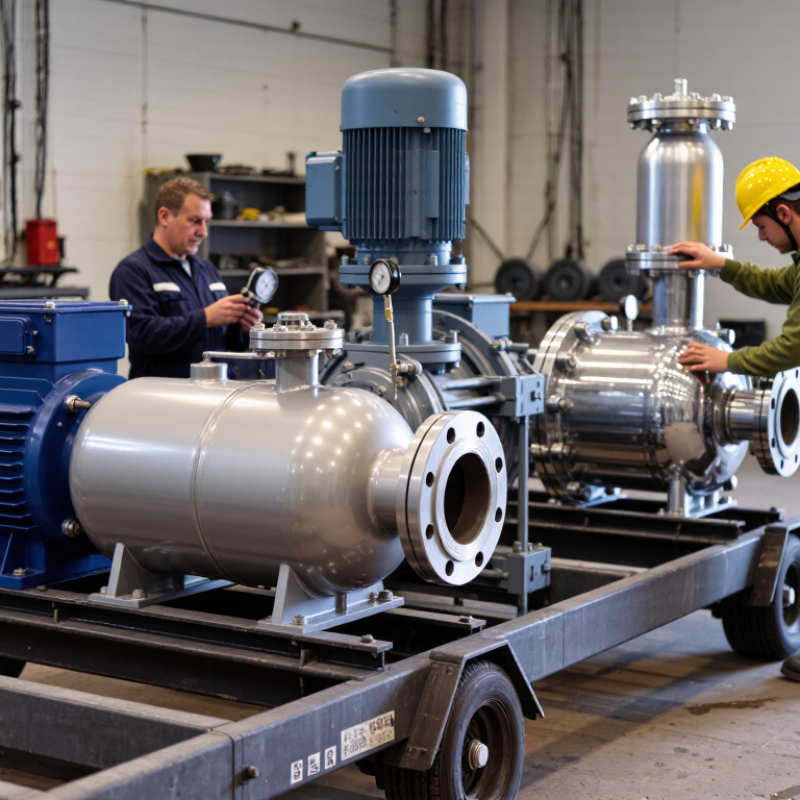
Define the pump duty before selecting a mud pump pulsation dampener. Record the maximum working pressure required under normal drilling conditions. Then check the pressure rating specified for the pump and connected equipment under API 7K requirements. The dampener should tolerate the operating pressure, not only the average gauge reading. Pressure spikes matter.
Flow rate is equally important. Calculate the target flow from displacement per stroke, stroke frequency, and volumetric efficiency. A simple estimate is useful, but mud leakage, liner wear, and fluid compressibility can change the actual output. Measure the flow when possible. Do not rely on a perfect calculation.
Stroke frequency shows how quickly the dampener must respond. High strokes per minute create more frequent pressure pulses and may increase gas volume requirements. Match the dampener’s response range to the pump’s operating envelope.
Consider mud density, solids content, temperature, and suction conditions.
Field inspections often reveal details that specifications miss.
A pressure trace can expose sharp peaks, unstable charging, or poor precharge.
Leave a safety margin. However, an oversized dampener may respond poorly at low flow. This is where judgment is still needed.
Check the API 7K documentation, equipment data, and measured site conditions together before final sizing.
Match the dampener pressure rating to the mud pump’s maximum working pressure, not its usual operating pressure. A pump rated at 5,000 psi requires a dampener rated for at least 5,000 psi. Selecting a 3,000-psi unit because the current job runs at 2,500 psi is unsafe. Pressure spikes can occur during valve changes, blocked lines, or sudden flow adjustments. Brief events still matter.
API Spec 7K provides recognized requirements for pressure-rated drilling equipment, including design controls, inspection, and pressure testing. The IADC Drilling Manual also emphasizes verifying equipment limits before high-pressure circulation.
Check the pump nameplate, technical drawings, and pressure-test records. Then confirm the dampener’s shell rating, connection rating, temperature range, and fluid compatibility.
Do not confuse precharge pressure with maximum working pressure. Precharge supports performance; it does not upgrade the vessel.
A useful field practice is choosing the next certified pressure class above the pump’s maximum working pressure, when available. That margin must not replace engineering review. It may also increase cost and weight.
I have seen teams focus on pressure alone and overlook flange ratings. That is an expensive mistake.
The final selection should match the complete pressure path, including the discharge manifold and connecting spool. Records should show the rating, test date, inspection status, and approved operating limits.
A tidy spreadsheet is helpful, but the metal still decides.
Choosing a mud pump pulsation dampener begins with gas volume, not vessel diameter. The required volume depends on flow rate, stroke frequency, pressure range, and acceptable pressure variation. API 674 treats pulsation control as a system design issue, requiring evaluation of pump, piping, and dampener together. A larger chamber is not automatically better.
For precharge, field specifications commonly use 50–70% of working pressure. Measure the lowest normal working pressure, then charge the gas side before introducing liquid. For example, a 3,000 psi working pressure gives a practical precharge range of 1,500–2,100 psi. Many engineers select about 60% as a starting point, then verify pressure traces during commissioning.
Too little gas volume allows the bladder to collapse repeatedly. Too much precharge reduces liquid storage and may increase pressure spikes. That shortcut can fail.
Use nitrogen only, and confirm the vessel rating, temperature correction, and inspection requirements. The Hydraulic Institute’s reciprocating pump guidance emphasizes checking dynamic pressure, not relying on static gauge readings. In the field, compare discharge-pressure data across several pump speeds. Watch the gauge needle, pipe vibration, and flange movement. Small details matter.
A 50% setting may suit a variable-pressure system better than 70%. This is often overlooked.
Gas temperature also changes after repeated cycling, so the initial reading may not represent operating conditions.
Recheck precharge after stabilization, and record the final value beside the pressure test data. Calibration records should remain traceable to the test instrument.
How to Choose a Mud Pump Pulsation Dampener?
Bladder selection begins with mud chemistry, not temperature alone. Water-based mud commonly operates near pH 9.5–11.5, according to API 13B-1 field-testing guidance. Oil-based systems may contain diesel, synthetic fluids, esters, or aromatic additives. These chemicals can swell ordinary nitrile rubber. NBR suits many water-based fluids, but high-temperature service can accelerate hardening. HNBR offers better heat and mechanical resistance. FKM handles many hydrocarbons, yet it may perform poorly with some amines and hot water. EPDM usually suits water-rich fluids, but petroleum exposure can cause rapid damage.
The operating range matters. At −20°C, a stiff bladder may respond slowly and crack during repeated pressure cycles. At 120°C, compression set and gas permeation become serious concerns. API 674 covers reciprocating pump pulsation control, while ASTM D471 evaluates elastomer volume and hardness changes after fluid exposure. Request actual immersion results at the planned temperature. A generic compatibility chart is not enough. I have seen acceptable laboratory results fail after dirty field service. Mud solids, pressure cycling, and poor precharge can change the outcome.
Tips: Match the bladder compound to the complete mud recipe. Test base fluid, additives, and cleaning chemicals together. Verify the compound’s continuous temperature rating, not its short-term peak. Check precharge at ambient temperature, then reassess after heating. A 10°C measurement error can mislead selection. Review hardness, swelling, mass change, and burst-cycle data before approval. Also question the first recommendation. It may be technically sound, but field evidence should still win.
| Bladder Material | Typical Continuous Service Range* | Water-Based Mud | Oil- or Synthetic-Based Mud | Resistance to Common Mud Additives | Low-Temperature Behavior | Recommended Use |
|---|---|---|---|---|---|---|
| NBR Nitrile Rubber | Approximately −30 to 100°C, depending on compound | Generally suitable for fresh water and conventional water-based muds; confirm compatibility with high salinity and oxidizing additives | Good resistance to many mineral oils and diesel-based fluids; performance varies with aromatic content | Good with many hydraulic oils and petroleum-derived fluids; limited resistance to ozone, strong oxidizers, and some amines | Usually suitable at −20°C when correctly compounded; flexibility decreases as temperature approaches the lower rating | Cost-effective choice for moderate-temperature service and standard oil- or water-based mud systems |
| HNBR Hydrogenated Nitrile Rubber | Approximately −30 to 150°C, depending on compound | Good general resistance to water-based muds, brines, and many drilling-fluid additives | Very good resistance to mineral oils, diesel-based fluids, and many synthetic-base fluids | Improved resistance to heat, ozone, sour-gas exposure, and aging compared with standard NBR; verify compatibility with concentrated polar chemicals | Normally suitable for −20°C service when the selected compound is rated accordingly | Preferred all-around option for a −20 to 120°C envelope where both temperature margin and oil resistance are required |
| FKM Fluorocarbon Rubber | Approximately −20 to 200°C, depending on compound | Acceptable for some water-based systems, but hot water, steam, concentrated alkaline fluids, and certain amines can cause degradation | Excellent resistance to many mineral oils, aromatic hydrocarbons, and high-temperature hydrocarbon fluids | Very good heat, ozone, and chemical resistance; compatibility must be checked for amines, ketones, low-molecular-weight alcohols, and hot aqueous fluids | −20°C is near the lower end for many FKM compounds; select a low-temperature grade if cold starts are frequent | Suitable for hot oil- or synthetic-based muds when hydrocarbon resistance is more important than aqueous-chemical compatibility |
| EPDM Ethylene Propylene Diene Rubber | Approximately −45 to 150°C, depending on compound | Excellent resistance to hot water, brines, dilute acids, and many water-based mud constituents | Poor resistance to mineral oils, diesel, and most hydrocarbon-based muds; swelling may occur | Good resistance to weathering, ozone, phosphate esters, and many polar chemicals; verify compatibility with hydrocarbons and strong acids | Generally excellent flexibility at −20°C | Strong choice for hot water-based mud, brine, and aqueous drilling-fluid applications without hydrocarbon contamination |
| CR Chloroprene Rubber | Approximately −35 to 100°C, depending on compound | Generally compatible with water and dilute aqueous solutions; confirm performance in concentrated brines and high-temperature service | Moderate resistance to some mineral oils, but generally less suitable than NBR or HNBR for continuous hydrocarbon exposure | Good ozone and weather resistance; moderate resistance to oils and many dilute chemicals | Typically suitable for −20°C service with acceptable flexibility | Use for moderate-temperature aqueous service where ozone resistance and general-purpose durability are needed |
| Polyurethane PU, compound-dependent | Approximately −30 to 80–100°C, depending on chemistry | Variable; some grades resist water well, while hydrolysis-resistant grades are required for hot aqueous service | Often good abrasion and tear resistance; chemical compatibility with base oils and additives must be confirmed specifically | Excellent mechanical strength and abrasion resistance, but sensitive to hydrolysis, strong acids, strong bases, and certain solvents depending on grade | Usually acceptable at −20°C with the correct formulation; stiffness can increase at low temperature | Consider when abrasion and mechanical strength dominate; generally not the first choice for continuous 120°C service |
Choosing a mud pump pulsation dampener starts with measured pressure, not catalog size. A practical engineering target is 2–5% peak-to-peak pressure ripple. Treat this as a project criterion, not a universal API limit. API Specification 7K defines requirements for drilling equipment, including pressure-containing components and testing. Record discharge pressure near the pump outlet, where spikes are most visible.
Check the dampener’s gas volume, precharge, rated pressure, and temperature range against the pump’s real stroke rate. A small precharge error can turn a smooth pressure trace into sharp peaks. Measure twice. Compare unloaded and circulating conditions. Field data often changes the selection; fluid density, nozzle restriction, and liner condition all affect ripple. A clean calculation can still mislead.
The pressure shell must also satisfy the applicable ASME Boiler and Pressure Vessel Code, Section VIII requirements. Confirm material certification, allowable stress, design pressure, relief protection, inspection, and hydrostatic testing records. ASME VIII compliance does not prove acceptable pulsation control, and API 7K compliance does not replace vessel-code verification. Keep both documents in the equipment file. The 2–5% target should be demonstrated through recorded test data, with sensor calibration and sampling details documented. If ripple remains above target, review precharge first; replacing the dampener may not fix the real cause.