How to Choose the Right Rubber Air Hose for Your Needs?
Choosing the right rubber air hose is crucial for optimizing performance in various applications. According to a report by the Industrial Manufacturing Association, the global industrial hose market is projected to grow at a CAGR of 4.5% through 2026. This growth highlights the demand for high-quality, durable hoses capable of delivering reliable performance under pressure. Rubber air hoses are favored for their flexibility, strength, and resistance to wear.
Research shows that many users overlook key factors when selecting a rubber air hose. For instance, the average user may not consider the operating pressure and temperature ratings. Proper size and material choices can significantly affect efficiency. A poorly chosen hose can lead to leaks or bursts, risking safety and productivity.
Moreover, not all rubber air hoses are created equal. It’s essential to evaluate specific needs, like the type of air tools used. Sometimes, a seemingly minor detail can make a significant difference in performance. Taking the time to analyze your requirements can yield better results and lower costs in the long run. Inadequate choices might lead to frequent replacements, even if the hose appears to work initially.
Understanding Different Types of Rubber Air Hoses Available in the Market
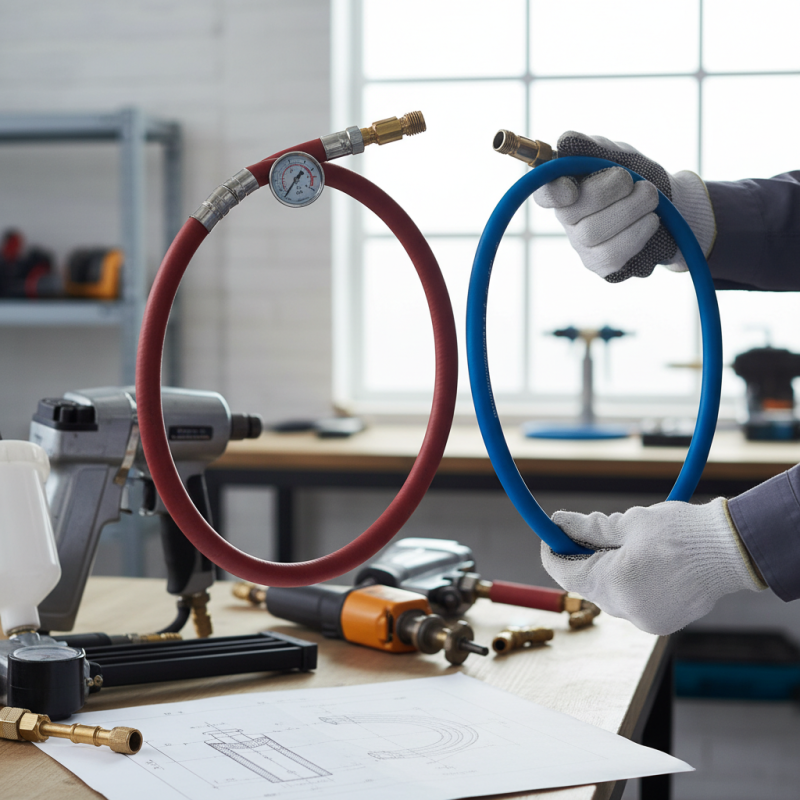
When selecting a rubber air hose, understanding the different types available is key. There are several main categories. For instance, some hoses are designed for high-pressure applications, while others are lightweight and flexible for easy handling. A report from the Industry Rubber Association indicates that about 40% of users prefer lightweight hoses due to their maneuverability.
Consider your specific needs before making a decision. Standard rubber hoses are durable and often resistant to abrasion, making them suitable for industrial use. On the other hand, reinforced hoses can withstand higher pressures. It's crucial to assess the maximum PSI rating required for your tasks.
**Tips:** Always check the temperature range of the hose you are considering. Extreme temperatures can cause hoses to degrade faster. A well-chosen hose can improve efficiency but requires some thought. Look for features that match your intended usage to avoid frustration later on. Choose wisely, as a poor fit may lead to leaks or bursts, causing interruptions in your workflow.
How to Choose the Right Rubber Air Hose for Your Needs?
| Type of Rubber Air Hose | Diameter (Inches) | Pressure Rating (PSI) | Length (Feet) | Temperature Range (°F) | Best Use Case |
| Standard Rubber Hose | 1/4 | 300 | 50 | -20 to 150 | General Purpose |
| Heavy Duty Hose | 3/8 | 400 | 100 | -20 to 180 | Construction and Industry |
| Oil-Resistant Hose | 1/2 | 300 | 75 | -40 to 200 | Automotive and Mechanic Work |
| Lightweight Hose | 1/4 | 200 | 50 | -20 to 140 | DIY and Home Use |
| Extreme Temperature Hose | 3/8 | 500 | 50 | -40 to 250 | Industrial Applications |
Identifying the Specific Requirements for Your Air Hose Needs
When choosing a rubber air hose, identifying your specific requirements is crucial. Consider the environment where you’ll use the hose. Will it be exposed to extreme heat or cold? High humidity might also be a factor. Always think about the length of the hose. Too short may hinder your work. A hose that's too long could lead to tangles and inefficiencies.
Tips: Measure the distance from the power source to your work area. Add some extra length for flexibility.
Pressure ratings are important too. Different tasks require different pressure levels. Know the maximum pressure your tools need. Exceeding this can lead to failure and danger. Also, consider the diameter of the hose. A wider diameter allows more airflow but might be bulkier to handle.
Tips: Think about the weight of the hose. Heavier hoses can cause fatigue during use. Lightweight options are easier to manage.
Always check for durability as well. Not all rubber hoses are made the same. Some may crack or wear out. Real-life usage often reveals weaknesses not visible at first glance. Don't hesitate to read reviews or ask for experiences. It's valuable to gather insights from others before making your choice.
Evaluating Hose Length and Diameter for Optimal Performance
When selecting a rubber air hose, the length and diameter are crucial. A longer hose may deliver air effectively, but it can also lead to pressure drops. According to industry data, every 100 feet of hose can reduce pressure by 1-2 PSI. If you need high-pressure applications, this loss becomes significant. Understanding what you need is essential.
The diameter influences airflow. A wider hose allows more air to pass. For example, a 3/8-inch diameter hose can supply approximately 90% more air than a 1/4-inch hose at the same pressure. This could mean the difference between smooth operation and frustrating delays. However, larger hoses can be bulky and cumbersome. Consider your workspace and how the hose will be used.
Choosing the right hose also requires consideration of your equipment. If tools require specific pressures, ensure your hose can meet those needs. Sometimes, the optimal length and diameter aren't just theoretical but also practical. Trials might be necessary to find the perfect match. Small adjustments in length or diameter can lead to better efficiency or higher costs. Keep these factors in mind for a successful selection.
Considering Temperature and Pressure Ratings for Durability
When selecting a rubber air hose, understanding temperature and pressure ratings is crucial for durability. A hose’s pressure rating indicates the maximum pressure it can withstand. Many standard hoses handle around 300 PSI, while specialized versions can exceed 1,000 PSI. A mismatch here can lead to a catastrophic failure.
Temperature ratings also play a vital role. Most rubber air hoses operate efficiently between -40°F to 200°F. However, harsh environments can drastically affect performance. Exposure to extreme heat may weaken a hose, while cold can make it brittle. In fact, industry data suggests that about 30% of hose failures occur due to inappropriate temperature conditions.
Choosing the right combination of temperature and pressure ratings is a matter of balancing needs versus risks. It's essential to consult reliable data that outlines these specifications. Without this, you risk inefficiency or worse—safety hazards. A hose that doesn’t meet the demands of your environment can lead to costly repairs and downtime.
Rubber Air Hose Temperature and Pressure Ratings
Assessing Compatibility with Connectors and Air Tools for Efficiency
Choosing the right rubber air hose is critical for optimal performance. Compatibility with connectors and air tools directly impacts efficiency. A mismatched hose can lead to leaks or reduced airflow. It’s essential to assess the fittings of your tools before making a purchase. Have you measured the connector sizes accurately? This simple step can save time and frustration later.
Different tasks require different hose lengths. A short hose might limit your movement, while a long one could create more drag. Think about your workspace and the tools you'll use. Is your hose flexible enough for tight corners? Consider the environment as well. Extreme temperatures can affect hose performance.
Finally, don't forget about pressure ratings. A hose with inadequate pressure can fail under load. It’s easy to overlook this detail in the excitement of a new project. Reflect on your specific needs and conditions. Finding the right hose takes effort, but it pays off in efficiency and safety.