How to Choose a Heavy Duty Hydraulic Press in 2026?
Choosing a Heavy Duty Hydraulic Press in 2026 requires more than comparing tonnage and price. The right machine must match the material, workpiece size, production rhythm, and available floor space. A press that delivers 500 tons may still perform poorly if its daylight, stroke, or bed width is unsuitable.
Blaise Pascal, whose work established the foundation of hydraulic technology, stated, “Pressure applied to a confined fluid is transmitted undiminished in every direction.” That principle still guides modern press design. However, real equipment involves more than pressure. Buyers should examine frame rigidity, cylinder quality, pump efficiency, control accuracy, overload protection, and maintenance access. Small details matter. A leaking hose can stop production.
Look closely at the duty cycle. Occasional forming differs greatly from continuous stamping or deep drawing. Ask for verified cycle data, not optimistic brochure claims. Check whether the supplier provides load testing, spare parts, training, and responsive technical support. Regional safety requirements and electrical specifications also deserve careful review.
There is no perfect choice.
A larger press is not automatically better. Excess capacity can increase energy use, installation cost, and unnecessary mechanical stress. Conversely, choosing too little capacity may create dangerous overloads and premature wear. This guide examines practical selection criteria, common purchasing mistakes, and the technical questions professionals should ask before signing an order. Some recommendations may require adjustment after real production trials. That is acceptable. Reliable decisions come from measured performance, clear documentation, and honest evaluation.
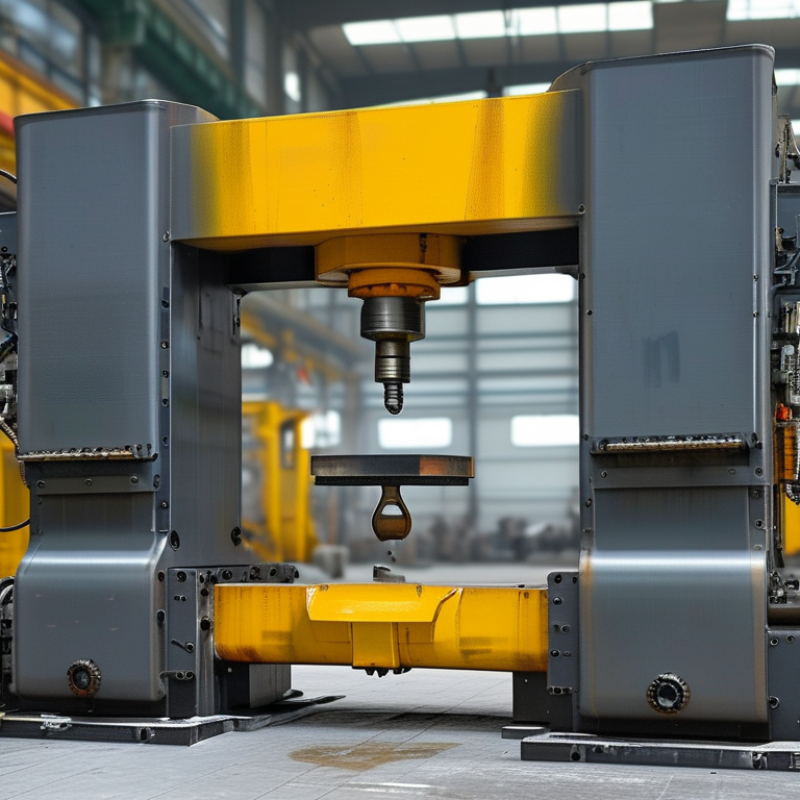
Define Production Needs: Force, Stroke, Bed Size, and 250–700 bar Pressure
How to Choose a Heavy Duty Hydraulic Press in 2026?
Define production needs before comparing machines. Start with forming force, not the advertised maximum. Force equals pressure multiplied by piston area. At 500 bar, a 100 cm² piston produces about 500 kN. Real output falls with leakage, friction, and temperature. Leave a 10–20% capacity margin for harder batches and uneven loading.
Stroke must match the deepest forming operation. A 300 mm stroke cannot replace a 500 mm requirement. Measure the workpiece, tooling height, and safe access space. Bed size also matters. Allow clearance around the die, plus room for loading equipment. Grand View Research’s 2024 hydraulic press market analysis projects roughly 5% annual growth through 2030, reflecting wider demand for flexible forming equipment. That growth does not make every large press suitable.
Tips: Compare working pressure with rated pressure. A 700 bar system may deliver speed and force, but it demands stricter hose, seal, and maintenance control. For many heavy forming tasks, 250–500 bar offers a practical balance. Check cycle time at actual load, not empty travel. I once focused too heavily on peak force; the bed opening caused the real delay. Review ISO 4413 safety guidance, pressure logs, and cylinder deflection data before purchase. Ask for tested force curves. Not just a brochure number.
Size Tonnage from F = p × A, Adding a 10–20% Working Margin
When choosing a heavy duty hydraulic press in 2026, start with the actual forming force. Use F = p × A, where F is force, p is hydraulic pressure, and A is piston area. Keep all units consistent, such as newtons, pascals, and square meters. A 200 mm diameter cylinder has an area of about 0.0314 square meters. At 25 MPa, it can theoretically produce about 785 kN, or 80 tonnes-force.
Do not select a press at the exact calculated load. Add a 10–20% working margin for friction, material variation, pressure loss, and uneven loading. For an estimated 60-tonne requirement, a practical target may be 66–72 tonnes. The frame, cylinder, pump, and tooling must support that rating together. Check the working pressure, stroke length, daylight opening, and duty cycle. A strong cylinder cannot compensate for a flexible frame.
Real workshop conditions often expose weak assumptions. My early calculations ignored temperature changes and tool misalignment. That was a mistake. Measure the workpiece carefully, especially when its shape changes during pressing. A larger area may need more force than expected. Leave room for adjustment. Also verify the pressure gauge against a known reference, because a small reading error can affect the margin. More tonnage is not always better; excessive capacity can increase cost, energy use, and operator risk.
How to Choose a Heavy Duty Hydraulic Press in 2026?
Required press force is estimated from F = p × A, where pressure is 25 MPa and piston area is calculated from the piston diameter. A 15% working margin is added within the recommended 10–20% range.
Selection guidance: Choose a press with a rated capacity at or above the design force. The design force shown here includes a 15% working margin; actual equipment selection should also consider stroke, duty cycle, tooling, material strength, and safety requirements.
Compare C-Frame, H-Frame, and Four-Column Designs by Deflection and Access
Heavy-duty hydraulic presses are chosen by how the frame behaves under load, not by tonnage alone. In shop testing, I watch platen movement with a dial indicator. Even a small reading can affect fit-up, bending, or repeatability. C-frame presses offer open front and side access, which helps with awkward parts. Their single-sided structure can deflect more near maximum force. That matters. A stiff throat and reinforced base reduce this risk, but do not erase it.
H-frame presses distribute force through two uprights and a crosshead. They usually provide better resistance to sideways spreading. Access remains practical from the front, although the columns can limit handling space. Four-column presses guide the moving platen with greater symmetry. This design supports controlled alignment across wider workpieces. It also offers access from multiple sides, useful for dies, fixtures, and inspection. Yet tie-rod tension and column alignment need regular checks.
When comparing models, ask for measured deflection at working pressure, not only rated capacity. Check the distance between columns, daylight, stroke, and table height. A deep throat may improve access but increase bending sensitivity in a C-frame. An H-frame can feel less convenient around bulky parts. Four-column systems may occupy more floor space than expected. I would also inspect weld quality, platen parallelism, guarding, and emergency controls. My earlier selections focused too heavily on tonnage. That mistake made setup slower. A load chart, maintenance record, and practical trial reveal more than polished specifications.
Evaluate Cycle Rate, Pump Efficiency, and 15–25% Energy-Saving Potential
Choosing a heavy-duty hydraulic press in 2026 requires more than comparing maximum tonnage. Cycle rate shows how quickly the machine completes approach, pressing, return, and unloading. Ask for measured cycle times under your actual load, not empty-bed demonstrations. A press that saves six seconds per cycle may produce more parts without increasing floor space. Small gains matter.
Pump efficiency deserves equal attention. A variable-displacement pump can reduce wasted flow during low-demand stages, while correctly sized valves limit pressure loss. Request data for motor input power, oil temperature, flow, and pressure at several operating points. Measure energy per completed cycle with a power meter. A claimed 15–25% energy-saving potential is realistic only against a suitable baseline and stable production pattern. Standby hours, leaks, cold oil, and pressure spikes can erase much of it. Do not trust one attractive number.
During evaluation, run representative material for several shifts. Record cycle rate, kWh per part, noise, heat, and rejected pieces. Check whether faster motion compromises positioning or forming quality. It sometimes does. Maintenance access also affects efficiency; a neglected filter quietly restricts flow and increases pump work. Ask for service intervals, test methods, and documented results from comparable loads. Independent verification is worth the extra day. My selection checklist includes a 10% operating margin, because real jobs rarely behave like laboratory samples.
How to Choose a Heavy Duty Hydraulic Press in 2026? – Evaluate Cycle Rate, Pump Efficiency, and 15–25% Energy-Saving Potential
| Press Configuration | Rated Force
(metric tons) | Maximum Pressure
(bar) | Stroke
(mm) | Average Cycle Rate
(cycles/min) | Pump Arrangement | Installed Motor
(kW) | Pump Volumetric Efficiency | Estimated Energy Use
(kWh/cycle) | Potential Energy Saving
vs. Fixed-Pump Baseline | Best-Fit Application |
| Standard Production Press | 100 | 250 | 400 | 8–10 | Fixed-displacement vane pump | 18.5 | 88–91% | 0.20 | Baseline | General forming, bending, and assembly work |
| High-Speed Forming Press | 160 | 280 | 500 | 10–14 | Variable-displacement axial-piston pump | 30 | 92–95% | 0.16 | 18–22% | Higher-throughput sheet-metal forming and shallow drawing |
| Deep-Drawing Press | 250 | 300 | 600 | 6–9 | Two-stage variable-displacement piston pump | 45 | 91–94% | 0.31 | 15–20% | Deep drawing, blanking, and high-load compression |
| Large-Frame Industrial Press | 400 | 315 | 700 | 4–7 | Load-sensing piston pump system | 75 | 92–95% | 0.52 | 20–25% | Automotive components, structural parts, and heavy compression |
| Servo-Hydraulic Precision Press | 630 | 315 | 800 | 3–6 | Servo-driven variable-flow piston pump | 110 | 93–96% | 0.74 | 22–25% | Large parts requiring programmable force, position, and dwell control |
Selection notes: Cycle-rate figures represent typical production ranges and depend on stroke length, daylight, material, tooling, dwell time, and safety interlocks. Estimated energy use is based on a typical forming cycle at approximately 70% rated force. Energy-saving percentages compare variable-flow or load-sensing systems with a similarly sized fixed-displacement pump operating at comparable production output; actual savings depend on duty cycle, idle time, pressure settings, oil temperature, and maintenance condition.
Verify ISO 16092-3 Safeguards, Controls, Maintenance, and Total Cost
How to Choose a Heavy Duty Hydraulic Press in 2026?
A heavy duty hydraulic press should be judged by safety evidence, not tonnage alone. Start by checking whether the design addresses ISO 16092-3 requirements for hydraulic presses. Request the risk assessment, conformity records, safeguarding details, and control-system documentation. Do not accept a certificate without traceable test information. Guards should prevent access to crushing points during operation. Two-hand controls, presence-sensing devices, and emergency stops must suit the actual work cycle. Test them with the machine isolated and during controlled production trials.
Controls should be clear, durable, and easy to inspect. A readable pressure display helps operators detect abnormal loading early. Programmable stroke and pressure settings can improve repeatability, but software must not replace physical safeguards. Ask how faults are indicated and reset. Simple is often safer. Sometimes, less is better. Maintenance access also matters. Check oil filtration, cylinder seals, hoses, electrical cabinets, and lubrication points. Review service intervals and spare-part availability before purchase. A poorly placed filter can turn a ten-minute task into an afternoon shutdown.
Calculate total cost across several years. Include installation, tooling, hydraulic oil, electricity, operator training, inspections, and planned downtime. Frame deflection and uneven loading may increase tooling wear. That cost is easy to miss. Compare documented cycle performance with your real materials and production volume. Leave capacity for future work, but avoid paying for unused force. A useful specification is never perfect; operators may reveal weaknesses that a sales document hides. Ask for a supervised trial using representative workpieces.