How to Choose the Best Rechargeable Headlamp
Choosing a Headlamp Rechargeable model is not just a matter of picking the brightest beam. The right choice depends on where you will use it, how long you need it, and whether you can recharge it easily. A trail runner may value a steady beam and a secure fit. A camper may care more about comfortable low settings and simple controls. Small details matter: cold fingers, a dim campsite, or a charging cable left at home can change the whole experience.
Petzl’s headlamp technical team offers a useful principle, paraphrased here rather than presented as a direct quotation: “Match the light to the task, not just the highest lumen number.” Brightness is only one part of the decision. Check runtime at the settings you will actually use, battery type, charging time, water resistance, weight, and whether the lamp can operate while charging. A beam that reaches far may still feel harsh when you read a map up close.
This guide will help you compare those trade-offs with practical details in mind. Look for clear specifications, reliable testing, and a comfortable fit you can judge after several minutes of wear. We should be honest about one limitation: advertised runtimes may not reflect cold weather or maximum brightness. No single headlamp suits every person. The best choice is the one you can operate easily, keep charged, and trust for the conditions you face.
Understanding Rechargeable Headlamp Types and Uses
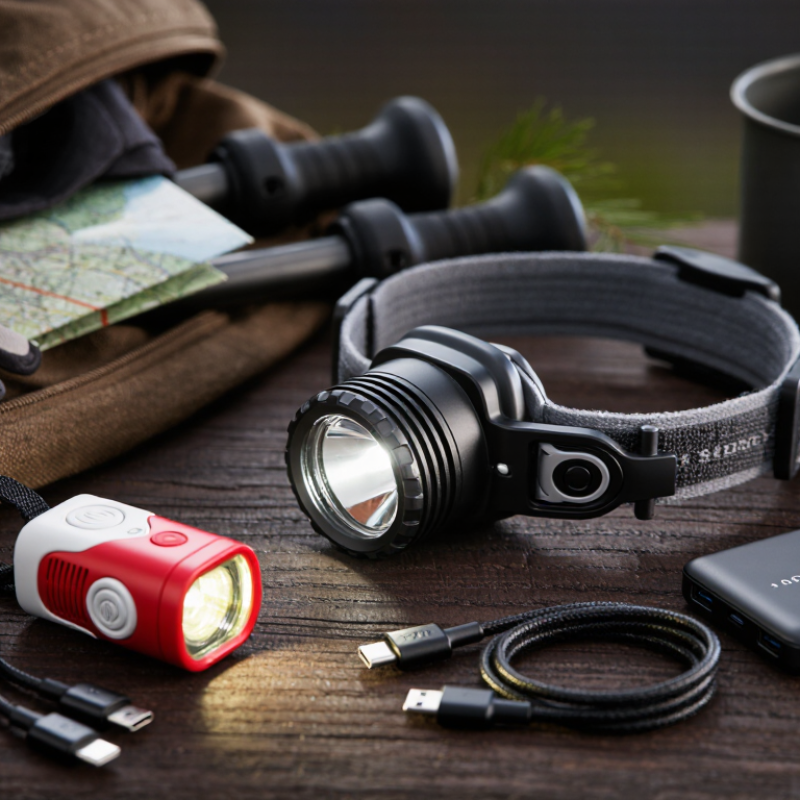
Rechargeable headlamps generally fall into three types: compact models with built-in batteries, designs with removable rechargeable cells, and hybrid models that accept either rechargeable or disposable batteries. Built-in batteries keep the housing light and simple to charge by USB. They suit evening walks, household repairs, and short camping trips. Removable cells are useful when a spare can be carried, especially on longer outings. Hybrids offer flexibility, though their extra compartments may add weight.
Beam style matters as much as battery type. A wide flood beam lights a tent, a map, or a nearby work surface without a harsh central spot. A focused beam reaches farther along a trail. Some lamps combine both, letting you switch modes as the task changes. That matters outdoors. Check whether the controls are easy to use with gloves, and whether the light has a low setting for close work. High brightness can drain a battery quickly, so a large lumen number alone tells you little about practical runtime.
Look for a clear runtime chart and a stated water-resistance rating. Cold weather can shorten battery life, and performance may decline as a rechargeable cell ages. I would not assume a USB port makes a lamp suitable for rain; check how the port is protected. A headlamp that feels comfortable for ten minutes may still press against your forehead after an hour. Fit it over the hat or helmet you actually plan to wear, if possible.
Identifying the Brightness and Beam Features You Need
Brightness is not a contest. For a campsite, close-up repairs, or a night walk, a moderate setting often shows enough detail without draining the battery quickly. Check the headlamp’s stated output, but treat it as a starting point. Real visibility also depends on beam shape, distance, weather, and how long the light maintains its brightness. A high maximum can look impressive on paper and still be uncomfortable for nearby tasks.
Look for adjustable brightness and a beam that suits your usual work. A wide flood beam spreads light across a tent, map, or cooking area. A focused spot beam reaches farther along a trail, but can leave nearby ground less visible. Some lamps combine both. Useful control matters. Try the switches with gloves if you expect cold conditions; a tiny button can be awkward in the dark. Red light may help preserve night vision, though it is not a substitute for enough white light when handling gear.
Pay attention to how brightness changes over time. Some lights step down as they warm up or conserve power, so a claimed peak setting may last only briefly. Check runtime figures at several settings, not just the brightest one. If possible, test the lamp against a familiar object at night. I would also ask whether the beam feels comfortable after ten minutes; a bright hotspot can become tiring. Specifications help, but they do not answer everything.
Comparing Battery Capacity, Runtime, and Charging Options
How to Choose the Best Rechargeable Headlamp
Battery capacity matters, but the milliamp-hour number can mislead. It does not show usable energy unless voltage is known. For example, a 2,000 mAh cell at 3.7 volts stores about 7.4 watt-hours. That gives a more useful comparison between batteries. Runtime also depends on brightness: a headlamp running at maximum output may drain quickly, while a lower setting can last through a long walk home. Check the test conditions, not just the headline hours. The ANSI/PLATO FL 1-2019 standard measures runtime until light output falls to 10% of its level 30 seconds after switch-on. A dim beam may technically still be on.
Charging options affect everyday convenience. USB-C can be handy when the same cable charges your phone and lamp, but check whether the headlamp includes a cable and supports charging from your usual power source. A removable battery is useful on multi-day trips: carry a charged spare instead of waiting beside an outlet. For short outings, an integrated battery may be simpler. Small details count. Look for a clear charge indicator and note the stated recharge time. I would still leave a little margin in any runtime estimate; cold weather, aging cells, and high brightness can all reduce practical performance. That margin is easy to forget.
Assessing Comfort, Durability, and Weather Resistance
A headlamp may feel comfortable in a shop but shift during a long walk. Adjust the strap with your usual hat or helmet, then move your head from side to side. Check for pressure at your forehead and slipping near your temples. The light should stay steady without needing a painfully tight strap. A padded band can help, though it may feel warm during a steep climb.
Tips: Wear it for ten minutes before buying. Test the controls with gloves, and check whether the charging port has a secure cover.
Durability depends on more than a tough-looking shell. Look for sturdy hinges, a strap that can be replaced, and clear care instructions. Weather resistance matters too: a rating may indicate protection from rain or splashes, but it does not automatically mean the lamp can be submerged. Check the product’s stated rating and limits. After wet use, dry the lamp before charging it, and inspect the port for grit or moisture. Cold weather can also reduce battery performance, so test runtime in conditions similar to your plans. One detail is easy to miss: a heavy lamp can become uncomfortable after an hour, even if it feels solid at first.
Matching Headlamp Features to Your Budget and Activities
How to Choose the Best Rechargeable Headlamp
Match the lamp to what you actually do, not the biggest lumen number on the box. The Outdoor Industry Association’s 2024 Outdoor Participation Trends Report counted 175.8 million U.S. outdoor participants in 2023. That range of activities calls for different gear. A dog walk on a familiar path needs a broad, comfortable beam; night hiking on uneven ground benefits from greater reach and a stable headband. For close tasks, such as reading a map or fixing a tent zipper, a low setting matters more than peak brightness. This is easy to misjudge.
Set your budget around useful features. Entry-level models can suit short walks and occasional chores, especially if they offer simple brightness control and a secure fit. For regular hikes or camping, consider a replaceable strap, water resistance, a lockout to prevent accidental activation, and a battery indicator. Check runtime at the brightness you will actually use; maximum-lumen runtime can be brief. The ANSI/PLATO FL 1 standard provides consistent methods for measuring flashlight performance, including beam distance and runtime, so compare products tested on the same basis. A red-light mode may help preserve night vision, but it is not essential for every user. Weigh the extra cost against your routine.
How to Choose a Rechargeable Headlamp
Match brightness to your activity, then compare runtime, comfort, weather resistance, and price.
These ranges are practical guidelines, not universal requirements. A lower-cost model may suit camping or casual walking; frequent hiking or running can justify spending more on comfort, reliable runtime, and weather resistance. Check runtime at the brightness you will actually use—maximum output usually drains the battery faster.