
Contract Manufacturing for Injection Molded Plastic Products in North America
(800) 824.0607
China’s PEM Electrolyzer market is moving from laboratory promise toward factory-floor decisions. The key questions are practical: Can a stack hold stable output under changing power? How often must its membranes, seals, and catalysts be serviced? Buyers comparing manufacturers need answers grounded in operating data, not brochure claims.
Dr. Sunita Satyapal, who has led the U.S. Department of Energy’s hydrogen program, has described hydrogen as “a versatile energy carrier.” That idea fits PEM technology, which can respond quickly to fluctuating renewable electricity. Yet flexibility alone does not make a project economical. Stack lifetime, system efficiency, water quality, and replacement-part access all matter. Small details matter.
This overview examines leading Chinese manufacturers through those engineering and purchasing lenses. It considers product range, production capability, reported performance, certification, and after-sales support. A name on a shortlist is only a starting point. A close look at warranty terms and field references may reveal more than a polished efficiency chart. Public specifications also differ in test conditions, so direct comparisons can be imperfect. That deserves scrutiny.
The sector is advancing quickly, but not every claim is equally easy to verify. Readers should treat rankings as a guide, not a substitute for technical due diligence. The strongest supplier is the one whose system fits the project’s operating profile and can be supported over time.
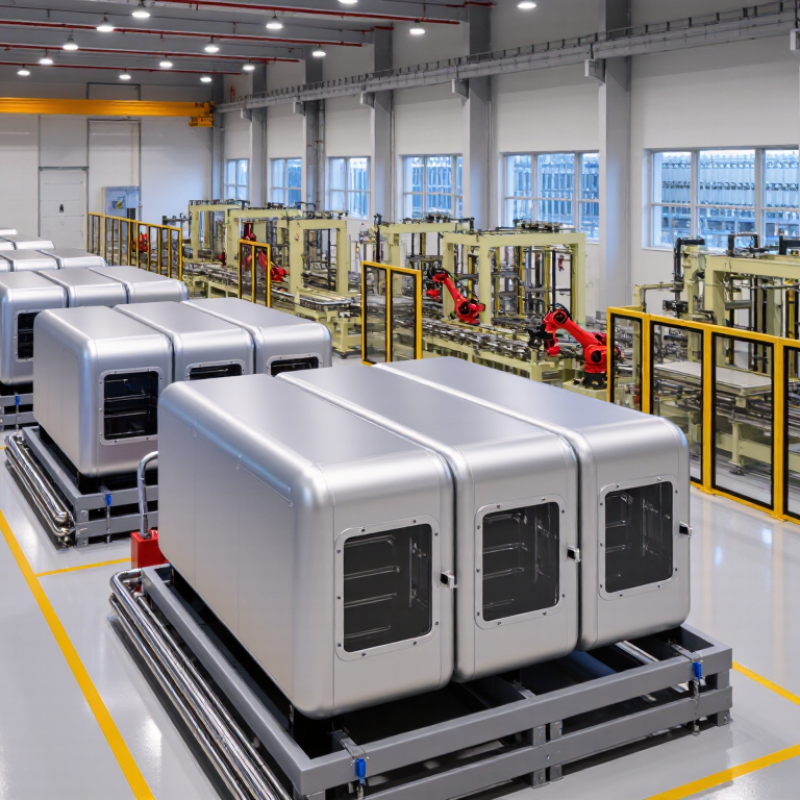
China’s PEM electrolyzer industry is developing alongside renewable power, hydrogen demonstrations, and industrial decarbonization projects. Local manufacturing can span membrane-electrode assemblies, bipolar plates, stack frames, power electronics, and water-treatment equipment. Yet a domestic supply chain does not automatically mean uniform quality. Performance depends on membrane durability, catalyst loading, sealing, and precise stack assembly. These details emerge during long operating hours, not only in a factory acceptance test. Buyers should compare current density, efficiency basis, operating pressure, ramp rate, and degradation data under clearly stated conditions.
Tips: Request test reports that identify temperature, pressure, water quality, and measurement methods. Ask how often stacks need inspection, what spare parts are available, and who provides commissioning support. A neat brochure is not enough.
Manufacturers in China serve projects with different scales and operating profiles, from renewable-linked installations to steady industrial demand. System integration matters: a stack must work with its rectifier, cooling loop, water supply, controls, and hydrogen handling equipment. Check whether quoted output refers to the stack or the complete system. Also ask about performance after repeated starts and stops. One area still deserves caution: published figures may use different test conditions, making direct comparisons difficult. Buyers should verify evidence independently and assess service capacity near the project site.
Evaluating Chinese PEM electrolyzer manufacturers starts with test evidence, not headline output claims. Ask for polarization curves at defined operating points, including current density and cell voltage. Check the stated temperature, pressure, water quality, and measurement method. Numbers need context. Efficiency figures can shift when auxiliary loads, operating ranges, and system boundaries differ. Request repeat tests after extended operation, ideally with independent witnessing.
Durability deserves equal scrutiny. Review degradation rates, start-stop behavior, and performance under variable renewable power. A short factory demonstration cannot prove years of stable service. Inspect how membrane-electrode assemblies, coatings, seals, and flow fields are controlled across production batches. Ask how defects are traced and whether incoming materials and finished stacks receive documented checks. Some suppliers may limit access to detailed process data; that makes independent verification harder, and should be recorded as an evaluation constraint.
System-level capability matters too. Review gas purity, crossover monitoring, water treatment, controls, cooling, and protective shutdown logic. Then examine how the unit responds to load changes, including recovery after a pause. Ask for service response times, spare-parts arrangements, and references from installations with comparable operating conditions. Compare warranties against stated duty cycles, not just calendar years. A neat document can still leave gaps; factory audits and clear test protocols help reveal them.
How PEM Electrolyzer Manufacturers Are Evaluated
System energy use is one useful efficiency benchmark: lower values mean less electricity is required per kilogram of hydrogen. The U.S. Department of Energy figures shown are technology status and targets, not ratings of Chinese manufacturers. Buyers should also assess durability, operating pressure, hydrogen quality, safety, and after-sales support.
Source: U.S. Department of Energy, PEM Electrolysis Technical Targets.
Leading PEM electrolyzer manufacturers in China serve projects that need responsive hydrogen production and compact equipment layouts. Their capabilities can differ considerably, even when advertised output ratings look similar. A useful assessment starts with the stack: ask about membrane electrode assembly quality, sealing methods, operating pressure, and performance testing. Request test records showing output, energy use, and operating conditions. Numbers need context.
Manufacturing strength also includes what happens after delivery. Check whether the supplier can explain commissioning steps, maintenance intervals, and replacement-part availability. Ask how the system responds to changing power input, and whether service staff can troubleshoot remotely or on site. A neat brochure is not proof; experienced buyers can still overvalue rated capacity. Compare the same operating conditions across suppliers, and verify claims through technical documents or a witnessed test. Some details may remain unclear until a project is operating.
Tips: Request a reference installation with a similar duty cycle. Review the stack’s expected service life and warranty terms together. Confirm what the quoted scope includes, such as controls, gas handling, and installation support. If an answer sounds vague, ask for a measurable example.
The table summarizes established PEM electrolyzer technology characteristics relevant to supplier evaluation. It does not assign specifications or rankings to individual manufacturers.
| Evaluation Dimension | Established PEM Technology Fact | Why It Matters When Comparing Suppliers |
|---|---|---|
| Electrolyte | A solid polymer membrane transports protons between the electrodes. | Check membrane durability, stack lifetime, and the conditions covered by the supplier’s performance warranty. |
| Feedstock and products | The electrolysis reaction consumes water and electricity and produces hydrogen and oxygen. | Compare water-quality requirements, water-treatment scope, and gas-handling equipment included in the system. |
| Typical stack temperature | PEM electrolyzer stacks commonly operate at approximately 50–80°C; the specified range depends on the design. | Request temperature limits, cooling requirements, and performance data at the proposed operating conditions. |
| Variable-load operation | PEM systems can respond to changing electrical input and are often considered for variable renewable power. | Compare minimum load, ramp rate, start-up time, and permitted operating cycles using test conditions stated by each supplier. |
| Materials and supply chain | PEM stack designs commonly use precious-metal catalysts and corrosion-resistant components, including titanium-based materials in some configurations. | Ask about material sourcing, component replacement, recycling, and exposure to supply-chain or price changes. |
| System efficiency | Reported efficiency depends on the measurement basis, operating load, system boundary, and whether auxiliary equipment is included. | Compare figures only when units, test conditions, and stack-versus-system boundaries match. |
| Hydrogen pressure and purity | Achievable outlet pressure and delivered hydrogen purity are system-design and operating-condition dependent. | Verify guaranteed outlet specifications, purification requirements, and the measurement method in the technical offer. |
| Certification and service | Applicable certifications, codes, and service coverage depend on the target market and project configuration. | Confirm project-specific compliance, commissioning support, spare-parts availability, and response times before selection. |
Chinese PEM electrolyzer manufacturers supply modular stacks, skid-mounted systems, and integrated units for hydrogen production. Typical equipment combines a proton-conducting membrane, catalyst-coated electrodes, bipolar plates, water purification, and power controls. The IEA’s Global Hydrogen Review 2024 estimates global electrolyzer manufacturing capacity reached about 25 GW per year in 2023, with China accounting for roughly 60%. That scale supports local supply chains, but factory capacity alone does not prove long-term stack durability or dependable field performance.
PEM systems respond quickly to variable power, making them useful beside wind and solar projects. Industrial buyers can apply the hydrogen in chemical production, steelmaking pilots, refinery processes, and vehicle-fueling stations. IRENA’s Green Hydrogen Cost Reduction report identifies electricity prices, equipment costs, and operating hours as major cost drivers. Operators therefore need to assess more than rated output: water quality, maintenance access, spare parts, and actual load profiles matter. Small details count. A system may look efficient on paper, yet run less economically when renewable supply fluctuates or maintenance takes longer than expected. That gap deserves careful review.
China’s PEM electrolyzer market is shaped by rapid manufacturing growth and rising interest in flexible hydrogen production. The IEA’s Global Hydrogen Review 2024 estimates that global electrolyzer manufacturing capacity exceeded 25 GW per year in 2023, with about 60% located in China. This figure covers all electrolyzer types, not PEM alone. The IEA also reports roughly 1.4 GW of installed global electrolyzer capacity by the end of 2023. Manufacturing capacity does not guarantee proven output. That distinction matters.
For PEM buyers, compare stack efficiency, degradation rates, operating pressure, hydrogen purity, and response to fluctuating power. Request test results from a duty cycle resembling your site, not only steady laboratory operation. Ask about membrane and catalyst replacement intervals, spare-part availability, and service response times. Small details count. Water-treatment requirements and cooling loads can change project economics.
Manufacturer selection should include independent performance verification and references from comparable installations. Check whether guarantees specify measurable limits, such as energy use per kilogram of hydrogen and annual availability. A polished datasheet can still omit difficult operating conditions. Review the balance of plant, commissioning plan, and maintenance scope alongside the stack. Industry capacity figures show scale, but site-level evidence shows whether a supplier can deliver reliably.