
Contract Manufacturing for Injection Molded Plastic Products in North America
(800) 824.0607

RFQ / CONTACT
Contract Manufacturing for Injection Molded Plastic Products in North America | (800) 824.0607

7 Tips for Choosing a Custom ABS Electronics Enclosure?

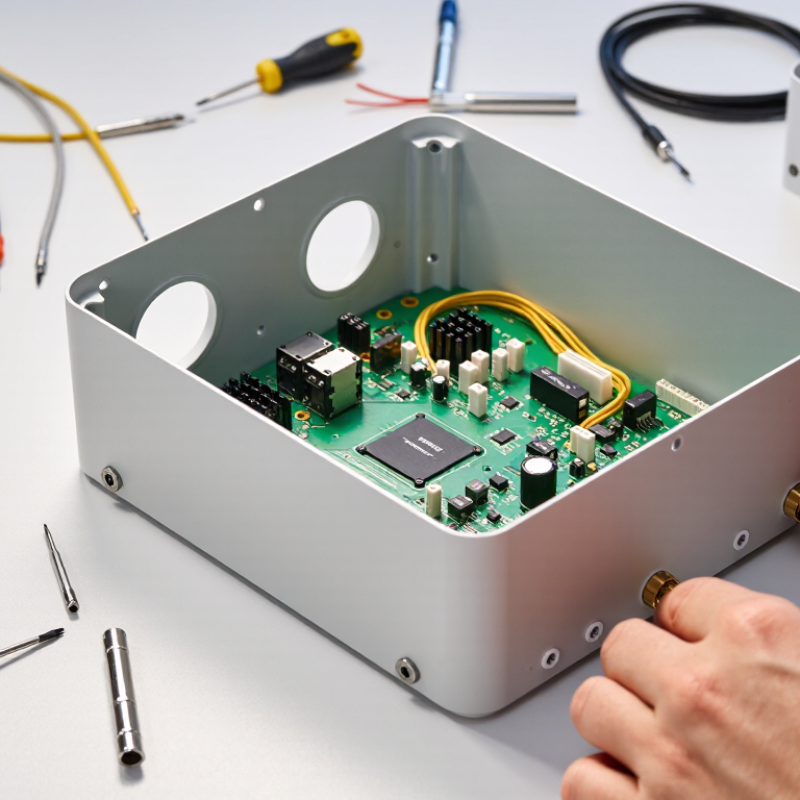
A small electronics enclosure does more than cover a circuit board. It must hold components securely, allow access to connectors, and suit the conditions where the device will operate. For a wall-mounted sensor, that could mean matching screw positions and leaving room for cables to bend without strain. For a handheld controller, grip and button placement may matter more. The right choice depends on the product, not just the drawing.

Choosing a custom ABS electronics enclosure involves several connected decisions. Consider the dimensions, wall thickness, mounting features, ventilation needs, surface finish, and production quantity. ABS is commonly selected for its practical balance of strength, weight, and ease of fabrication, but it is not the best fit for every environment. Heat, sunlight, impact, and chemical exposure deserve careful review. Details matter.

A neat-looking prototype can still hide a poor fit. A connector may sit too close to a wall, or a lid may press against a component. These problems are easier to catch with a physical sample and clear measurements than with assumptions. The seven tips ahead will help you compare suppliers, prepare useful specifications, and check design details before production. No checklist replaces testing. And some trade-offs may only become clear after handling a sample.
7 Tips for Choosing a Custom ABS Electronics Enclosure?

Define the Requirements for a Custom ABS Electronics Enclosure

7 Tips for Choosing a Custom ABS Electronics Enclosure

Define the Requirements for a Custom ABS Electronics Enclosure

Tip 1: Measure the components before discussing enclosure dimensions. Record the circuit board’s length, width, and height, then allow room for connectors, cables, and assembly. A few millimeters can matter. Check how the enclosure will be mounted, too. Wall brackets, screws, and internal supports all need space.

Tip 2: Describe the operating environment clearly. Note expected temperatures, sunlight exposure, dust, moisture, and nearby heat sources. ABS can suit many indoor electronics applications, but the material and enclosure design must match actual conditions. Don’t assume a unit will stay cool just because its first prototype did. That assumption deserves a second look.

Tip 3: Map every user interaction. Mark where buttons, displays, vents, and cable exits should sit. Include connector sizes and the direction cables need to bend. A cable that fits on paper may press against a wall in the finished enclosure.

Tip 4: Specify access and fastening needs, such as a removable cover or threaded inserts.

Tip 5: Define finish, color, and visible surface details.

Tip 6: Ask how tolerances affect fit.

Tip 7: Review a physical prototype with the real components installed. Test it. Record what feels awkward, even if the drawing looked perfect.

Assess Operating Conditions and Required Protection

Assess the enclosure’s real environment before choosing its wall thickness or seal. Will it sit beside a warm power supply, collect dust on a factory floor, or face rain outdoors? Measure ambient and internal temperatures during peak load; a shaded bench test can miss heat trapped around components. ABS grades vary, so check the resin supplier’s temperature and chemical-resistance data rather than assuming every enclosure behaves alike.

Tip: Define the hazard, then set a testable protection target. IEC 60529 classifies IP6X as dust-tight and IPX7 as protection against temporary immersion under specified test conditions. An IP67 target does not automatically protect against every cleaning chemical, pressure wash, or long-term outdoor exposure. Match the rating to actual use, and verify the lid, gasket, cable entries, and fasteners together. Small gaps matter.

For a dusty workshop, inspect seams and connector openings; for outdoor use, consider UV exposure and temperature cycling. Record the hottest measured internal temperature and the test method, not just the room reading. A protection target chosen from habit is easy to miss. I would also revisit the assumptions after the first prototype: cable bends and uneven gasket compression can change the result. Refer to IEC 60529 and the selected ABS material’s technical data sheet when documenting the design.

7 Tips for Choosing a Custom ABS Electronics Enclosure? – Assess Operating Conditions and Required Protection

Operating Condition What to Assess Practical Design Consideration Verification
1. Temperature Minimum and maximum ambient temperatures, internal heat from components, and exposure duration. Check the selected ABS grade’s temperature data and allow for heat buildup. ABS grades and enclosure designs vary; do not assume one universal operating range. Review the material datasheet and test the assembled enclosure under expected load and temperature conditions.
2. Dust and water Dust exposure, splashes, rain, washdown, immersion risk, and the direction or duration of water exposure. Specify the required IP rating for the complete assembled enclosure. Seams, cable entries, switches, and fasteners can affect protection; ABS alone does not establish an IP rating. Test the finished assembly to the applicable IP test method, including its seals and installed accessories.
3. Impact and vibration Drops, knocks, transport vibration, mounting orientation, and the mass of internal components. Use appropriate wall thickness, corner radii, ribs, and mounting points. Assess the enclosure and material grade at the lowest expected temperature, when impact behavior may differ. Perform representative impact, vibration, and mounting-load tests on the assembled product.
4. Sunlight and outdoor exposure Direct UV exposure, outdoor service life, temperature cycling, and weather exposure. Standard ABS may weather or change color with prolonged UV exposure. For outdoor use, consider a UV-stabilized grade or a different material, and assess the full design. Confirm UV and weathering performance with grade-specific data or suitable exposure testing.
5. Chemicals and cleaning Contact with cleaners, oils, fuels, solvents, process fluids, or disinfectants, including concentration and contact time. Chemical compatibility depends on the ABS grade, chemical, temperature, and exposure. Some solvents can damage ABS; check compatibility before specifying it. Consult grade-specific compatibility information and test samples using the actual chemical and cleaning procedure.
6. Condensation and humidity Humidity changes, condensation, temperature swings, and the sensitivity of internal electronics to moisture. Choose sealing and ventilation features based on the actual moisture risk. A vent can help manage pressure or condensation but may change the enclosure’s ingress protection. Evaluate the assembled enclosure in expected humidity and temperature-cycle conditions, including any vents or cable glands.
7. Electrical and fire-safety requirements Voltage, heat sources, required insulation, flame behavior, grounding, and applicable product regulations. Select a documented ABS grade that meets the product’s requirements. Plastic enclosures are not inherently electrically conductive or flame-retardant; design openings and clearances for the application. Check grade certifications and have the complete product assessed against applicable electrical and safety standards.

Note: Protection performance depends on the specified material grade, enclosure geometry, seals, hardware, and final assembly. Confirm requirements with product-specific documentation and testing.

Select Enclosure Dimensions, Features, and Mounting Options

7 Tips for Choosing a Custom ABS Electronics Enclosure?

Select Enclosure Dimensions, Features, and Mounting Options

Size the enclosure around the assembled electronics, not just the circuit board. Measure connector projection, cable bend radius, battery height, and screw heads. Then allow room for assembly and servicing. A plug that fits on paper may hit the sidewall in real life. Check the complete tolerance stack; small errors add up.

Choose wall thickness and internal ribs for the expected handling and load. Place standoffs beneath board supports, away from components and traces. Add ventilation only where heat requires it; openings can reduce dust protection. For reference, IEC 60529 defines a 12.5 mm test sphere for the IP2X solid-object rating. Select mounting bosses, slots, or brackets based on the installation surface and service access. CAMPUS plastics data lists many general-purpose ABS grades near 1.04 g/cm³, but grade-specific data should guide weight and molding decisions. Details matter. Test a physical sample with the actual cables and fasteners.

One thing worth reconsidering: compact dimensions often look elegant, but leave little room for repair.

Compare ABS Grades and Manufacturing Methods

ABS grades differ in impact resistance, heat tolerance, and flame performance. General-purpose ABS suits many indoor housings, while high-impact grades better tolerate drops and knocks. Heat-resistant grades can help near warm components, but they may cost more or mold differently. Flame-retardant grades need verification against the enclosure’s actual safety requirements. MatWeb’s compiled material records put typical unfilled ABS density near 1.04 g/cm³; formulation and test conditions affect reported properties. Treat that figure as a reference, not a design guarantee. Ask suppliers for grade-specific test data.

Manufacturing choice matters too. Injection molding suits repeat orders and complex details, but tooling raises upfront cost. CNC machining avoids a mold and works for prototypes or small batches, though material waste can increase. Additive manufacturing enables quick fit checks, but printed parts may show layer lines and weaker directional strength.

PlasticsEurope’s Plastics—the Facts 2024 report estimates global plastics production at 413.8 million tonnes in 2023. That broad figure signals a mature materials industry, not a reason to choose ABS blindly. Compare sample parts, especially around screw bosses and thin walls. The best option is not always obvious.

Verify Design, Compliance, and Prototype Performance

Start with the actual electronics, not an idealized drawing. Check board dimensions, connector positions, cable bends, and screw clearances against the enclosure model. A few millimeters can decide whether a plug seats cleanly. Confirm wall thickness and mounting points, too; thin bosses may crack when screws are tightened. Small details matter.

Define operating conditions before approving the design. Estimate heat from the components, then test whether the enclosure traps it near sensitive parts. Confirm that the selected ABS grade and any coatings meet the project’s documented requirements. Compliance depends on the complete product and its intended use, not on the plastic name alone. Ask a qualified test provider which evaluations apply, and keep material records, drawings, and revisions together. Labels and access to service points deserve a check as well.

Build a prototype using production-like material and processes when possible. Fit the real board, close the case, and inspect connector access, seams, and fastening points. Run it under expected operating conditions, then look for heat buildup, distortion, loose inserts, or pinched wires. It may not fit perfectly on the first try. That is useful evidence, not a failure. Record each change and repeat the checks; a prototype that merely looks right can still reveal problems after assembly.