7 Tips for Choosing the Best Water Control Gate?
Choosing the right water control gate is rarely a simple purchasing decision. It affects flow regulation, flood protection, irrigation performance, and long-term maintenance costs. A gate that looks suitable in a catalog may fail under sediment, pressure, corrosion, or repeated operation. Practical site conditions matter more than attractive specifications.
This guide shares seven useful tips for evaluating a water control gate with greater confidence. The recommendations focus on gate type, opening size, operating load, construction materials, sealing performance, automation, and supplier support. Each factor should match the channel, reservoir, drainage system, or treatment facility where the gate will operate. Small details matter, such as a muddy guide rail, an exposed actuator, or limited access for routine inspection. They can create serious difficulties later.
Reliable selection begins with verified information. Review flow rates, water levels, debris conditions, temperature changes, and expected operating frequency. Ask manufacturers for test data, installation guidance, and maintenance requirements. Independent engineering review is also valuable for critical infrastructure. No checklist can replace accurate field measurements. That is an important limitation.
A carefully selected gate should operate smoothly, resist its working environment, and remain serviceable for years. However, even a high-quality product can perform poorly when installed incorrectly or neglected. Consider the complete lifecycle, not only the initial price. These seven tips can help you compare options clearly and avoid expensive assumptions before committing to a final design.
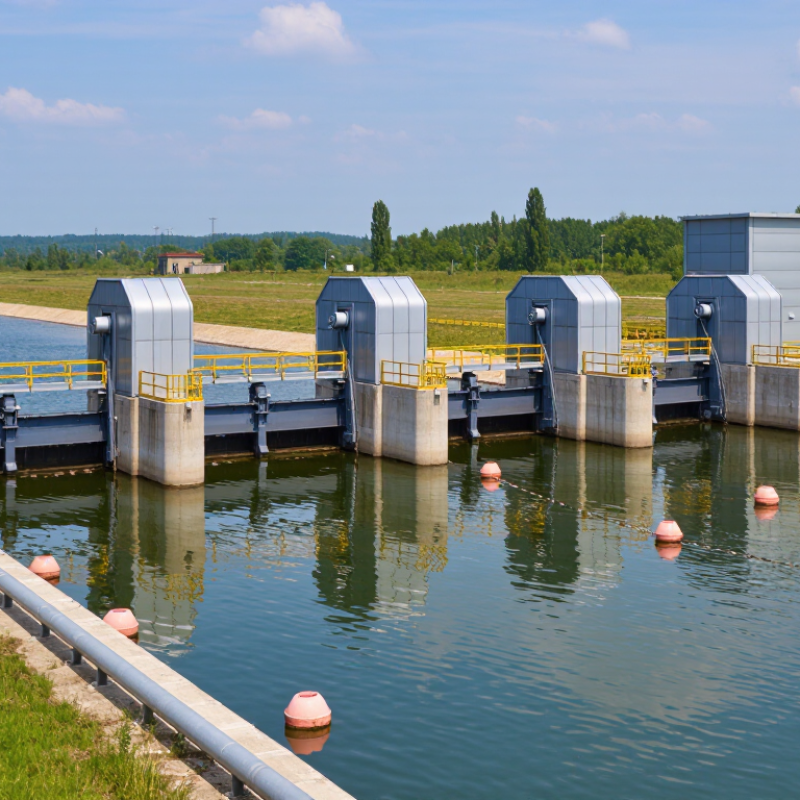
Define Design Duty: Flow Rate, Head, Channel Size, and 1–2 m/s Velocity
7 Tips for Choosing the Best Water Control Gate?
Define Design Duty: Flow Rate, Head, Channel Size, and 1–2 m/s Velocity
Choosing a water control gate starts with defining its design duty, not selecting a gate shape. Record peak, normal, and minimum flow rates from surveys or operating records. A single average value can hide storm inflows or daily process changes. Measure channel width, bed slope, water depth, and upstream and downstream levels. These details establish the actual hydraulic setting.
Head is equally important. Calculate the maximum water-level difference across the gate, including emergency conditions and downstream blockage. The gate must move and seal under that pressure, not only during normal operation. Check whether sediment, floating debris, or uneven concrete could change the load. Small site errors matter. I once underestimated a channel width on an old drawing; the proposed frame later needed adjustment. Rechecking dimensions is slower, but cheaper than rebuilding.
Use velocity as a practical design check, usually targeting about 1–2 m/s where conditions allow. Lower velocity may encourage sediment deposition, while higher velocity can increase turbulence, vibration, and wear. Relate velocity to flow and channel area:
Q = A × V.
For example, 2 m³/s through a 2 m² opening produces 1 m/s. Confirm this result at several operating levels, because the opening area changes with gate position. Ask for documented calculations, material data, load assumptions, and testing records. Reliable choices come from traceable inputs, not attractive catalog dimensions.
Select the Gate Type: Compare Sluice, Slide, Flap, and Stop-Log Designs
7 Tips for Choosing the Best Water Control Gate
Tip 1: Define the duty first. Sluice gates suit channels, culverts, and reservoirs needing controlled vertical flow. Slide gates work well for isolation and moderate head conditions. Measure upstream head, opening size, sediment depth, and design flow. Tip 2: Use flap gates where reverse flow is the main concern. Their hinged panels close automatically during tides or downstream flooding. Tip 3: Choose stop-log gates for simple seasonal control. They are practical, but operators need safe lifting access and storage space.
The UNESCO World Water Development Report 2024 states that agriculture uses about 70% of global freshwater withdrawals. That figure makes leakage and inaccurate regulation expensive. Tip 4: Check sealing performance under real head pressure. A small gap can produce visible jets, vibration, and erosion around the sill. Tip 5: Compare maintenance access, not only purchase cost. Sluice and slide gates require inspection of stems, seals, guides, and hoists. Stop-logs need repeated manual handling. Flap gates have fewer moving parts, but hinge corrosion can be overlooked.
The WMO State of Global Water Resources 2023 reported that 2023 was the driest year for global rivers in 33 years. Tip 6: Allow for both drought and sudden inflow. A gate sized only for average flow may fail during storms. Tip 7: Match materials to water chemistry and debris exposure. Stainless components may help, though they are not maintenance-free. I would also request a lifecycle estimate. The cheapest gate can become the costliest choice after one difficult repair.
Specify Materials: Stainless Steel Grades and ISO 12944 Coating Classes
Water-control gates often fail at welds, hinges, and crevices before the main plate looks damaged. Material selection must reflect water chemistry, not only purchase price. The NACE IMPACT study estimated global corrosion costs at 2.5 trillion US dollars annually, equal to about 3.4% of global GDP. That figure supports disciplined specifications.
For freshwater service, 304 stainless steel may perform well when chlorides remain low and cleaning is practical. Saltwater, brackish water, or chloride-rich runoff usually justifies 316 stainless steel, especially around submerged welds. Still, 316 is not automatically safe. Temperature, stagnant pockets, biological deposits, and poor weld cleaning can trigger pitting. I would request chloride, pH, and temperature records before approving a grade. Duplex stainless steel can offer higher strength, but fabrication quality becomes more demanding.
Coating requirements need equal precision. ISO 12944 classifies atmospheric corrosivity from C1 to CX, while C4 and C5 environments require more robust systems than ordinary inland exposure. Its durability ranges are estimates: low, medium, high, and very high, with very high exceeding 25 years under defined conditions. The class is not a warranty. Specify surface preparation, edge rounding, stripe coats, dry-film thickness, and inspection records. One detail is often missed. ISO 12944 primarily addresses coated steel systems, so stainless gates should not receive unnecessary paint without checking crevice risks and maintenance access. World Stainless production statistics reported approximately 58.4 million tonnes in 2023, yet volume does not replace site-specific engineering judgment.
Evaluate Sealing: Seating Head, Leakage Limits, and AWWA C561 Compliance
A reliable water control gate starts with its sealing duty, not its frame size. Confirm the seating head, or water pressure pushing the gate against its seal. A higher head demands stronger compression and more careful guide alignment. On site, measure the opening, check concrete flatness, and record upstream and downstream levels. A small misalignment can create a visible trickle.
Leakage limits must appear in the specification and acceptance test. Do not accept vague wording such as “watertight.” State the allowable leakage rate, test head, test duration, and whether seating or unseating pressure applies. AWWA C561 provides requirements for fabricated stainless-steel slide gates, including design, materials, and leakage testing. Verify the applicable edition with the engineer. Field conditions rarely match the drawing perfectly. That is where many assumptions fail.
The U.S. Environmental Protection Agency’s 2022 Clean Watersheds Needs Survey estimated $630.1 billion in wastewater infrastructure needs over 20 years. That figure makes lifecycle sealing important, not merely initial purchase price. Inspect seal wear, fastener access, frame deflection, and corrosion exposure. Request documented factory and field test results. AWWA C561 compliance should be demonstrated through records, not a logo or sales claim. I would also keep a small uncertainty allowance for installation tolerances. Perfect sealing is a useful target, but unmanaged tolerances can quietly defeat it.
7 Tips for Choosing the Best Water Control Gate
Evaluate Sealing: Seating Head, Leakage Limits, and AWWA C561 Compliance
The chart converts the AWWA C561 reference leakage rate of 0.10 US gal/min per linear foot of seal into the maximum calculated leakage for different seal perimeters. A larger seating perimeter permits a proportionally larger total leakage allowance, so the gate should be evaluated using both the leakage rate and the actual seal geometry.
Selection checklist: confirm rated seating head, specify allowable leakage, verify seating and unseating conditions, inspect seal materials, review gate-frame stiffness, require documented testing, and confirm compliance with the applicable edition of AWWA C561 and project requirements.
Verify Actuation and Maintenance: Torque, Cycle Life, Access, and Testing
A water control gate can look robust on a drawing and still fail during a storm. Verify the actuator’s required torque under the worst head pressure, not only during dry commissioning. Ask for torque curves, safety factors, and the method used to calculate seating and unseating loads. A handwheel that feels smooth at installation may become difficult after sediment settles around the gate. I have seen teams size equipment from normal flow data. That assumption was wrong. Peak loads matter. Select controlled travel and position feedback when operators need repeatable openings.
Cycle life deserves the same scrutiny as initial price. Request a tested cycle rating and define what each cycle includes. Moving ten percent open and closed is not equal to a full-stroke operation. Check seals, stems, gearboxes, and fasteners against expected frequency, water chemistry, and debris loads. Maintenance access should be visible before concrete is poured. Can a technician reach the stem, remove the actuator, and replace a seal without draining the channel? Leave working clearance around inspection points. During factory and site testing, record travel time, torque, leakage, limit settings, and emergency operation. Photographs and signed test sheets create useful evidence for future crews. Do not treat testing as paperwork. A missed access detail can cost more than the gate.