
Contract Manufacturing for Injection Molded Plastic Products in North America
(800) 824.0607

RFQ / CONTACT
Contract Manufacturing for Injection Molded Plastic Products in North America | (800) 824.0607

What Are the Top 10 Roller Table Conveyor Manufacturers?

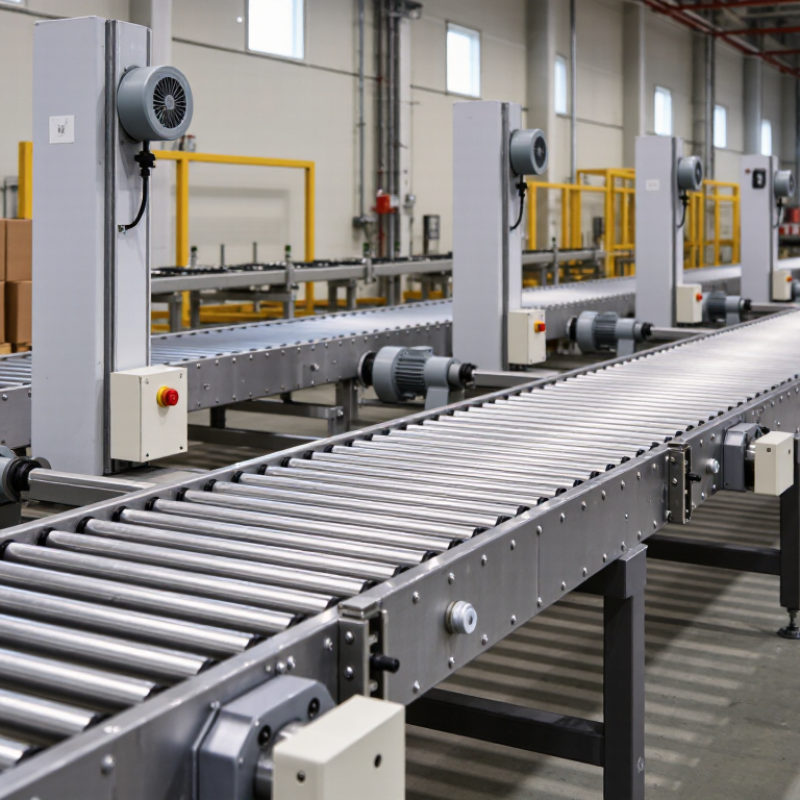
A Roller Table Conveyor may look simple: steel rollers, a sturdy frame, and a drive system moving loads between workstations. Yet the right design can affect line speed, product handling, maintenance time, and how safely workers transfer materials. Buyers therefore compare more than price. Roller diameter, load capacity, conveyor width, controls, guarding, and service support all matter.

Industry investment points to a wider shift. MHI and Deloitte’s 2024 Annual Industry Report found that 55% of surveyed supply-chain leaders planned to increase investment in supply-chain technology during 2024. That figure covers technology broadly, not roller conveyors alone. Still, it reflects pressure to improve material flow and connect equipment with larger automation systems. Small details count. A poorly matched roller pitch, for example, can make a carton wobble or stall at a transfer point.

This guide examines ten Roller Table Conveyor manufacturers and the factors that distinguish them, including product range, customization, integration capabilities, and support. It is not a universal ranking: a manufacturer suited to heavy steel components may not fit a parcel line. Published specifications also do not tell the whole story. Ask about real operating conditions, spare-parts access, and performance references before choosing. One caveat: supplier claims deserve verification, especially when comparing unlike systems.
What Are the Top 10 Roller Table Conveyor Manufacturers?

What Is a Roller Table Conveyor?

A roller table conveyor moves goods across a line of rotating rollers mounted in a frame. The rollers support cartons, totes, or rigid-bottom loads while reducing the effort needed to push them. Some systems use gravity and a slight incline; others use powered rollers to control movement. Simple, but not foolproof. A soft package can sag between rollers, while a skewed carton may drift or jam.

Roller tables are common at packing stations, sorting points, and assembly lines, where workers need access to items from above. Roller spacing, load weight, frame height, and transfer direction all affect performance. MHI’s 2024 Annual Industry Report found that 55% of surveyed supply-chain professionals planned to increase investment in supply-chain innovation. That figure is not specific to conveyors, but it highlights why practical material-handling choices matter. Poorly matched equipment can still create bottlenecks.

Tips: Match roller spacing to the smallest load base, not just the heaviest carton. Check that items remain stable at the chosen incline. Measure the real load, including packaging. Small details matter. Recheck the line after installation; actual traffic patterns may reveal awkward transfers that a drawing missed.

What Is a Roller Table Conveyor?

Roller table conveyors move items along a series of rotating rollers. These selected nominal roller diameters are commonly found in conveyor equipment; the right size depends on the load, roller spacing, and operating conditions. Sizes and availability vary by manufacturer.

How Are Roller Table Conveyor Manufacturers Evaluated?

Evaluate roller table conveyor manufacturers against your operating conditions, not polished catalog claims. Start with rated load, roller pitch, conveyor width, speed, and duty cycle.

MHI and Deloitte’s 2024 Annual Industry Report found that 55% of surveyed organizations planned to increase supply-chain technology investment. That figure does not rank conveyor suppliers, but it highlights the value of checking controls and system integration. Numbers need context.

Request drawings, load calculations, and test results for products handling cases like yours. Compare roller deflection, bearing life, frame stiffness, and performance under uneven loads. Ask how the manufacturer verifies capacity, and whether its design follows relevant Conveyor Equipment Manufacturers Association guidance. Check guarding, emergency-stop access, spare-part availability, and expected maintenance intervals.

Test it loaded. A witnessed trial with your actual cartons can reveal jams that a clean showroom run will miss.

Review installation references from similar facilities, but ask about problems as well as successes. Confirm who handles commissioning and how quickly replacement rollers can be supplied. A low purchase price may hide frequent adjustments or long service delays.

Still, published ratings rarely reflect dust, washdown, or rough handling on a real shift; a factory test cannot settle every question.

Which 10 Manufacturers Lead the Roller Table Conveyor Market?

The ten leading roller table conveyor manufacturers are not defined by one universal ranking. Their strengths show up in different factory conditions. Heavy-duty builders design frames and rollers for steel, timber, and loaded pallets. Modular-system specialists make sections that fit changing layouts. Accumulation experts control back pressure when cartons pause on a line. Food-grade producers focus on cleanable surfaces and corrosion resistance. Parcel-handling manufacturers prioritize speed and reliable package flow.

Other leaders serve distinct needs. Custom engineering firms adapt roller pitch, width, and drive systems to unusual products. Warehouse automation makers connect conveyors with sortation and storage equipment. Mining and bulk-material specialists build for dust, impact, and heavy loads. Regional integrators offer installation and maintenance close to the site. Export-focused producers compete through broad configuration options and documented testing. Details matter. A polished catalog cannot show how quietly a loaded roller turns after months of use. Buyers should compare payload ratings, roller spacing, spare-part access, and service response. The market picture is imperfect: a capable local specialist may outperform a larger supplier on a specific line.

What Are the Top 10 Roller Table Conveyor Manufacturers? - Which 10 Manufacturers Lead the Roller Table Conveyor Market?

The table below compares ten practical capabilities used to evaluate roller table conveyor suppliers. It is not a verified ranking of manufacturers; comparable public market-share data is not provided here.

No. Supplier Capability Relevant Conveyor Facts What to Verify
1 Gravity roller systems Use a decline or manual pushing to move loads; they do not require a powered drive for conveying. Load limits, roller spacing, slope, and whether the product has a sufficiently flat base.
2 Powered roller systems Use motorized rollers or a drive mechanism to move loads without relying on gravity alone. Speed control, drive layout, accumulation method, and controls integration.
3 Live roller conveyors Powered rollers convey unit loads such as cartons, totes, and pallets, subject to system design and load requirements. Minimum and maximum load dimensions, weight, and required throughput.
4 Accumulation and zone control Zero-pressure accumulation systems control product spacing so loads can queue with reduced contact between items. Zone length, sensing method, release logic, and handling of irregular loads.
5 Pallet roller tables Heavy-duty roller conveyors can be designed to handle palletized loads; capacity depends on the structure, rollers, and operating conditions. Rated load per pallet, support spacing, impact conditions, and pallet quality.
6 Roller and frame materials Steel, stainless steel, and polymer components are used in conveyor designs; material choice depends on load, environment, and cleaning needs. Corrosion exposure, hygiene requirements, temperature, and material specifications.
7 Roller pitch and load support Roller spacing must suit the load base; adequate support is needed to prevent loads from becoming unstable or sagging between rollers. Product footprint, base rigidity, roller diameter, and support points during transfer.
8 Curves, merges, and transfers Conveyor layouts may include curves and transfer sections, but load orientation and dimensions affect whether a design will work reliably. Transfer gaps, turning radius, load stability, and line layout drawings.
9 Controls and system integration Powered conveyor lines may require sensors, motor controls, safety devices, and communication with other material-handling equipment. Control scope, interfaces, safety design, and commissioning responsibilities.
10 Engineering and lifecycle support Conveyor performance depends on correct application design, installation, maintenance, and replacement-part availability. Engineering documentation, warranty terms, maintenance guidance, and service coverage.

What Products and Technologies Distinguish These Manufacturers?

Roller table conveyor manufacturers stand out less by catalog size than by how their systems handle real loads. Gravity tables suit simple transfers, while powered rollers keep cartons moving across longer routes. Leading product ranges often include straight sections, curves, transfers, and adjustable legs. Small details matter: roller spacing must support a carton’s base without sagging.

Their technologies differ in drive design and control. Some systems use motorized rollers with zone-based accumulation, allowing packages to pause without stopping the entire line. Others rely on chain or belt drives for heavier loads. Sensors, variable-speed controls, and guarded pinch points can improve flow and operator safety. Still, more automation is not always better. It can add maintenance and control complexity.

Material choices also distinguish manufacturers. Galvanized steel works well in many dry warehouses, while stainless steel may suit washdown areas. Roller diameter, bearing quality, frame strength, and noise levels deserve close attention. A sample carton test can reveal problems that a specification sheet misses, especially at curves and transfers. The awkward truth is that no single design fits every facility. A poorly matched conveyor may run smoothly when empty, then stall under uneven loads.

How Can Buyers Compare Manufacturers and Select a Supplier?

Buyers comparing roller table conveyor manufacturers should begin with the real load, not a brochure’s maximum speed. Record product weight, base dimensions, surface condition, and hourly flow. Then check roller diameter, spacing, frame stiffness, and drive capacity against those details. A carton with a soft base may sag between rollers; a heavy tote can expose weak bearings quickly. Ask for a layout drawing and a test using representative loads. Small details matter.

Integration deserves equal scrutiny. MHI’s 2024 Annual Industry Report found that 55% of surveyed supply-chain professionals planned to adopt robotics and automation within five years. That trend makes control compatibility, sensor placement, and safe handoffs worth checking before purchase. Ask how the conveyor communicates with upstream equipment, handles jams, and resumes after a stop. Request documented duty-cycle limits, maintenance intervals, spare-part lead times, and warranty terms. Compare total operating costs, not just the quoted price. Factory references help, but similar product dimensions and shift patterns matter more. One imperfect point: published throughput figures rarely reflect every site’s layout, so require written acceptance criteria before shipment.