7 Best Carbon Fiber Components Manufacturers Worldwide
Choosing reliable carbon fiber suppliers requires more than comparing glossy websites or impressive product photographs. Carbon Fiber Components can vary significantly in fiber grade, resin system, surface finish, dimensional accuracy, and testing standards. A lightweight panel may look perfect while hiding inconsistent curing or weak bonding beneath the surface.
This guide examines seven respected Carbon Fiber Components manufacturers worldwide. The selection considers engineering experience, production capability, quality management, customization, and evidence of dependable delivery. It also considers practical details, such as autoclave capacity, mold precision, laminate design, inspection methods, and support for prototypes or larger production runs. These factors matter when a component must fit tightly, withstand vibration, or perform reliably under changing temperatures.
Real manufacturing is rarely flawless. Lead times can shift. Communication may vary across regions. Even strong manufacturers may specialize in different applications. Some excel at aerospace-grade structures, while others offer better solutions for automotive parts, sporting equipment, robotics, or industrial assemblies. Buyers should verify certifications, material traceability, test reports, and current production capabilities before making a final decision.
Details matter most.
The companies discussed here are not ranked solely by size or reputation. Their value depends on project requirements, technical risk, budget, and expected service life. By comparing their strengths and limitations, engineers, procurement teams, and product designers can make a more informed choice. The goal is not to promise a perfect supplier, but to identify manufacturers worthy of careful evaluation.
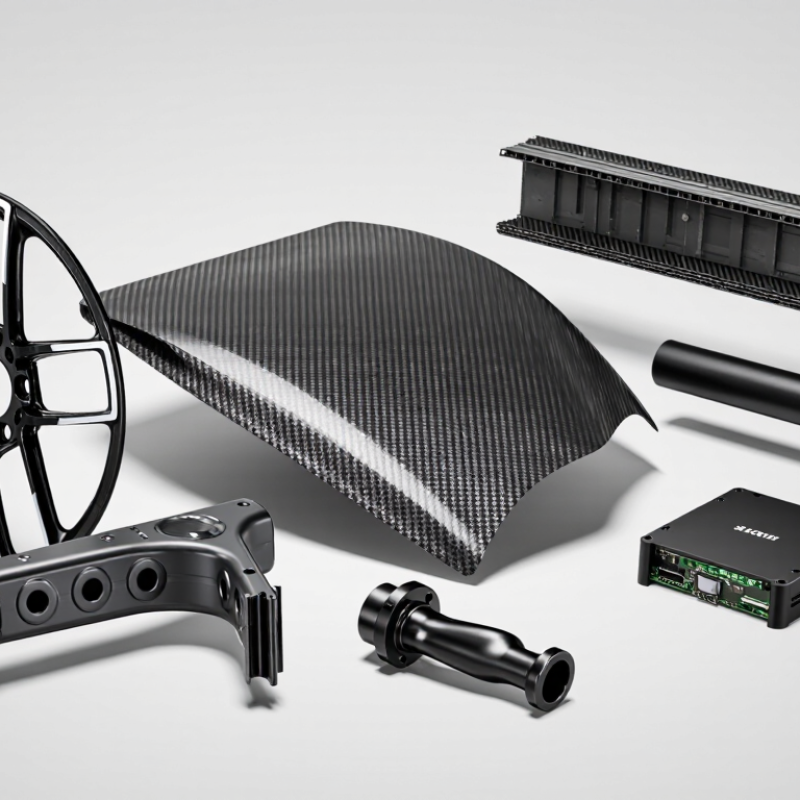
Carbon Fiber Components: Materials, Processes, and Performance Standards
Carbon fiber components combine low weight, high stiffness, and carefully controlled manufacturing. The material is not simply “stronger than steel.” Its performance depends on fiber direction, resin quality, void content, and load design. Unidirectional carbon suits beams and arms, while woven fabric handles multi-directional stress. Prepreg systems offer accurate resin ratios, but refrigerated storage and strict handling are essential.
Common processes include autoclave curing, compression molding, resin transfer molding, and filament winding. Each method changes surface quality, production speed, and internal consistency. Autoclave parts can achieve excellent consolidation under heat and pressure. Compression molding is often more practical for repeated production. Yet, every process has weaknesses. A small wrinkle may become a serious stress concentration.
Reliable manufacturers verify components through documented inspections and mechanical testing. Tensile testing can follow ASTM D3039, while flexural performance may follow ASTM D790 or ISO 14125. Fiber volume, voids, cure temperature, and dimensional tolerance also require records. Visual inspection alone is not enough. It can miss internal delamination. Ultrasonic inspection helps reveal hidden defects in thicker laminates. I have seen polished surfaces hide uneven bonding, which is why traceable testing matters more than appearance. A perfect layup sounds attractive, but real production needs continual review, process feedback, and honest acceptance of variation.
How to Evaluate Carbon Fiber Component Manufacturers Worldwide
How to Evaluate Carbon Fiber Component Manufacturers Worldwide
When comparing carbon fiber component manufacturers worldwide, begin with evidence, not polished photographs. Ask for process maps covering fiber storage, layup, curing, machining, and final inspection. A capable supplier should explain resin systems, fiber orientation, cure temperatures, and allowable tolerances clearly. Request sample inspection reports, material certificates, and dimensional records from recent production. Vague answers are signals. They may reveal weak technical control.
Evaluate engineering depth through a controlled sample. Provide the same drawing, load case, surface requirement, and delivery target to each manufacturer. Compare their questions before comparing their prices. Strong teams identify risks such as voids, delamination, warpage, and galvanic interaction with metal fittings. They should recommend inspection methods, including ultrasonic testing, coordinate measurement, and visual standards. Ask how nonconforming parts are isolated and corrected. Good documentation matters.
Audit capacity beyond the sales office. Review equipment maintenance, operator training, traceability, environmental controls, and subcontractor management. A factory visit may reveal crowded work areas, poor storage, or careful material handling. Also examine quality certifications, but do not treat certificates as proof of daily discipline. Speak with reference customers about repeatability, engineering response, and late design changes. A practical evaluator should admit uncertainty. I would allow time for a second audit, because one visit can create false confidence. Do not rush.
Seven Leading Carbon Fiber Component Manufacturers by Industry Focus
The seven leading carbon fiber component manufacturers differ mainly by industry focus. Aerospace specialists produce lightweight brackets, panels, and structural assemblies under strict traceability systems. Automotive manufacturers focus on crash performance, dimensional accuracy, and repeatable production. Cycling specialists refine frames, forks, and wheel parts for stiffness and controlled weight.
Wind energy manufacturers build large composite sections that resist fatigue and changing weather. Medical component producers create precise housings and support structures with clean, stable surfaces. Industrial robotics suppliers develop rigid arms, covers, and motion components that reduce vibration. Marine specialists make corrosion-resistant panels, masts, and reinforcement parts for demanding water environments. These categories are more useful than a simple global ranking. No ranking is perfect.
Tips: Ask for fiber orientation data, resin specifications, inspection records, and production tolerances. Request sample parts when possible. Check how the supplier handles repairs, batch changes, and long-term support. A polished surface can hide weak bonding. Do not judge quality by appearance alone. Experienced buyers should also compare load cases, operating temperatures, and expected service life. Some manufacturers excel at prototypes but struggle with volume production. That distinction matters. Considering these details can make the final selection more reliable, even when technical documentation is incomplete.
Manufacturing Capabilities, Quality Systems, and Customization Options
7 Best Carbon Fiber Components Manufacturers Worldwide
Manufacturing quality now matters as much as fiber strength. MarketsandMarkets’ 2024 Carbon Fiber Market report projects growth from about USD 3.9 billion in 2023 to USD 5.5 billion by 2028. That expansion raises expectations for repeatable production, not attractive samples. Capable manufacturers should offer prepreg layup, resin transfer molding, filament winding, compression molding, and controlled curing. Their equipment must match the component’s load path, geometry, and production volume.
Quality systems reveal operational maturity. ISO 9001 registration is useful, but it is only a starting point. Aerospace programs may require AS9100, while automotive projects often demand IATF 16949 controls. Strong factories document fiber and resin batches, cure temperatures, pressure cycles, and operator qualifications. They also use ultrasonic inspection, dimensional scanning, and void-content testing. The ISO Survey 2023 reported more than one million ISO 9001 certificates worldwide, so certification alone cannot prove technical depth.
Customization should be measurable. Ask for laminate schedules, ply-drop rules, tolerance limits, surface-finish samples, and inspection plans. A serious supplier can adjust fiber orientation, resin chemistry, tooling materials, and cure profiles. Small details matter: a 0.2-millimeter edge mismatch may affect assembly. I would still challenge every impressive claim. Some suppliers present certificates better than process evidence. Request a first-article report, sample test data, and traceability records before approving production.
Choosing the Right Global Supplier for Carbon Fiber Components
Selecting a global carbon fiber components supplier requires more than comparing catalog prices. Start with the application: load direction, impact exposure, operating temperature, and expected service life. Ask how the manufacturer controls fiber orientation, resin content, curing temperature, and laminate thickness. A reliable supplier should provide material certificates, dimensional reports, and batch traceability. Request sample parts, not only polished photographs. Small details matter. Check edge finish, drilled-hole quality, surface porosity, and insert alignment under real inspection conditions.
Production experience becomes visible during difficult conversations. Can the engineering team explain failure modes in plain language? Can it adjust tooling without hiding schedule risks? Evaluate prototype methods, inspection equipment, and the supplier’s ability to repeat results across different production runs. Independent testing can confirm tensile strength, compression performance, fatigue behavior, and thermal stability. Yet test data needs context. A coupon test may not represent a bonded assembly exposed to vibration, moisture, or repeated impacts. That gap is easy to miss.
Global sourcing also depends on communication, packaging, export documentation, and after-sales response. Define tolerances, acceptance criteria, intellectual property controls, and change-approval procedures before ordering. Time-zone delays can turn a minor drawing error into weeks of rework. Cost should include tooling, inspection, freight, replacement parts, and engineering support. The cheapest quotation may become expensive after one failed batch. I would still avoid over-specifying every detail; excessive requirements can slow development and add cost without improving safety. A practical supplier earns trust through evidence, honest limitations, and consistent delivery.
7 Best Carbon Fiber Components Manufacturers Worldwide - Choosing the Right Global Supplier for Carbon Fiber Components
Material performance benchmark for evaluating carbon fiber component supplier capabilities
Specific tensile strength is calculated as tensile strength divided by density. The benchmark uses representative room-temperature values for unidirectional carbon-fiber-reinforced polymer and commonly used aerospace-grade metals. Actual component performance depends on fiber orientation, resin system, laminate design, processing quality, testing standards, and application requirements.