
China Top Polyester Masterbatch Suppliers for Global Buyers
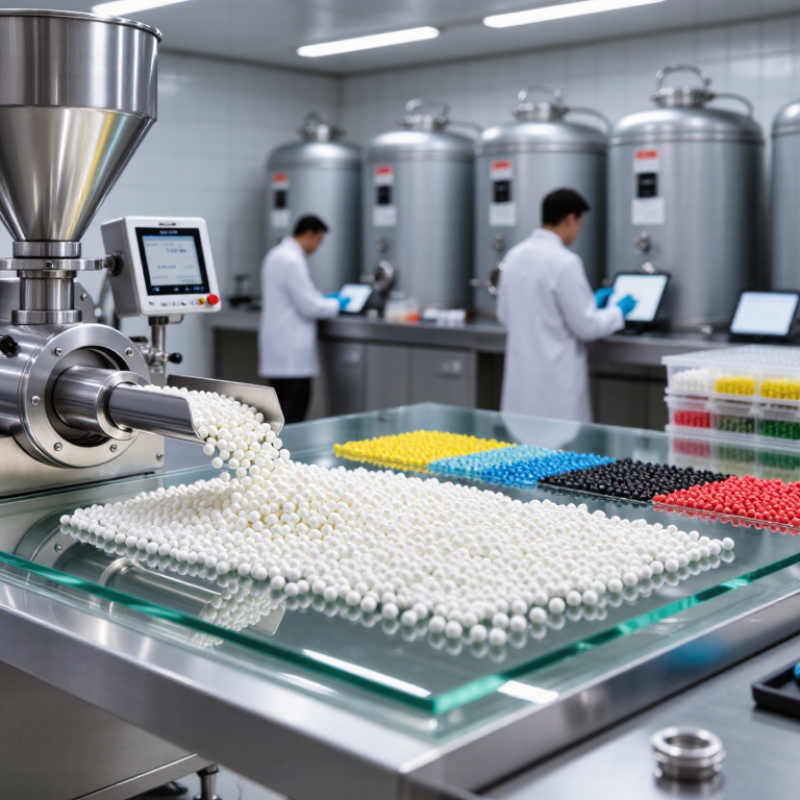
China has become a major sourcing destination for Polyester Masterbatch, supported by broad polymer capacity and improving color-control technology. Global buyers now examine more than price. They compare dispersion, carrier compatibility, heat stability, and production consistency. A bright white pellet may look simple, yet its quality depends on pigment selection, drying control, and careful extrusion.
Polymer specialist Dr. John Scheirs has stated, “Masterbatch performance depends on effective dispersion, carrier compatibility, and stable processing.” This practical view remains relevant for polyester applications. Suppliers should provide technical data, recommended dosing ranges, color references, and batch traceability. Buyers should also request samples tested under their own spinning, film, or injection conditions. Laboratory results can change on a busy production line.
The strongest Chinese suppliers usually combine formulation expertise with dependable manufacturing routines. They may offer custom shades, UV protection, delustered effects, or recycled-polyester compatibility. However, supplier claims still require verification. A polished website proves little. Audited facilities, retained samples, inspection records, and responsive technical support provide stronger evidence. Small differences in moisture or pigment loading can affect fiber appearance and breakage rates.
This guide introduces leading China-based suppliers for international buyers. It considers product quality, customization, documentation, export experience, and practical communication. Rankings are never perfectly objective. A supplier suitable for high-speed fiber production may not suit packaging film. Buyers should reflect on their own equipment, compliance needs, and volume before choosing a partner. That step is often overlooked.
Polyester Masterbatch: Definition, Functions, and Industrial Applications
China Top Polyester Masterbatch Suppliers for Global Buyers
Polyester masterbatch is a concentrated blend of pigments or functional additives in a polyester-compatible carrier. It is mixed into PET or other polyester materials during extrusion, injection molding, or fiber spinning. This approach improves dosing accuracy and reduces powder handling on production floors. Textile Exchange’s 2024 Materials Market Report estimated global fiber production at 124 million tonnes in 2023. Polyester represented about 57% of that volume, showing its industrial importance. Yet, high volume does not guarantee simple processing.
Its functions include durable coloration, UV protection, delustering, antiblocking, and selected performance improvements. Typical applications include PET bottles, preforms, films, packaging sheets, strapping, and textile fibers. A properly designed concentrate can support consistent shade and cleaner production. However, a color match on a laboratory plaque may fail after heat exposure, stretching, or recycling. This is an easy point to underestimate. The OECD’s Global Plastics Outlook reported 353 million tonnes of plastic waste in 2019, increasing pressure for recyclable and resource-efficient polyester products.
Tips: Check carrier compatibility, moisture content, dosage range, and dispersion quality before volume production. For packaging, request migration and food-contact documentation where required. Test the masterbatch under actual processing temperatures, not only standard laboratory conditions. Small differences in drying can change clarity, strength, and final color. A practical supplier should provide technical data, batch consistency records, and application guidance.
China Top Polyester Masterbatch Suppliers for Global Buyers - Polyester Masterbatch: Definition, Functions, and Industrial Applications
Technical comparison of common polyester masterbatch categories for PET and other polyester processing applications
| Masterbatch Type | Primary Function | Typical Carrier | Typical Addition Rate | Common Active Components | Main Applications | Important Technical Requirements | Buyer Quality Checks |
|---|---|---|---|---|---|---|---|
| White Polyester Masterbatch | Provides whiteness, opacity, light scattering, and visual coverage. | Polyester-compatible carrier, commonly PET or another compatible polyester resin. | Approximately 0.5–5%, depending on opacity and final color requirements. | Titanium dioxide, usually in rutile form, with dispersing and processing aids. | Polyester staple fiber, filament yarn, nonwoven fabric, film, strapping, and selected packaging products. | High dispersion, controlled moisture, thermal stability, low filtration pressure, and compatibility with spinning or extrusion conditions. | Whiteness index, opacity, pigment dispersion, filter-pressure increase, moisture, and batch-to-batch color consistency. |
| Black Polyester Masterbatch | Creates deep black coloration and improves light absorption. | PET or other polyester-compatible carrier resin. | Approximately 0.5–4%, depending on carbon black concentration and target jetness. | Specialty carbon black, dispersants, and stabilizing additives. | Black fibers, technical textiles, films, molded polyester parts, automotive fabrics, and outdoor products. | Uniform dispersion, controlled viscosity impact, low ash, thermal stability, and resistance to migration or surface defects. | Jetness, undertone, particle dispersion, filterability, ash content, moisture, and compatibility with recycled PET if applicable. |
| Color Polyester Masterbatch | Delivers consistent shades without direct handling of concentrated pigments. | Polyester carrier selected for the intended fiber, film, or molding process. | Commonly 0.2–3%; exact dosage depends on shade strength and product design. | Organic pigments, inorganic pigments, dyes where suitable, dispersants, and thermal stabilizers. | Apparel fibers, home textiles, carpets, technical yarns, packaging films, and injection-molded polyester products. | Shade repeatability, heat resistance, lightfastness, migration resistance, and compatibility with high-speed processing. | Color difference using ΔE, tinting strength, lightfastness rating, heat-aging performance, and visual plate or yarn approval. |
| Optical Brightener Masterbatch | Enhances perceived whiteness and brightness by converting ultraviolet energy into visible blue light. | Polyester-compatible resin carrier. | Often around 0.05–0.5%, subject to active concentration and target brightness. | Fluorescent whitening agents and compatible processing aids. | White polyester fibers, films, sheets, and selected consumer or technical textile products. | Controlled dosage, thermal stability, uniform distribution, and suitability for the intended end-use and regulatory requirements. | Whiteness improvement, fluorescence intensity, heat stability, migration behavior, and compliance documentation. |
| UV Stabilizer Masterbatch | Reduces ultraviolet-related discoloration, embrittlement, and loss of mechanical performance. | PET or a polyester carrier with suitable thermal stability. | Approximately 0.5–3%, depending on exposure level and stabilizer system. | UV absorbers, hindered amine light stabilizers, or blended stabilization systems. | Outdoor textiles, agricultural fabrics, geotextiles, straps, films, bottles, and durable molded components. | Long-term weathering performance, low volatility, compatibility with pigments, and minimal effect on melt flow. | Accelerated weathering results, tensile-retention data, color change, additive compatibility, and application-specific compliance. |
| Flame-Retardant Polyester Masterbatch | Improves resistance to ignition, flame spread, or afterflame under defined test conditions. | A polyester-compatible carrier selected to maintain processability. | Commonly 2–15%, depending on chemistry, target standard, and final polymer formulation. | Phosphorus-based, nitrogen-based, mineral, or synergistic flame-retardant systems. | Technical textiles, transportation fabrics, electrical components, furnishings, films, and industrial molded parts. | Thermal stability, low corrosivity, smoke behavior, mechanical-property retention, and compliance with the specified fire-test method. | LOI, vertical or horizontal burning performance, afterflame time, dripping behavior, smoke data, and certification reports. |
| Antistatic Polyester Masterbatch | Reduces static charge accumulation and improves dust-control or handling performance. | Polyester-compatible carrier with an antistatic additive system. | Typically 1–5%, depending on humidity, surface requirements, and processing conditions. | Permanent or migratory antistatic agents, conductive additives, or blends designed for polyester. | Packaging films, fibers, cleanroom materials, conveyor textiles, electronics packaging, and industrial fabrics. | Surface resistivity, humidity dependence, additive permanence, printability, and limited impact on transparency or mechanical properties. | Surface resistivity, charge decay time, coefficient of friction, additive migration, and performance at relevant humidity levels. |
| Processing-Aid Polyester Masterbatch | Supports smoother processing, reduced surface defects, improved release, or controlled melt behavior. | PET or another carrier designed for the target extrusion, spinning, or molding process. | Generally 0.2–3%, subject to the selected additive and process objective. | Dispersing agents, lubricants, nucleating agents, release aids, or rheology-control additives. | Fiber spinning, film extrusion, sheet production, injection molding, and recycled polyester processing. | Stable dosing, low volatility, minimal odor, no adverse effect on polymer molecular weight, and reliable filtration performance. | Melt pressure, torque, surface quality, break frequency, intrinsic viscosity, odor, and processing-window tests. |
| Recycled-Content-Compatible Polyester Masterbatch | Helps provide color or functional performance while accommodating recycled PET feedstocks. | Carrier selected for compatibility with recycled and virgin polyester blends. | Approximately 0.2–5%, depending on the functional package and variation in recycled feedstock. | Pigments, optical modifiers, stabilizers, chain-support additives, or processing aids. | Recycled polyester fibers, films, strapping, nonwovens, and selected packaging applications. | Tolerance to feedstock color variation, moisture control, filtration stability, odor management, and preservation of intrinsic viscosity. | Recycled-content compatibility, IV retention, color correction, odor screening, contaminant filtration, and traceability documentation. |