
Top 10 Excavator Gear Brands for Global Buyers
Choosing an excavator gear brand involves more than comparing prices or recognizing familiar logos. On a busy jobsite, a failed travel gear can stop a machine, delay deliveries, and leave crews waiting beside a muddy trench. Excavator Gear needs to suit the machine model, workload, and working conditions, from dusty demolition sites to steep, uneven ground. Small details matter. Tooth profile, material quality, machining accuracy, and parts availability can all influence service life and downtime. Yet a specification sheet cannot predict every repair.
This guide introduces ten brands that global buyers may encounter when sourcing excavator gears. It considers practical factors such as product range, manufacturing experience, quality controls, warranty terms, and responsiveness after a sale. Buyers should still confirm compatibility using the machine’s make, model, serial details, and existing gear measurements. A polished catalog is not enough. Ask for clear documentation, realistic lead times, and support for installation or troubleshooting. Regional availability can also change the value of an otherwise suitable product.
No ranking fits every fleet. A contractor running several machines in abrasive conditions may prioritize proven durability and fast replacement parts. A smaller operator may weigh price and local service more heavily. Some comparisons remain imperfect because brands do not always publish the same technical data. That is worth remembering. Use this overview as a starting point, then verify claims directly with suppliers and qualified service professionals before choosing a part.
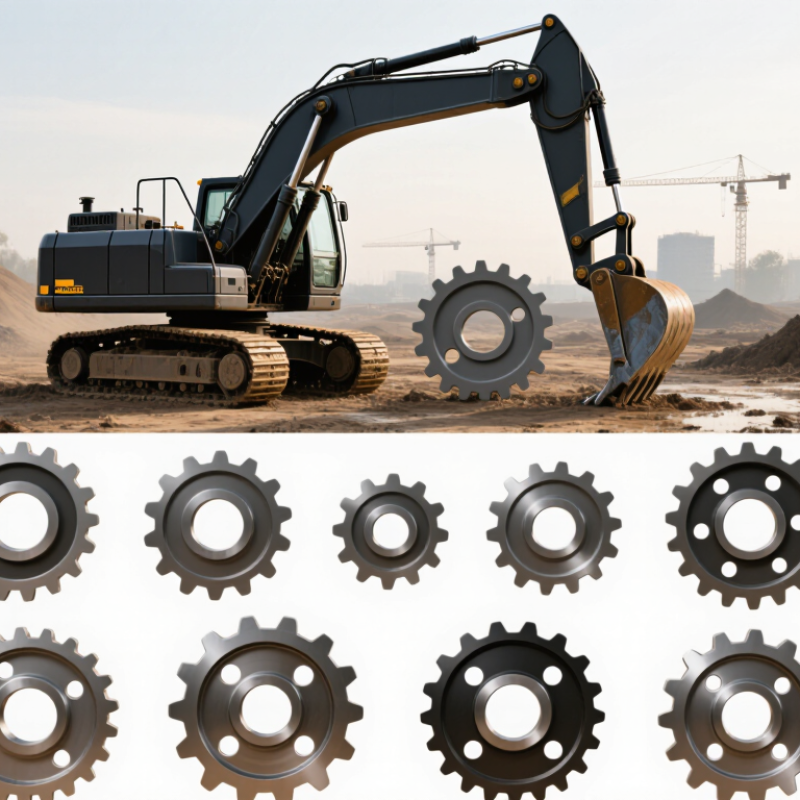
Classify Excavator Gears by Swing, Travel, Pump, and Final-Drive Function
Top 10 Excavator Gear Brands for Global Buyers
Classify Excavator Gears by Swing, Travel, Pump, and Final-Drive Function
Excavator gears are easier to compare by function than by appearance. Swing-drive gears reduce speed and help rotate the upper structure. Inspect tooth contact, backlash, and lubricant condition when assessing wear. A machine that turns unevenly may have a drive issue, but hydraulic or bearing faults can produce similar symptoms.
Travel-drive gears deliver torque to move the tracks. Final drives usually contain planetary reduction gears near each track or wheel. These assemblies are closely related, though catalogs may label them differently. Pump-drive gears transfer engine power to hydraulic pumps, where accurate fit and clean lubrication matter. Small scoring marks can signal contamination; they do not prove the gear alone caused the problem.
Tips: Match the part number, dimensions, and machine serial range before ordering. Ask whether the listing covers gears only or a complete assembly. Check service records, too. They can be incomplete, so verify measurements rather than relying on notes alone.
Top 10 Excavator Gear Brands for Global Buyers - Classify Excavator Gears by Swing, Travel, Pump, and Final-Drive Function
Functional guide to common excavator gear types—not a ranking of manufacturers or brands. Component design, materials, dimensions, and service limits vary by machine model.
| No. | Function Group | Gear or Component | Typical Location | Primary Function | Common Inspection Points |
|---|---|---|---|---|---|
| 1 | Swing | Swing reduction planetary gear set | Inside the swing gearbox, between the swing motor and output shaft | Reduces motor speed and increases torque to rotate the upper structure. | Check for abnormal noise, lubricant contamination, pitting, scoring, and excessive backlash. |
| 2 | Swing | Swing motor pinion | At the swing gearbox output, meshing with the swing bearing gear | Transfers rotation from the swing drive to the geared swing bearing. | Inspect tooth contact, wear, cracks, looseness, and correct mounting or backlash. |
| 3 | Swing | Swing bearing ring gear | On the upper structure or undercarriage, depending on the machine’s swing-bearing design | Provides the large-diameter gear track engaged by the swing pinion. | Look for uneven tooth wear, damaged teeth, inadequate lubrication, and changes in swing noise. |
| 4 | Travel | Travel reduction planetary gear set | Inside each travel drive, downstream of the travel motor | Reduces hydraulic motor speed and delivers higher torque to the track drive. | Check gear teeth and bearings for wear, metal debris in oil, leaks, and overheating. |
| 5 | Travel | Travel-drive sun gear | At the center of a planetary reduction stage | Transmits input rotation to the surrounding planet gears. | Inspect splines and tooth faces for fretting, pitting, chipping, or abnormal clearance. |
| 6 | Travel | Travel-drive planet gears and carrier | Within the planetary stages of the travel reduction unit | Distributes torque through the reduction stages and supports the rotating gear elements. | Check planet gears, pins, bushings, and bearings for uneven wear, scoring, and excessive play. |
| 7 | Final drive | Final-drive ring gear | Inside the travel reduction housing, surrounding the planetary gears | Provides the stationary or rotating reaction member required by the planetary gear stage, according to the design. | Inspect tooth surfaces and housing support for cracks, pitting, looseness, and abnormal contact patterns. |
| 8 | Final drive | Final-drive output gear or carrier | At the output end of the travel reduction assembly | Transfers reduced-speed, higher-torque rotation toward the track sprocket. | Check output splines, fasteners, bearing support, lubricant condition, and signs of leakage. |
| 9 | Pump | Hydraulic pump drive gear | In the engine-to-pump drive arrangement, where a gear drive is used | Transmits engine rotation to a pump or pump-drive assembly in designs that use gears. | Inspect tooth wear, alignment, mounting, lubrication, and related drive noise; some designs use splines or other drive arrangements instead. |
| 10 | Pump | Auxiliary gear-pump rotor pair | Inside an auxiliary or pilot hydraulic gear pump, where fitted | Meshes to move hydraulic fluid from the inlet side to the outlet side of a positive-displacement pump. | Check for scoring, chipped teeth, excessive internal clearance, contamination, and reduced pump performance. |