
Contract Manufacturing for Injection Molded Plastic Products in North America
(800) 824.0607
Gas Insulated Switchgear (GIS) is a compact solution for controlling and protecting high-voltage networks. It is often installed where space is scarce, such as urban substations, tunnels, and industrial sites. Inside a sealed enclosure, insulating gas separates energized components. That design can reduce equipment footprint, but it also makes specification, maintenance, and gas management important.
The International Energy Agency’s 2023 report, Electricity Grids and Secure Energy Transitions, says the world may need to add or replace 80 million kilometres of power lines by 2040—roughly the length of today’s entire global grid. IEA Executive Director Fatih Birol described the challenge this way: “The world is facing a ‘grid crunch’.” His warning concerns grid infrastructure broadly, not GIS alone. Still, it helps explain why utilities are assessing dependable, space-efficient switchgear as networks expand and modernize.
This overview compares ten manufacturers active in the worldwide GIS market. It considers product range, voltage coverage, technical support, project experience, and attention to environmental performance. IEC 62271-203 provides an important technical reference for gas-insulated metal-enclosed switchgear above 52 kV. Company capabilities and product availability can vary by region, however. Rankings also depend on the criteria chosen. Not a simple ranking. A shortlist should be checked against local grid requirements, service capacity, lifecycle costs, and the buyer’s plans for managing insulating gases.
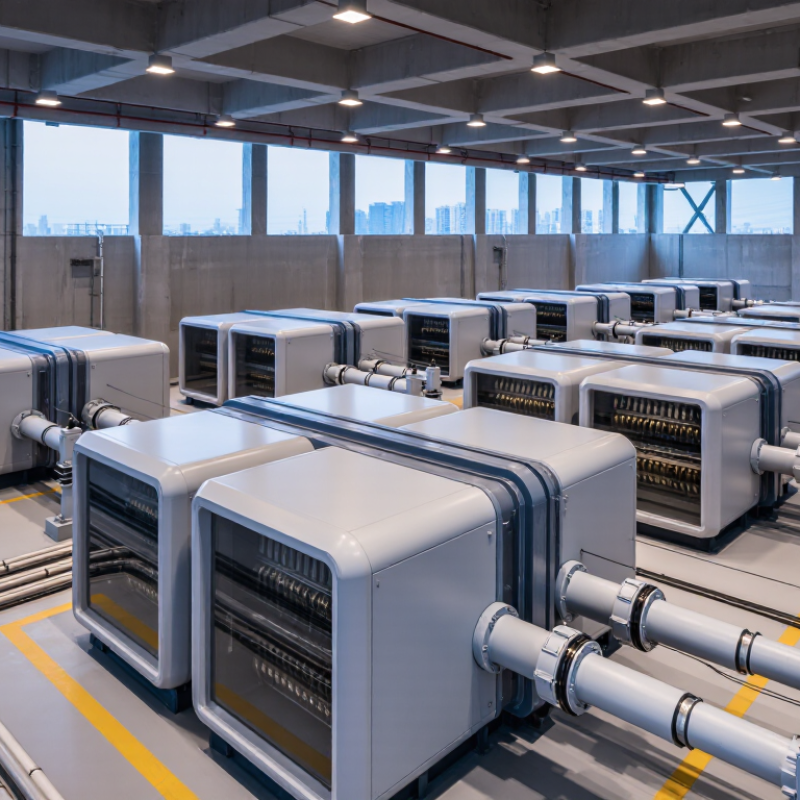
Gas-insulated switchgear (GIS) places high-voltage switching equipment inside sealed, grounded metal enclosures. An insulating gas fills the compartments and helps prevent electrical discharge between live parts and the enclosure. Because the equipment is enclosed, GIS can fit into substations where outdoor air-insulated equipment would need more space. Compact does not mean simple.
Its core components include busbars, circuit breakers, disconnectors, and earthing switches. Busbars carry power between circuits. Circuit breakers interrupt current during faults, while disconnectors isolate sections for maintenance. Earthing switches connect isolated parts to ground, helping make work areas safer when procedures are followed. Current and voltage transformers provide measurements for protection and control systems.
The enclosure, gas compartments, seals, and monitoring devices are just as important as the switching parts. Sensors can track gas density or pressure, since a leak may reduce insulation performance. Designs vary, and some systems use alternatives to traditional sulfur hexafluoride gas. Each option brings different operating and maintenance considerations. The trade-offs deserve attention. GIS can reduce space needs, but its sealed construction may make fault diagnosis less straightforward than expected. Careful inspection records and trained maintenance teams remain essential.
Gas-insulated switchgear (GIS) places conductors, busbars, and switching equipment inside sealed, metal enclosures. Insulating gas prevents electrical breakdown across compact gaps, allowing substations to fit into dense cities or indoor sites. When protection relays detect a fault, they signal the circuit breaker to interrupt current. Disconnectors then isolate equipment for maintenance. Fast and contained. But the system still depends on careful inspection and reliable trip settings.
The International Energy Agency’s Electricity Grids and Secure Energy Transitions (2023) says annual grid investment must rise from about $300 billion to more than $600 billion by 2030. GIS can help where space is scarce, though it is not a cure for aging cables or weak grid planning. Many installations use sulfur hexafluoride (SF₆), an effective insulator that also has a high climate impact. The IPCC Sixth Assessment Report gives SF₆ a 100-year global warming potential of 25,200. That trade-off is easy to understate. Operators need leak detection, gas handling procedures, and maintenance records; newer designs may use alternative insulation. The best choice depends on local conditions, not just footprint.
Gas-insulated switchgear (GIS) places switching and protection components inside sealed, earthed metal enclosures. An insulating gas or gas mixture provides electrical insulation, while circuit breakers interrupt fault currents. GIS is used across a range of voltage classes and can help reduce substation footprint. The bars show selected standardized highest voltages for equipment, not manufacturer rankings or market-share data.
Assessing global gas-insulated switchgear manufacturers requires more than comparing catalogue ratings. Check that the proposed equipment matches your system voltage, short-circuit duty, indoor or outdoor conditions, and operating temperature range. Ask for type-test documentation and clear limits for partial discharge, mechanical endurance, and gas leakage. Details matter. Compare the scope of each test, not just the headline result.
Review reference projects with similar grid conditions and installation dates. Ask how quickly the manufacturer can supply replacement parts, train local technicians, and support commissioning across your region.
For long-term reliability, examine gas-monitoring arrangements, leak-detection procedures, and plans for equipment maintenance or end-of-life handling. A polished brochure is not proof of consistent production quality. Request factory inspection records and traceable quality documentation where available.
Also assess whether drawings, manuals, and spare-part lists are practical for your maintenance team. Some evaluations still rely too heavily on price; that is understandable, but it can hide service gaps or costly retrofit work.
A short, technically specific question often reveals more than a broad promise.
Gas-insulated switchgear, or GIS, places high-voltage components inside sealed metal enclosures. Its compact footprint suits dense city substations, industrial sites, and locations exposed to dust or salt air. The top 10 gas-insulated switchgear manufacturers worldwide are best compared through evidence, not visibility alone. Look for documented voltage ranges, factory testing, service coverage, and a clear record of equipment operating in similar conditions.
Details matter. Ask how technicians inspect gas compartments, monitor pressure, and access components during maintenance. Compare installation requirements, spare-parts availability, and the supplier’s guidance on insulating gases and end-of-life handling. A polished specification sheet is not enough. Real projects involve tight switchrooms, delivery delays, and site conditions that rarely match the drawings perfectly.
Rankings can change with regional demand and project type, so “top 10” is not a universal verdict. One manufacturer may excel in utility-scale installations, while another serves compact urban networks more effectively. Review independent test documentation and project references, and verify that quoted performance applies to the exact configuration. No list is perfect. That caveat matters.
GIS technology is being reshaped by pressure to fit more equipment into constrained substations while reducing environmental impact. Digital sensors now track gas density, temperature, and partial discharge. These readings can reveal developing faults before a breaker fails. That matters. But a dashboard is only useful when measurements are calibrated and maintenance teams know how to act on them.
Insulation is changing too. The IPCC’s Sixth Assessment Report assigns sulfur hexafluoride a 100-year global warming potential of 25,200. This figure is pushing engineers to assess alternative insulating gases, sealed designs, and leak-detection systems. Each option brings trade-offs in performance, handling, and service requirements. In many medium-voltage applications, vacuum interruption offers another way to reduce reliance on SF6. High-voltage designs need careful evaluation; one solution does not fit every grid.
The International Energy Agency’s 2023 report, Electricity Grids and Secure Energy Transitions, says annual grid investment must rise above $600 billion by 2030. GIS upgrades can support this expansion where space is scarce, including urban substations with limited room for air-insulated equipment. Remote condition monitoring may also reduce unnecessary inspections. Still, data quality varies, and older assets can be difficult to integrate. The technology is advancing, but operators should test its value against real maintenance records.
A brand-neutral overview of ten key technologies used across the global GIS industry. Entries describe industry technologies, not ranked or company-specific product claims.
| No. | Key technology | Typical application | Industry fact or technical context | Role in GIS development |
|---|---|---|---|---|
| 1 | SF₆-insulated switchgear | High-voltage and extra-high-voltage substations | SF₆ has strong dielectric and arc-quenching properties and has been widely used in GIS. Its 100-year global warming potential is 25,200 under IPCC Sixth Assessment Report values. | Provides compact insulation and interruption performance, while leakage prevention, gas handling, and emissions reduction remain important design and operational priorities. |
| 2 | SF₆-free insulation alternatives | New GIS designs and selected replacement projects | Alternatives include vacuum switching combined with clean air, as well as gas mixtures using substances such as fluoronitriles or fluoroketones. Suitability depends on voltage level, equipment design, and operating conditions. | Supports lower-GHG-impact equipment development; adoption and product availability vary by voltage class and application. |
| 3 | Vacuum interruption | Medium-voltage switchgear and selected emerging GIS designs | Vacuum interrupters extinguish arcs within sealed vacuum interrupter bottles and are widely used in medium-voltage switching equipment. | Can eliminate SF₆ from the interruption chamber; insulation outside the interrupter must still be designed for the equipment’s voltage and configuration. |
| 4 | High-voltage compact GIS design | Urban substations, industrial sites, and space-constrained locations | GIS places live parts inside grounded enclosures filled with insulating medium, generally requiring less installation space than equivalent air-insulated arrangements. | Enables substations in locations where land, weather exposure, or visual impact constrains conventional outdoor equipment. |
| 5 | Digital monitoring and condition assessment | New substations and modernization of existing assets | Digital systems can collect equipment status and condition data, including operating counts, temperature, gas density or pressure, and alarm information. | Helps operators identify abnormal conditions and plan maintenance based on asset condition rather than fixed intervals alone. |
| 6 | Partial-discharge detection | Factory testing, commissioning, and in-service diagnostics | Partial discharge can indicate localized insulation defects. GIS diagnostic methods include ultra-high-frequency (UHF) sensing and other measurement techniques. | Provides information for insulation assessment; results require appropriate interpretation and do not, by themselves, establish a complete diagnosis. |
| 7 | Modular and prefabricated substation systems | Fast-track projects, remote sites, and repeatable installations | GIS bays and auxiliary systems can be assembled or tested in factory-controlled conditions before delivery, depending on project design and transport limits. | Can reduce site assembly work and help standardize installation, testing, and project execution. |
| 8 | High-voltage insulation coordination | Transmission networks across multiple voltage classes | GIS is designed for standardized system voltages, including common classes such as 72.5, 145, 245, 420, 550, and 800 kV; available equipment ratings depend on the design and market. | Supports reliable switching and insulation performance through coordinated design of clearances, enclosures, surge protection, and system conditions. |
| 9 | Seismic and environmental qualification | Earthquake-prone regions and demanding site environments | Equipment may be designed and tested against project-specific seismic, temperature, humidity, pollution, and altitude requirements. | Improves suitability for varied installation conditions; qualification levels must be checked against the applicable project specification and standards. |
| 10 | Lifecycle gas and asset management | Installation, maintenance, refurbishment, and end-of-life handling | Good practice includes gas inventory tracking, leak detection, controlled recovery, and appropriate handling of insulating gases during service and decommissioning. | Helps reduce emissions and supports safe, traceable maintenance throughout the equipment lifecycle. |
Note: This table summarizes technologies and practices found across the GIS industry. It does not assign capabilities, rankings, or product specifications to individual manufacturers. Voltage ratings and technology availability vary by product and project.