
Contract Manufacturing for Injection Molded Plastic Products in North America
(800) 824.0607
China’s electric-vehicle charging industry has grown quickly, and its manufacturers now serve markets around the world. Yet choosing a Level 3 Ev Charger supplier takes more than comparing maximum power ratings. Buyers need to examine real-world uptime, connector options, thermal management, software, and after-sales support. A charger may look impressive in a specification sheet. The test comes when vehicles arrive back-to-back on a hot afternoon.
IEA Executive Director Fatih Birol has said, “The world is at a pivotal moment in the transition to clean energy.” That transition depends on charging infrastructure drivers can trust. This guide introduces leading Chinese manufacturers, including companies known for charging networks, power electronics, and high-speed charging systems. It considers what each brings to the market, while distinguishing proven capabilities from claims that deserve closer checking. Names and rankings can shift as products, service coverage, and regional requirements change.
Power is only part of the story. A dependable unit must manage heat, communicate clearly with vehicles, and recover gracefully from faults. Buyers should also ask about field references, spare-parts access, software updates, and local technical support. Those details are less exciting than a headline kilowatt figure, but they matter at the charging site. No manufacturer is perfect, and a strong factory reputation does not guarantee equally strong service everywhere. The following overview offers a practical starting point—not a substitute for testing equipment against a project’s actual operating conditions.
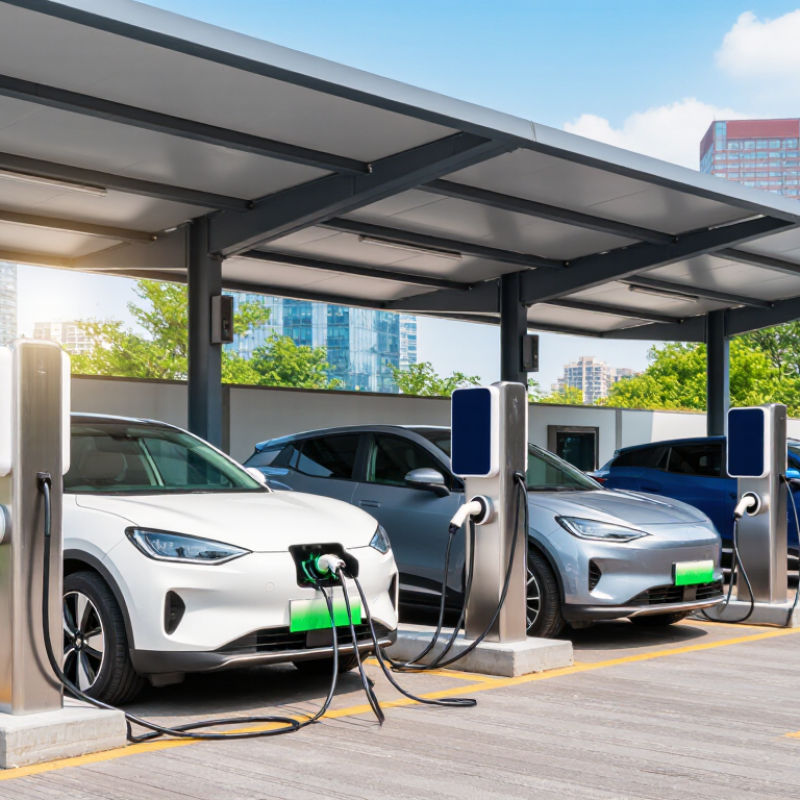
“Level 3” usually describes DC fast charging in North American terminology. In China, buyers more often discuss DC charging power, connector compatibility, and compliance with applicable GB/T standards. The terms are not perfectly interchangeable. A charger converts grid electricity outside the vehicle, allowing direct battery charging. Actual speed depends on the vehicle, battery temperature, state of charge, and available site power. A 120 kW unit cannot make every car accept 120 kW.
For Chinese-market equipment, compare temperature management, electrical protection, software monitoring, and service coverage. A display showing kilowatts is useful, but it does not prove stable performance during a hot afternoon or a busy charging session. Site operators should also consider cable reach, maintenance access, and queue patterns. The label can still mislead. “Level 3” is a convenient shorthand, not a complete technical specification. Good selection starts with the vehicle fleet and the site’s actual electrical conditions.
Top Level 3 EV Charger Manufacturers in China
How China’s DC Fast-Charging Industry Is Structured
China’s DC fast-charging industry is a layered supply chain, not simply a contest between charger makers. Upstream suppliers provide power modules, semiconductors, cables, cooling systems, and connectors. Manufacturers combine these parts into charging cabinets and dispensers, then software and service providers connect equipment to payment, monitoring, and maintenance systems. The layers overlap. That matters.
Infrastructure figures show the scale and the mix. China’s National Energy Administration reported 12.82 million charging facilities nationwide at the end of 2024. EVCIPA’s year-end statistics counted 3.58 million public charging piles, including about 1.24 million DC units. The difference reflects distinct counting categories: the national total includes private facilities, while the public tally tracks shared equipment. A headline total alone can mislead.
Manufacturers therefore compete on more than peak power. For operators, cabinet reliability, thermal control, service access, and compatibility with different vehicles can matter as much as rated output. Utilities and site developers shape deployments through grid capacity, location, and installation costs; fleet depots often prioritize predictable charging windows. A charger may look powerful on paper, yet perform poorly at a crowded site with limited electrical capacity. The structure is not perfectly tidy, either: some firms span hardware, software, and after-sales support, making “manufacturer” a blurry category.
China’s charging-infrastructure build-out creates demand for manufacturers across charging equipment, power systems, and site integration. The chart shows installed charging-pile stock, split between public and private infrastructure—not manufacturer market share.
Units: million charging piles, year-end. Source: China Electric Vehicle Charging Infrastructure Promotion Alliance (EVCIPA), annual infrastructure statistics.
Leading Level 3 EV charger manufacturers in China are judged by more than peak charging speed. Their equipment must deliver steady DC power while managing heat, grid fluctuations, and repeated use. In a factory, engineers may test output under load, inspect cable temperatures, and record fault responses. These details matter. A charger rated at 240 kW, for example, may not sustain that output for every vehicle or battery condition. Actual charging depends on the vehicle, temperature, and site power supply.
Strong manufacturers also document component testing, production checks, and software updates. Buyers should ask for clear information about connector options, communication protocols, warranty terms, and local service capacity. Ask how the company handles a failed charging module, not just how quickly it can ship a unit. Small details count. A well-designed enclosure can protect electronics from dust and rain, but poor site installation can still cause trouble. Published specifications rarely show the full operating picture, so independent testing and customer references are useful. There is room for improvement here: sales material often gives less attention to maintenance than to headline power ratings. Reliable comparisons need both.
China’s leading Level 3 EV charger manufacturers differ less by headline power than by how reliably they deliver it. The IEA’s Global EV Outlook 2024 reports that China held about 70% of the world’s public charging points in 2023, with an even larger share of fast chargers. That scale makes field reliability and service access important comparison points. Some manufacturers focus on compact, air-cooled units for urban sites. Others offer liquid-cooled systems designed for sustained high-power sessions. The distinction is practical: a busy highway stop has different thermal demands from a small city car park.
For fleet depots, modular power cabinets can allocate output across several parked vehicles, helping operators match charging to departure schedules. Retail sites may value dual connectors, clear user displays, and remote fault monitoring. These features reduce friction, but they do not guarantee a smooth session. Grid capacity, cable handling, and maintenance response still matter. A high kilowatt rating looks impressive. Yet a charger that repeatedly throttles during hot afternoons may serve drivers less effectively. Compare test conditions, connector compatibility, load-sharing behavior, and uptime measurement methods—not just the maximum output printed on a specification sheet. Some specifications remain difficult to compare consistently. That deserves scrutiny.
Standards-based comparison of three common EV charger product categories available from manufacturers serving the Chinese market. These are capability benchmarks, not rankings or claims about specific companies; actual specifications vary by product and project.
| Comparison Dimension | Residential AC Category | Commercial AC Category | DC Fast-Charging Category |
|---|---|---|---|
| Typical rated power | About 7 kW; commonly single-phase, 220 V, 32 A. | About 11 kW or 22 kW; commonly three-phase, 380 V, 16 A or 32 A. | Often configured from about 60 kW to 240 kW per unit; higher-power systems are also available for suitable sites and vehicles. |
| Charging approach | AC is supplied to the vehicle; the vehicle’s onboard charger converts it to DC for the battery. | AC charging supports workplaces, residential compounds, hotels, and destination parking where vehicles are parked for longer periods. | The charger converts grid AC to DC and supplies the vehicle battery directly, subject to vehicle and connector limits. |
| Common applications | Private homes, assigned parking spaces, and overnight charging. | Offices, shopping centers, hotels, residential communities, and fleet parking with scheduled dwell time. | Public charging stations, highway service areas, bus depots, logistics hubs, and other locations needing shorter charging stops. |
| Power management | May support scheduled charging and household load management, depending on the model and installation. | Load balancing across charging points can help manage a site’s available electrical capacity. | Power sharing between dispensers or charging points may be used to allocate a station’s available capacity. |
| Connector and standards considerations | For China-market equipment, confirm the applicable GB/T AC interface and local electrical requirements. | Confirm connector configuration, electrical installation requirements, and compatibility with the intended vehicles and site platform. | For China-market equipment, confirm the applicable GB/T DC interface and communication requirements, including compatibility with the vehicle. |
| Typical protection and controls | Product designs commonly include protections such as overcurrent, leakage-current, and overtemperature protection; confirm the certified model specification. | May include user access controls, metering, status monitoring, and electrical protections; functions vary by model. | May include emergency stop, insulation monitoring, temperature monitoring, and electrical fault protections; verify against the project specification. |
| Key procurement checks | Check supply capacity, installation conditions, vehicle compatibility, protection functions, and warranty terms. | Check site load capacity, number of charging points, load-management functions, metering, and platform integration. | Check grid connection capacity, continuous power rating, vehicle compatibility, site utilization, service support, and applicable certifications. |
Note: Power ratings and features above are indicative category examples, not guaranteed specifications. Verify current GB/T requirements, product certifications, local grid conditions, and vehicle compatibility for each project.
A Level 3 charger is a high-power DC system, so evaluate more than its advertised kilowatt rating. Ask for test reports showing output under different voltage and temperature conditions. Request a live demonstration: watch the screen, cable, and connector during a sustained charging session. Heat matters. Check how the cabinet manages airflow, and ask what happens if a cooling fan fails. A glossy brochure is not proof.
Review the manufacturer’s quality controls, component traceability, and production test records. Confirm that the charger supports the connector types and communication protocols your vehicles and site require. Ask for details on software updates, remote monitoring, and fault logs; these affect daily operation, not just installation. Examine safety certifications for the specific model and destination market, rather than assuming one certificate covers every configuration. I would also ask for spare-parts lead times and a written warranty process. Small details count. Talk with existing customers about response times after commissioning. One limitation is easy to overlook: a capable charger may still be a poor fit if local grid capacity or service support is weak. Request references, then verify them independently.