Top 10 Precision Work Rolls Suppliers for Global Buyers
Choosing a roll supplier is a production decision, not just a price comparison. Precision Work Rolls influence strip quality, mill stability, and the time between roll changes. A mismatch in roll dimensions, hardness, or surface finish can create avoidable problems on the shop floor.
This guide presents ten suppliers for global buyers to evaluate. It considers practical factors such as product range, material options, machining and grinding capabilities, inspection practices, delivery support, and technical communication. Details matter. A supplier should be able to discuss the intended mill, workload, roll diameter, barrel length, and required finish—not offer a generic quote alone.
The list is a starting point, not a universal ranking. Supplier suitability depends on the mill process, operating conditions, and local service needs. Buyers should confirm specifications, quality records, lead times, and available documentation directly with each company. Ask how hardness is measured and how finished surfaces are checked. Small questions can reveal gaps.
Price still matters, but the lowest quotation may not reflect the full cost of use. Consider replacement frequency, downtime, transport, and access to technical support. This comparison aims to help procurement and engineering teams make a more informed shortlist. It cannot replace a technical review of your own requirements, and supplier information can change. Verify key details before placing an order.
What Precision Work Rolls Are and Where They Are Used
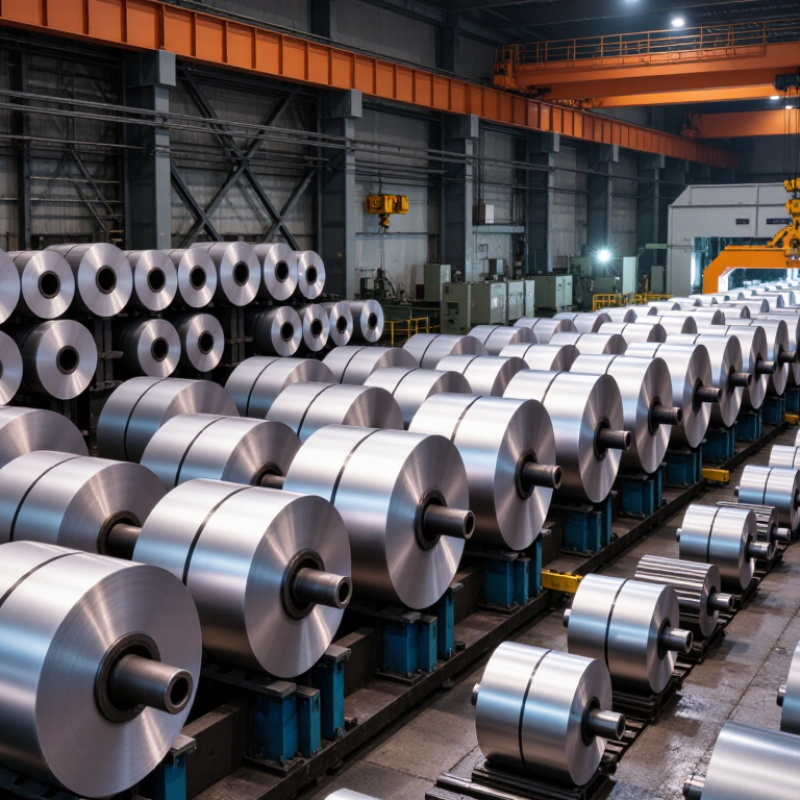
Precision work rolls are the small-contact, high-load tools that shape metal as it passes through a rolling mill. Their surfaces apply pressure, control thickness, and influence finish. Depending on the mill, rolls may work with hot steel, cold strip, or non-ferrous sheet. A roll’s diameter, hardness, crown, and surface texture affect how evenly material deforms. Small tolerances matter. World Steel Association data reports 1,882.6 million tonnes of crude steel production worldwide in 2024, illustrating the scale of the industry these components serve. This figure measures steel production, not work-roll demand, but it helps explain why reliable rolling equipment matters.
In practice, work rolls are used in hot- and cold-rolling mills, including finishing stands that produce sheet for construction, machinery, and vehicle manufacturing. They also appear in mills processing aluminum and other metals. Engineers select roll materials and surface treatments according to load, temperature, wear, and the finish required. Even a well-specified roll can perform poorly if alignment, cooling, or maintenance is neglected. The roll alone does not guarantee consistent strip.
Tips: Match roll specifications to the mill stand and material, then track wear and surface condition during operation. A simple inspection for scoring, uneven wear, or heat marks can catch problems early. Do not assume a familiar setup is always correct; production conditions change, and the best choice sometimes needs review.
How Work Rolls Are Made and Quality-Tested
Precision work rolls begin with carefully selected alloy steel, chosen for hardness, toughness, and resistance to thermal fatigue. Steel is forged or cast into a rough blank, then heat-treated to develop the required internal structure. The roll is machined, ground, and polished; a smooth finish matters because tiny surface marks can transfer to strip. This process serves a vast industry: World Steel Association’s World Steel in Figures 2024 reports 1,892.2 million tonnes of crude steel production in 2023. That scale makes consistent roll quality essential, though production conditions differ between mills.
Testing checks both the surface and the material beneath it. Technicians measure hardness at several points, inspect dimensions and runout, and use ultrasonic examination to detect internal flaws. ASTM A388/A388M describes ultrasonic examination of steel forgings, while hardness testing may follow recognized Rockwell or Brinell methods. Results should be recorded against agreed acceptance limits, not judged by a single reading. Small details count. A roll can pass hardness checks yet still perform poorly if its crown, balance, or surface finish is wrong for the mill. And inspection is not perfect: probe placement, calibration, and operator judgment can affect results. Reliable suppliers document these limits and explain how test findings relate to the buyer’s operating conditions.
What Global Buyers Should Look for in a Supplier
Choosing a precision work roll supplier starts with the mill, not the brochure. Ask how the supplier controls steel composition, heat treatment, hardness, and surface finish. Request inspection records for runout, diameter tolerance, and ultrasonic testing. A polished sample is useful, but it cannot prove consistency across a full production batch. Details matter.
Fit also depends on operating conditions. Share the rolling material, target thickness, mill speed, and expected campaign length. A capable supplier should explain how roll geometry and surface treatment suit those demands. Ask for drawings, material certificates, and a clear process for handling defects. Traceability helps connect a delivered roll to its inspection data. Check whether the supplier can support installation questions and practical maintenance guidance, not just shipment.
Delivery promises deserve careful review. Confirm production capacity, packaging methods, export experience, and realistic lead times before placing an order. A low quote may omit testing, protective packing, or technical support. Compare the full scope. During discussions, note whether answers are specific or vague; small inconsistencies can signal a process that needs closer checking. No supplier is perfect, and even thorough records cannot prevent every issue. That is worth remembering. A reliable partner is one that communicates clearly when a problem appears and helps determine its cause.
Profiles of 10 Precision Work Roll Suppliers
Profiles of 10 Precision Work Roll Suppliers
Precision work roll suppliers differ in materials, finishing methods, and service support. These ten profiles describe useful supplier types rather than ranked companies. A specialist in forged steel rolls may suit demanding rolling schedules. A supplier focused on alloy development can tailor hardness and wear resistance. Grinding specialists deliver closely controlled diameters and surface finishes. Some manufacturers excel at short production runs, while larger operations handle repeat orders at scale. Heat-treatment experts focus on balancing surface hardness with core strength. Custom-design suppliers work from drawings and mill requirements. Regional producers may offer shorter delivery routes. Export-focused suppliers can coordinate protective packing and shipping documents. Reconditioning specialists restore worn rolls, though results depend on the roll’s condition. Technical-service providers help investigate wear patterns and operating issues. Details matter.
Tips: Ask for material specifications, dimensional tolerances, inspection records, and sample test reports. Confirm how the supplier handles defects and delivery changes. A polished catalogue is not proof of consistent quality. If possible, compare trial rolls under similar mill conditions; one test may still miss long-term performance differences. A supplier’s response to a difficult question can be revealing. It can also be imperfect, so verify important claims in writing.
How to Compare Suppliers by Capability, Delivery, and Support
A precision work roll is more than a polished cylinder. Its material, hardness, crown, and surface finish must suit the mill and the product being rolled. Ask suppliers for inspection records and tolerances, not just a catalogue range. Can they explain how they control runout after grinding? A clear answer matters.
Compare capability against your actual operating conditions. Share roll dimensions, load, speed, cooling method, and required surface quality. Then ask how the supplier selects steel grade and heat treatment. Request sample measurement reports, and check whether testing covers the working surface and the roll body. Numbers help. So does a technical conversation with the people who will handle your order. A perfect specification sheet may still leave practical questions unanswered.
Delivery claims need detail. Confirm production lead time, packing method, shipping estimates, and how delays are communicated. For repeat orders, ask whether key dimensions and process records can be retained. Support matters after installation, too: clarify who reviews wear patterns, responds to damage reports, and recommends regrinding intervals. Compare response times using a real scenario, such as a roll arriving with a surface mark. Not every supplier will have a neat answer. That may be worth noting, rather than overlooking it. A simple scorecard for capability, delivery, and support can keep comparisons grounded in evidence.