
Contract Manufacturing for Injection Molded Plastic Products in North America
(800) 824.0607
Choosing a reliable Relief Valve Block supplier requires more than comparing catalog prices. These compact components protect hydraulic circuits, control pressure, and support safe machine operation under demanding conditions.
This guide examines seven leading suppliers worldwide through practical purchasing criteria. We consider pressure ratings, block materials, port standards, sealing systems, machining accuracy, testing procedures, and technical support. We also review customization, delivery consistency, certifications, and documentation. A polished website is not enough. Production evidence matters.
Hydraulic engineer and author Anthony Esposito wrote, “Hydraulic systems are used to transmit and control power.” That principle explains why a small valve block deserves serious evaluation. A poorly specified block can create leaks, unstable pressure, unnecessary downtime, or difficult maintenance. The best manufacturers usually provide clear drawings, verified test results, and responsive engineering support.
Real applications reveal the difference. A mining system may need corrosion-resistant steel and dependable performance under vibration. A mobile hydraulic unit may prioritize compact ports, quick servicing, and weight reduction. An industrial press may require repeatable pressure control across long production cycles.
No ranking is flawless. Supplier performance can vary by region, product series, and project volume. Some companies excel at standard blocks but struggle with custom manifolds. Others offer excellent engineering but longer delivery times. This comparison recognizes those trade-offs instead of pretending every buyer has identical needs.
The following seven suppliers represent strong options for global sourcing. Buyers should still confirm specifications, testing practices, warranty terms, and local support before placing an order. Small details often decide whether a Relief Valve Block performs reliably in the field.
What Is a Relief Valve Block and Why Is It Used?
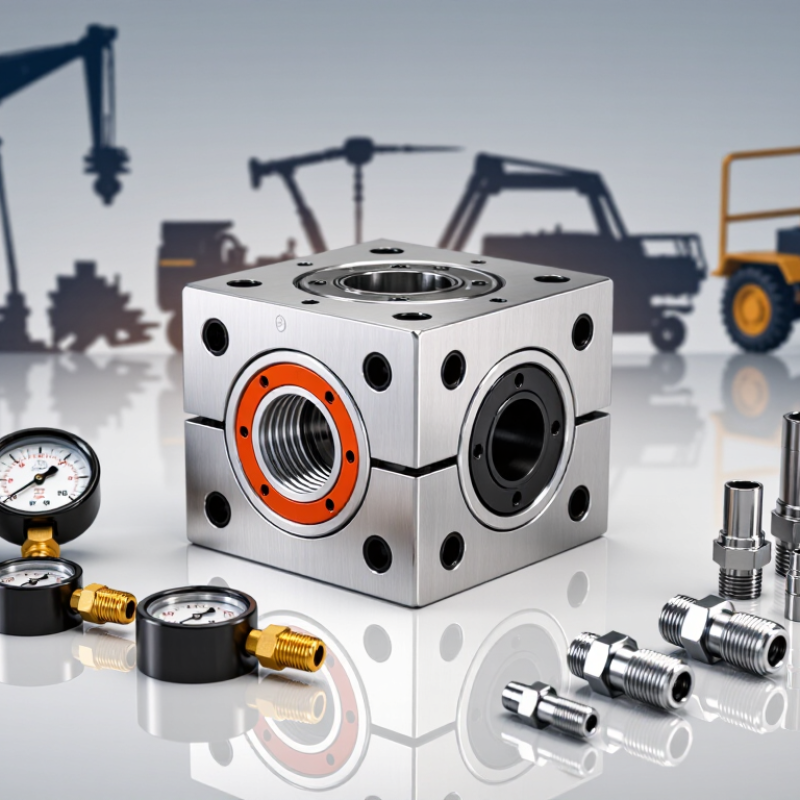
A relief valve block is a compact hydraulic manifold that combines pressure relief, isolation, testing, and gauge connections. It protects pumps, cylinders, hoses, and actuators from excessive pressure. When pressure exceeds the preset limit, the valve redirects fluid toward the tank or a safer circuit path. That response prevents sudden damage during a stalled cylinder or blocked actuator. Compact design matters. Fewer external fittings can reduce leakage points and simplify maintenance inside crowded machinery.
Industry demand supports this need. Grand View Research valued the global industrial valves market at approximately USD 77.8 billion in 2022, with projected growth through 2030. Hydraulic systems remain important in construction equipment, manufacturing presses, energy facilities, and material handling. A relief valve block helps engineers control these systems without adding a large valve assembly. It also allows technicians to check pressure close to the protected component, improving diagnostic accuracy.
Selection still requires judgment. Engineers should verify flow capacity, pressure range, fluid compatibility, temperature, and contamination tolerance. ISO 4413 emphasizes safe hydraulic design, including effective pressure limitation and controlled energy release. An oversized block may respond slowly, while an undersized passage can create heat and pressure loss. Real-world maintenance often reveals another weakness: incorrect adjustment after installation. A clear setting procedure and accessible test port are therefore valuable. The cheapest configuration is not always the most reliable.
Evaluating relief valve block suppliers requires more than comparing catalog prices. The Industrial Valves Market report by MarketsandMarkets projects growth from approximately USD 78.8 billion in 2024 to USD 97.5 billion by 2029. Rising demand increases supplier choices, but not necessarily supplier quality. Request material certificates, pressure-test records, dimensional drawings, and serial-level traceability. A reliable supplier should explain how each block handles pressure spikes, contamination, temperature changes, and repeated cycling.
Look for engineering evidence, not polished claims. Ask whether the supplier performs finite element analysis and hydraulic flow testing. Confirm conformity with relevant ISO 4413 principles and applicable pressure-equipment requirements. Check production controls under ISO 9001, but do not treat certification as proof of performance. Audited processes can still produce weak documentation. That deserves attention.
Lead time is another practical test. Request recent delivery data, not an optimistic promise. A 2024 report from Grand View Research identifies automation and industrial maintenance as major drivers of hydraulic equipment demand, which may tighten capacity during peak periods. Ask for backup machining capacity and documented nonconformance procedures. Speak with reference users operating similar pressures and fluids. Inspect a finished valve block if possible. Look closely at port finish, thread protection, labeling, and test-point accessibility. Small details often reveal larger habits. Some evaluation decisions remain uncertain; a supplier may pass every document review yet struggle during field failures. A controlled pilot order can expose that gap before full deployment.
A company-neutral procurement framework based on the technical, quality, compliance, and service factors commonly used for industrial relief valve block sourcing.
The weighting model gives the highest priority to pressure and temperature suitability, material compatibility, inspection, testing, and traceability. Buyers can score each supplier against these criteria and apply the weights to create a transparent comparison without relying on brand reputation alone.
Relief valve block sourcing now depends on more than pressure ratings. According to Grand View Research, the global industrial valves market was valued at approximately USD 77 billion in 2023. Demand is being shaped by automation, energy efficiency, and safer fluid control. In this environment, seven supplier types deserve close evaluation.
Supplier One focuses on compact cartridge manifolds for mobile machinery. Supplier Two offers stainless-steel blocks for corrosive process environments. Supplier Three specializes in high-pressure forged bodies and documented burst testing. Supplier Four provides fast prototype machining for low-volume projects. Supplier Five stands out through custom cavity layouts and integrated sensors. Supplier Six supports large industrial systems with application engineering and traceable material certificates. Supplier Seven emphasizes short delivery times, repair kits, and regional technical service.
These strengths matter during real installation work. A block may sit beside a pump, exposed to vibration, heat, and dirty hydraulic oil. Supplier selection should therefore include flow testing, surface-finish records, seal compatibility, and pressure-cycle evidence. MarketsandMarkets has identified hydraulic equipment as a growing industrial segment, driven partly by automation and infrastructure investment. The exact growth rate varies by research method, so buyers should avoid treating forecasts as guarantees. That is easy to overlook. In my experience, a beautifully machined block can still fail when port orientation restricts maintenance access. Ask for drawings, test reports, and sample units before approving production. Small details decide reliability.
| Supplier Profile | Primary Market Region | Principal Strength | Common Relief Valve Block Configurations | Typical Materials | Relevant Standards and Requirements | Best-Fit Applications |
|---|---|---|---|---|---|---|
| Leading Supplier Profile 1 | North America | Strong engineering support for process plants, refineries, and high-pressure applications. Usually capable of supplying engineered assemblies with dimensional documentation and inspection records. | Single-block isolation Double-block-and-bleed Gauge-integrated assemblies | Carbon steel, stainless steel, alloy steel, and nickel-based alloys, selected according to pressure, temperature, and fluid compatibility. | ASME B16.34 for applicable valve construction; ASME B16.5 or B16.47 where flanged connections are used; ISO 9001 quality systems are commonly requested. | Refining, chemical processing, and high-pressure hydrocarbon service. |
| Leading Supplier Profile 2 | Western Europe | High emphasis on compact design, traceability, machining quality, pressure testing, and compliance with European equipment and documentation requirements. | Compact two-valve blocks Three-valve manifolds Custom port layouts | Austenitic stainless steel, duplex stainless steel, carbon steel, and corrosion-resistant alloys. | Pressure Equipment Directive 2014/68/EU where applicable; EN or ISO-based testing and material traceability; sour-service compliance may require ISO 15156 or NACE MR0175. | European process plants, offshore modules, and packaged skids. |
| Leading Supplier Profile 3 | East Asia | Competitive production of standardized blocks, broad machining capacity, and flexible batch manufacturing for OEM and distributor supply programs. | Standard inlet/outlet blocks Instrument manifolds Threaded configurations | 316/316L stainless steel, carbon steel, brass for suitable non-corrosive services, and selected nickel alloys. | ISO 9001 is commonly used for quality management; NPT, BSP, and metric connection options may be available depending on the design. | General industrial equipment, water treatment, and OEM packages. |
| Leading Supplier Profile 4 | South Asia | Cost-effective custom fabrication and machining, with particular flexibility for made-to-order dimensions, connection standards, and small-to-medium production runs. | Flanged blocks Threaded blocks Drain and vent arrangements | Carbon steel, 304/316 stainless steel, duplex grades, and alloy steel, subject to material certification and service requirements. | ASME B16.34 may apply to valve components; ASTM material specifications and hydrostatic or pneumatic testing are commonly included in procurement requirements. | Industrial projects, utility systems, and price-sensitive skid packages. |
| Leading Supplier Profile 5 | Middle East | Experience with severe operating environments, hydrocarbon facilities, sour-gas considerations, and project-based technical submittals. | Sour-service blocks High-temperature assemblies Bleed and drain systems | Low-temperature carbon steel, stainless steel, duplex stainless steel, and nickel alloys for corrosive or sour-service conditions. | ISO 15156/NACE MR0175 may be required for hydrogen-sulfide service; project specifications may also require PMI, hardness testing, NDE, and full material traceability. | Refineries, gas processing, petrochemical, and upstream facilities. |
| Leading Supplier Profile 6 | Southeast Asia and Oceania | Practical support for offshore, marine, LNG, and modular equipment, with focus on corrosion resistance, compact footprints, and maintenance accessibility. | Offshore compact blocks LNG-compatible assemblies Panel-mounted manifolds | 316L stainless steel, duplex stainless steel, low-temperature carbon steel, and nickel alloys for cryogenic or marine environments. | Material impact testing may be specified for low-temperature service; project requirements can include NACE compliance, ISO 9001, and third-party inspection. | Offshore platforms, marine systems, LNG, and floating production units. |
| Leading Supplier Profile 7 | Eastern Europe and Central Asia | Strong value proposition for heavy industrial service, replacement projects, and customized assemblies using regional engineering and fabrication resources. | Heavy-duty blocks Flanged isolation units Maintenance bypass blocks | Carbon steel, low-alloy steel, stainless steel, and selected corrosion-resistant alloys for demanding process conditions. | Applicable ASME, EN, ISO, or GOST-based requirements depend on the project; pressure testing, dimensional inspection, and material certificates should be confirmed before purchase. | Power generation, district heating, metallurgy, and process industries. |
Relief valve block suppliers differ most in product design, certification, and field support. A compact block may combine isolation, bypass, and pressure relief functions. This reduces connections and possible leak points. However, not every compact design fits every process line. Material selection matters. Stainless steel, alloy steel, and special coatings perform differently under corrosion, vibration, and temperature changes.
Standards reveal important differences. Suppliers may design against ISO 4126, API 526, or ASME pressure vessel requirements. These standards address different aspects, including sizing, dimensions, testing, and pressure containment. Buyers should request material certificates, pressure-test records, calibration results, and traceability documents. MarketsandMarkets estimated the industrial valves market at about USD 78.8 billion in 2023, with continued growth through 2028. Grand View Research also reported strong expansion forecasts, although its market boundaries differ. The numbers are not perfectly comparable.
Service support can separate a reliable supplier from a cheaper one. Ask about response times, spare-seat availability, installation guidance, and remote troubleshooting. A supplier with regional technicians may reduce downtime more effectively than one offering only a lower purchase price. In my experience, documentation is often promised but poorly organized. That weakness deserves attention. A clear data book should match the serial number, test pressure, materials, and approved drawings. Buyers should also verify whether support continues after commissioning. The best supplier is not always the lowest-cost option. It is the one that combines compliant products, practical engineering, and dependable support when pressure conditions change.
Choosing a relief valve block supplier starts with your application, not a product list. Define fluid type, pressure range, temperature, port size, and installation space. A block used on a compact hydraulic manifold needs different priorities from one serving a hot process line. I have found that vague specifications create expensive revisions later. Be precise early.
Ask suppliers for material certificates, pressure-test records, dimensional drawings, and traceable inspection data. A dependable supplier should explain sealing materials, surface treatment, flow paths, and allowable pressure drop. Request samples or a witnessed test when failure could stop equipment. Review their engineering response, not only their quoted price. Fast answers are useful, but careful answers matter more. Check whether production controls match the documentation.
Supplier experience should fit your industry, operating environment, and maintenance habits. Look for practical evidence, such as repeat designs, field feedback, and clear replacement support. Confirm lead times, minimum order quantities, spare-part availability, and communication after delivery. I would also ask how they handle a drawing error or a failed inspection. Their response reveals accountability. No supplier is perfect. However, a transparent correction process is safer than an impressive brochure. Choose the partner that can prove consistency under your real conditions.