Top Sludge Sensor Manufacturers and Suppliers
Choosing among the Top Sludge Sensor Manufacturers and Suppliers starts with a practical question: what must the instrument measure, and under which process conditions? Sludge changes with flow, solids concentration, bubbles, temperature, and cleaning cycles. A probe that performs well in a clear-water test may struggle inside a dense return-sludge line. Small details matter.
The need for dependable measurement sits within a much larger infrastructure challenge. The U.S. Environmental Protection Agency’s 2022 Clean Watersheds Needs Survey estimated $630.1 billion in clean-water infrastructure needs over 20 years. That figure is not a sensor-market forecast. It does, however, show the scale of investment facing water utilities and treatment plants. Better monitoring can support process control, maintenance planning, and more informed equipment decisions.
Quality-management expert W. Edwards Deming wrote, “It is wrong to suppose that if you can’t measure it, you can’t manage it—a costly myth.” His principle fits sludge monitoring, but measurement alone does not guarantee good decisions. Sensor range, installation position, calibration needs, signal stability, and service support all deserve close review. No instrument is magic. That point is easy to overlook in a product brochure.
This guide introduces leading Sludge Sensor manufacturers and suppliers, with attention to their technologies and practical fit. Buyers should compare specifications against actual samples and operating conditions, not just headline accuracy. The shortlist is a starting point, not a substitute for testing.
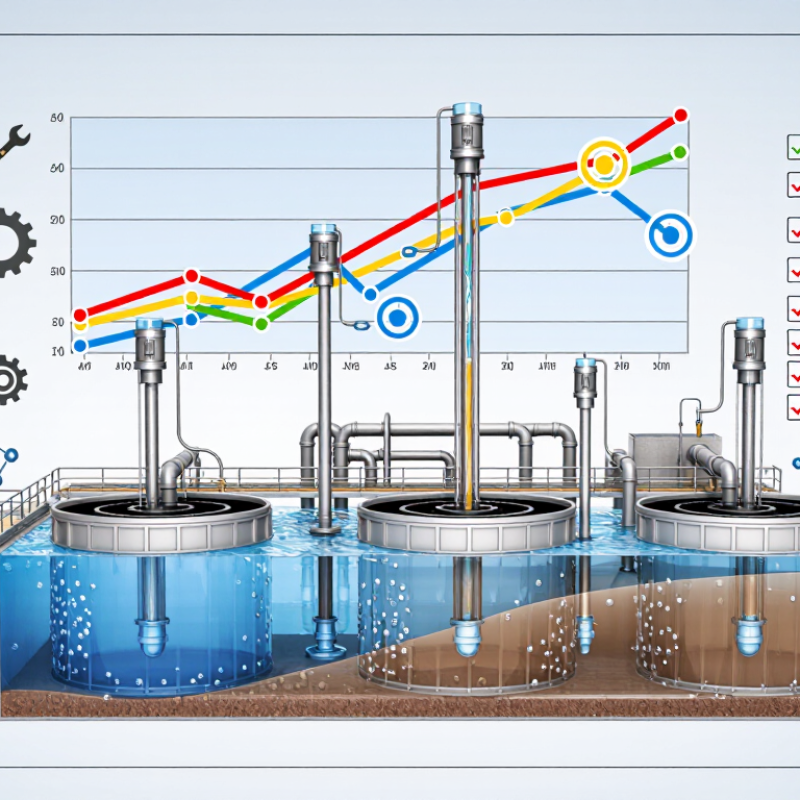
Understanding Sludge Sensors and Their Measurement Principles
Sludge sensors help operators track the boundary between clearer water and settled solids in clarifiers and settling tanks. That boundary can shift quickly. A sudden change may reflect a real process event, but it can also come from bubbles, uneven flocs, or a probe coated with solids.
Many instruments use ultrasound. The probe sends sound into the liquid and detects reflections from changes in density or acoustic properties. The travel time helps estimate the sludge blanket’s position. Optical sensors use light instead: particles scatter or absorb light, producing a signal related to suspended solids. The relationship is not always direct. Particle size, color, and composition can change the reading.
Neither method is magic. Installation depth, tank geometry, and flow patterns matter. A probe near a scraper may see conditions that do not represent the whole tank. Regular cleaning and comparison with a physical sample can reveal drift. A tidy reading can still be wrong, and that is easy to overlook during a busy shift. Sensor selection should match the measurement needed: blanket level, solids concentration, or both. Operators should check what the instrument actually reports before treating its number as a complete picture of sludge conditions.
Key Features Used to Compare Sludge Sensor Products
When comparing sludge sensor products, start by defining the measurement: blanket depth, interface position, or solids concentration. These are not interchangeable. A sensor that tracks a settling blanket may perform poorly when bubbles, moving scrapers, or uneven sludge surfaces disturb the signal. Check measuring range, blind zone, repeatability, response time, and whether readings remain stable in the plant’s actual tank geometry. Small details matter. Can operators clean the probe without draining a clarifier? Are wetted materials suitable for the site’s temperature and chemical conditions? Confirm output options, alarm settings, and calibration procedures before comparing purchase prices.
Operational context matters too. The US EPA’s 2022 Clean Watersheds Needs Survey estimated $630.1 billion in wastewater infrastructure needs over 20 years. That figure is not a sensor-market estimate, but it underscores why dependable monitoring and manageable maintenance deserve attention. UNESCO’s 2017 World Water Development Report estimated that over 80% of wastewater worldwide was discharged without adequate treatment; conditions and measurement methods vary across regions. Ask suppliers for test data from comparable sludge conditions, not only clean-water demonstrations. Where possible, compare sensor readings with manual sampling during commissioning. Yet one site trial may not capture seasonal changes, and that limitation should be recorded rather than ignored. A polished specification sheet is useful, but it cannot prove performance in a foaming, turbulent tank.
Leading Sludge Sensor Manufacturers and Their Product Offerings
Leading Sludge Sensor Manufacturers and Their Product Offerings
Sludge sensor manufacturers typically offer instruments for measuring sludge blanket depth, suspended solids, and interface levels in tanks. Common designs use ultrasonic signals or optical measurement to detect the boundary between clarified water and settled solids. Many product lines include submersible probes, wall-mounted controllers, and cable assemblies for installation at different tank depths. Some suppliers also provide automatic cleaning systems to limit buildup on sensing surfaces.
Details matter. A sensor with a display may suit a small treatment facility, while a multi-channel controller can serve several basins. Manufacturers often specify measurement range, accuracy, response time, and materials that tolerate wet, corrosive environments. Look for clear installation guidance and access to calibration support. A probe that works well in a quiet settling tank may struggle where aeration creates bubbles or turbulence.
Product claims still need checking against site conditions. Ask suppliers how their sensors handle foam, changing solids concentrations, and routine maintenance. Request test data for comparable applications, not just ideal laboratory conditions. One overlooked issue is cable routing; poor placement can make a reliable reading appear unstable. The “best” instrument is not always the most advanced. It is the one operators can clean, verify, and use consistently.
How to Evaluate Suppliers, Service, and Technical Support
A sludge sensor supplier should understand the conditions around the measurement, not just the instrument. Ask how the sensor performs in your tank’s solids concentration, temperature range, and cleaning cycle. Request clear guidance on installation depth and mounting position. Small placement errors can produce unstable readings. A useful supplier will explain signal limits and likely maintenance needs without promising perfect accuracy.
Service matters after commissioning. Check response hours, technician availability, and access to replacement parts. Ask for a sample calibration record and troubleshooting guide. These show whether support is practical or merely listed in a brochure. For remote sites, confirm how staff can diagnose faults and whether training includes hands-on checks. It is easy to focus on purchase price; ongoing support may matter more. Still, response-time promises need to be tested against your site’s actual needs.
Tips: Compare suppliers using the same questions. Request a written service scope, spare-parts lead times, and a commissioning plan. Speak with a similar facility if possible. One detail may be missed: confirm who pays for repeat visits when readings remain inconsistent. That question can feel awkward, but it is worth asking.
Selecting Sludge Sensors for Different Treatment Applications
Selecting a sludge sensor starts with the process question, not the instrument. A clarifier operator may need a reliable sludge blanket level to prevent solids carryover. A thickener may require continuous solids concentration readings to guide pumping. These are different measurements, even when both sensors sit in sludge. Match the measuring principle to the task, expected solids range, and tank geometry.
Look closely at installation conditions. In an aeration basin, bubbles and moving equipment can disturb readings, while a quiet settling tank offers a more stable measurement point. Check whether the sensor can handle abrasive particles, grease, and buildup on its sensing face. Access matters too: a device that is hard to remove may stay dirty longer than planned. Small detail. Big difference.
Before choosing, compare the sensor’s range and response time with actual operating needs. Ask how readings will be checked against grab samples or manual depth measurements; field verification can reveal drift that a display will not. Plan for cleaning and calibration, and confirm that staff can reach the sensor safely. No single setup works everywhere. A sensor may perform well during steady flow and still give confusing data after a sudden load change. Record those limits, then review them after installation rather than assuming the first readings tell the whole story.
Top Sludge Sensor Manufacturers and Suppliers: Selecting Sensors for Different Treatment Applications
Typical sludge solids concentrations help indicate the measurement range a sensor may need to cover. Values are approximate and vary with process conditions.
Indicative total solids ranges (% by mass): raw primary sludge 2–6%, waste activated sludge 0.5–1.5%, thickened sludge 3–8%, anaerobically digested sludge 2–6%, and dewatered cake 15–30%. Confirm the operating range and measurement method for the specific process when selecting a sensor.