
Contract Manufacturing for Injection Molded Plastic Products in North America
(800) 824.0607

RFQ / CONTACT
Contract Manufacturing for Injection Molded Plastic Products in North America | (800) 824.0607

What Are the Top Types of Welding Positioners in 2026?

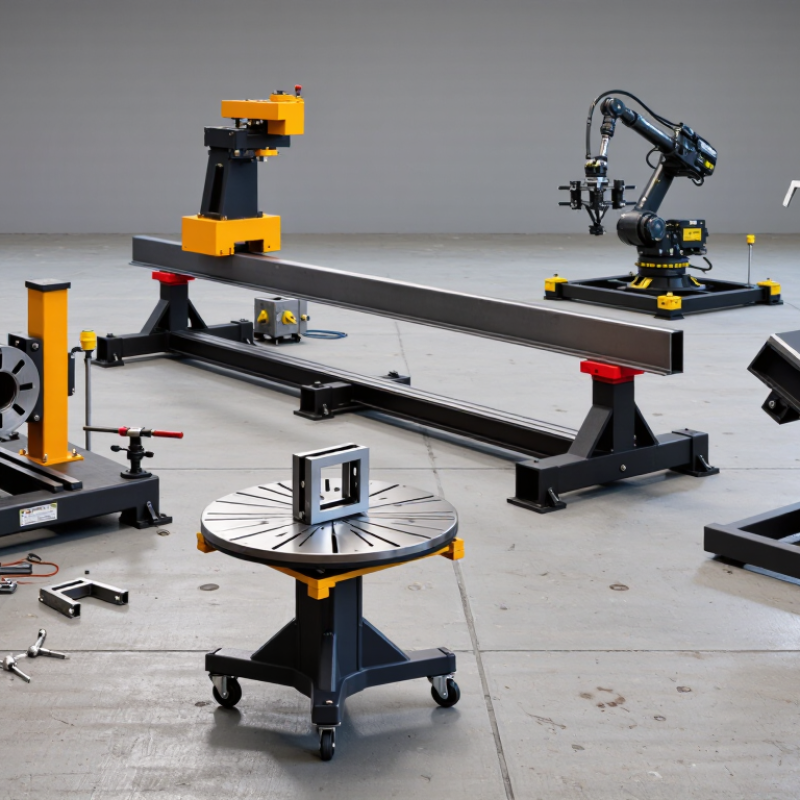
Welding Positioners help place a workpiece at a more accessible angle, so welders can focus on the joint instead of repeatedly repositioning heavy parts. In 2026, the main options include manual turntables, powered rotary units, tilting positioners, and headstock-tailstock systems. Some machines combine rotation and tilt. Names can vary between manufacturers, so compare what each unit actually moves.

A compact manual positioner may suit small brackets or repair work. Powered rotary models can turn round parts at a controlled speed, while tilting tables bring angled joints closer to a comfortable working height. Headstock-tailstock systems support longer workpieces at both ends. More complex multi-axis models offer extra movement, but they also need suitable fixtures, controls, and floor space. More movement is not always better.

The right choice depends on the real job. Check the rated load, workpiece center of gravity, rotation speed, tilt range, duty cycle, and mounting pattern. A 300-kilogram capacity, for example, does not guarantee safe handling if a long part shifts its balance point. Measure the fixture and finished assembly, not just the bare component. Small details matter.

There is no universal winner. A shop producing short, repeatable welds may value simple controls; a team handling varied assemblies may need broader adjustment. Still, a positioner cannot correct poor fit-up or replace sound welding practice. That distinction is easy to overlook. This guide compares the leading types and explains where each can help—and where its limits deserve a closer look.
What Are the Top Types of Welding Positioners in 2026?

How Welding Positioners Are Classified by Motion and Load

Welding positioners in 2026 are best compared by how they move a workpiece and how much load they can safely support. A basic turntable rotates a part around one axis, helping welders maintain a steady position around a circular seam. Tilt-rotate models add an angled axis, bringing joints closer to a comfortable working angle. Headstock-and-tailstock designs support long parts at both ends, while multi-axis systems allow more complex positioning. More movement can improve access, but it also adds setup and control considerations.

Load classifications are not universal, so compare each machine’s rated capacity with the actual fixture and workpiece together. A compact positioner may suit small brackets; a heavier unit may handle large frames or assemblies. Weight alone is not enough. A long part with its center of gravity far from the table can create more leverage than a compact part of equal mass. That detail is easy to miss. Check the manufacturer’s load chart for permitted tilt angles, speed, and load offset before selecting a machine.

In practice, motion and load should be assessed as a pair. A part may fit the weight rating but exceed limits when tilted or mounted off-center. Secure clamping, balanced loading, and controlled rotation help reduce sudden movement and inconsistent weld access. One useful habit is to test the planned setup at low speed before welding. Ratings are helpful, not magic; real fixtures can behave differently than expected.

What Are the Top Types of Welding Positioners in 2026?

Compare common positioner designs by their typical number of controlled motion axes. Load capacity is model-specific, so select equipment by its rated payload and the combined weight of the workpiece and fixtures.

How to read it: Rotary tables and headstock-tailstock positioners typically rotate around one axis; tilt-and-rotate and three-axis positioners add positioning movement. These are typical configurations, and specific designs can vary. There is no universal load-capacity threshold separating light-, medium-, and heavy-duty positioners; check each machine’s rated payload.

Single-Axis Rotary-Table Positioners for Basic Weld Rotation

Single-axis rotary-table positioners are a practical choice when a weldment needs rotation but little or no tilting. The operator clamps the part to a circular table and turns it into a more accessible welding position. This can reduce awkward reaches on brackets, pipe sections, and small frames. The setup is simple. Yet it will not solve every access problem.

Before selecting a unit, check the rated load, table diameter, speed range, and workpiece center of gravity. Include the fixture’s weight in the load calculation; a heavy part mounted off-center can create instability. Variable speed helps maintain a steady weld path, while a foot control can leave both hands free.

The American Welding Society’s 2023 welding workforce data forecast a need for 360,000 welding professionals by 2027. That forecast highlights workforce pressure, but a positioner alone does not guarantee higher output. Poor fixturing still costs time.

Tips

Trial-fit the largest, heaviest part you expect to rotate. Confirm clearance for the torch, cables, clamps, and operator before production. Keep rotation slow enough to control the puddle. It takes practice. Recheck the setup after changing fixtures; that step is easy to overlook.

Two-Axis Tilt-and-Rotate Positioners for Multi-Angle Access

Two-axis tilt-and-rotate welding positioners let operators change both the workpiece angle and its rotation. One axis tilts the table; the other turns the fixture. This combination can bring a joint into a more comfortable welding position without repeatedly unclamping the part. It is especially useful for frames, pipe assemblies, and components with welds on several faces.

In practice, access depends on more than the two axes. Check the workpiece weight, center of gravity, fixture size, and required tilt range before choosing a positioner. A large assembly may shift its balance as the table tilts. Secure clamping matters. Controlled rotation can help maintain a steady travel angle, while a foot control may leave both hands available for the torch. Keep cables and hoses clear of moving parts, too. That detail is easy to miss.

These machines can reduce awkward reaches and repeated handling, but they do not fix poor joint preparation or unsuitable settings. Operators still need to inspect fit-up, control heat input, and verify the weld. On a small job, setup time may outweigh the access benefit. That can be frustrating. A realistic trial with the actual fixture and workpiece often reveals whether the extra axis improves the workflow—or simply adds another adjustment to manage.

Headstock-and-Tailstock Positioners for Long Workpieces

What Are the Top Types of Welding Positioners in 2026?
Headstock-and-Tailstock Positioners for Long Workpieces

Headstock-and-tailstock positioners support long parts between two powered or coordinated ends. This setup helps rotate shafts, frames, and pipe assemblies while keeping weld joints accessible. The headstock drives rotation; the tailstock supports the opposite end. Together, they can reduce repeated lifting and awkward access. That matters as skilled labor remains stretched: the American Welding Society has projected a need for about 360,000 welding professionals by 2027. Positioners cannot replace experienced welders, but they can make handling more consistent.

Choose capacity by checking the workpiece’s weight, length, center of gravity, and required rotation speed. A long, uneven frame may create more strain than its weight alone suggests. Confirm that both supports stay aligned under load, and check whether the controls allow smooth, synchronized movement. A small mismatch can cause vibration or disrupt a steady weld. Setup takes care. It is not magic.

Tips: Leave clearance for clamps, torches, and cables before loading the part. Test rotation slowly with the workpiece secured, then inspect for wobble. Keep a written record of part dimensions and balance points. It may feel tedious, but the notes can prevent repeat setup errors.

What Are the Top Types of Welding Positioners in 2026? — Headstock-and-Tailstock Positioners for Long Workpieces
Positioner Type Configuration Best Suited Workpieces Key Advantages Planning Considerations
Fixed-Height Headstock-and-Tailstock A powered headstock rotates the workpiece between centers; the tailstock supports the opposite end. Long shafts, pipes, beams, and fabricated assemblies with repeatable dimensions. Stable support and straightforward setup for recurring jobs. Confirm center height, usable distance between centers, workpiece balance, and access for the welding torch.
Adjustable-Height Headstock-and-Tailstock Headstock and tailstock height can be adjusted to suit different workpiece diameters or fixture requirements. Mixed-size production, large-diameter fabrications, and jobs requiring a specific weld height. Greater setup flexibility than a fixed-height arrangement. Check adjustment range, locking method, alignment, and whether both supports must be repositioned together.
Floor-Mounted Long-Bed Positioner Headstock and tailstock are installed on a long base or bed, often with a movable tailstock for loading and length changes. Long production parts such as pressure-vessel sections, structural components, and pipe assemblies. Provides a defined support line and can help maintain alignment over the workpiece length. Allow for foundation and floor loading, loading clearance, bed length, and safe access along the full work zone.
Rail-Mounted or Track-Mounted System One or both supports travel along rails or tracks to accommodate different workpiece lengths or move assemblies between stations. Long, variable-length workpieces and production layouts that need adjustable support spacing. Offers positioning flexibility and can support a range of part lengths. Track alignment, travel limits, cable routing, locking, and floor condition are important to reliable operation.
Synchronized Dual-Drive Positioner Both ends are driven and electronically or mechanically synchronized to rotate the workpiece together. Long or heavy assemblies where coordinated rotation at both supports is required by the application. Can reduce torsional loading caused by driving a long workpiece from only one end. Verify synchronization controls, torque requirements, workpiece stiffness, and the manufacturer’s load and operating limits.
Modular Headstock-and-Tailstock System Separate support modules are arranged or reconfigured for different work lengths, fixtures, or production cells. Job shops and flexible manufacturing environments handling a variety of long parts. Adaptable layout and potential for reconfiguration as production needs change. Confirm module compatibility, alignment procedures, repeatability, and the space needed for safe loading.
Selection note: Capacity, speed, center height, distance between centers, and allowable workpiece dimensions vary by model. Check the equipment manufacturer’s rated limits and account for fixtures, clamps, eccentric loads, and the workpiece’s center of gravity.

Three-Axis and Custom Positioners for Complex Welding Setups

Three-axis and custom welding positioners help manage parts that cannot sit flat on a standard turntable. A three-axis unit commonly combines rotation, tilt, and height adjustment. This lets operators bring a joint into a comfortable torch angle while keeping the workpiece secure. Picture a long frame with a seam tucked beneath a crossbar: controlled tilting can reduce awkward reach and repeated repositioning. Still, three axes may be more than a small shop needs.

Custom positioners suit unusual part shapes, heavy fixtures, limited floor space, or robotic cells with tight clearance. The International Federation of Robotics reported 541,302 industrial robot installations worldwide in 2023 in its World Robotics 2024 report. That figure covers industrial robots broadly, not welding equipment alone, but it signals why repeatable part presentation matters in automated production. A positioner should match the robot’s reach, payload, rotation speed, and cable routing. A mismatch can create collisions or slow the cell. The details are easy to overlook.

Tips: Test the fixture with a representative part before finalizing the design. Check access to every weld, pinch points, and how cables move through the full rotation. Ask operators to review the setup; their feedback may expose a clearance problem that drawings missed. For complex work, a short trial run is worth the time.