
What Are the Top Types of Restaurant Coolers?
Undercounter and Prep-Table Coolers for Kitchen Workstations
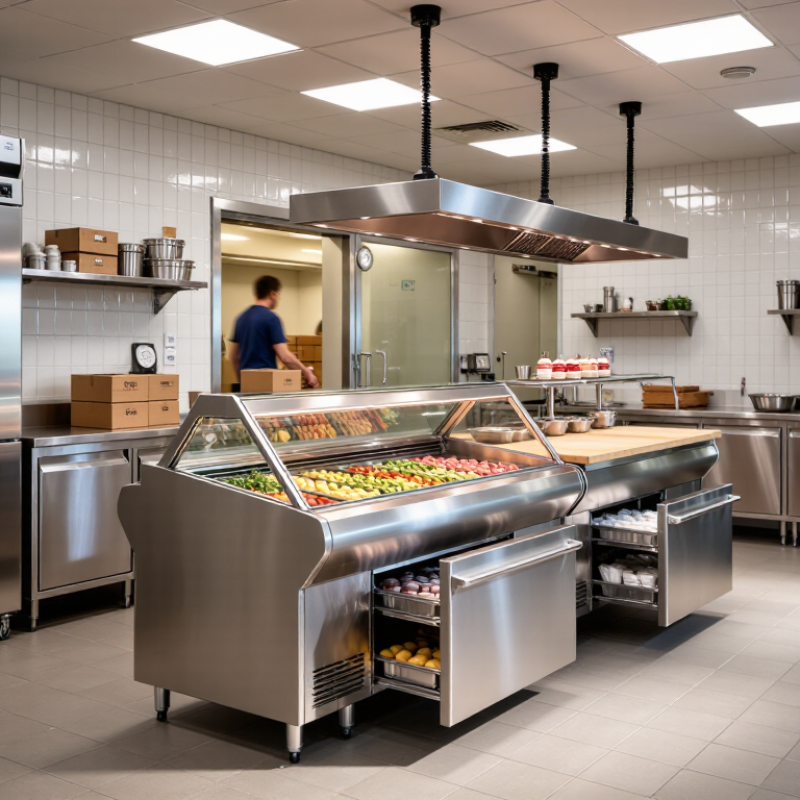
Undercounter coolers keep backup ingredients close to the cooking line, while prep-table coolers place chilled storage directly beneath the work surface. The right choice depends on the task. A compact unit can save steps beside a grill; a prep table suits stations assembling salads or sandwiches.
Small details matter. The FDA Food Code 2022 sets cold holding for time/temperature control foods at 41°F (5°C) or below. That is a holding limit, not a guarantee that every shelf stays evenly cold.
ENERGY STAR reports that certified commercial refrigerators use about 20% less energy than standard models. Treat that figure as a useful benchmark, not a promise for every kitchen. Frequent door opening, blocked vents, and hot product loads can affect performance.
For prep tables, check pan depth and layout against the actual menu. A crowded rail may slow service, even when the cabinet has ample storage underneath.
A common planning mistake is choosing by exterior size alone. Measure doorway clearance, aisle space, and peak prep volume before ordering. Then log temperatures during busy service, when lids may stay open longer.
Even a well-sized cooler can struggle if airflow is blocked or warm ingredients are loaded too quickly. That part is easy to overlook.