
Why Choose a Plastic Injection Machine for Your Business?
Choosing a plastic injection machine is not merely a purchase decision. It can shape production speed, product consistency, and long-term operating costs. For many manufacturers, the right machine turns carefully prepared resin pellets into reliable parts, cycle after cycle. Its value appears in practical details: stable clamping force, accurate temperature control, smooth mold movement, and repeatable injection pressure. Small details matter.
A well-selected machine can reduce material waste and support consistent quality across demanding production runs. It may also help operators manage energy use, maintenance schedules, and changing product requirements. Experienced manufacturers usually evaluate more than advertised injection speed. They examine mold dimensions, shot size, automation needs, workplace conditions, and after-sales service. Technical specifications should match real production data, not hopeful estimates. A machine that is too small may struggle under pressure. One that is too large can increase unnecessary energy and maintenance costs.
Still, no machine is perfect. Even advanced equipment requires trained operators, suitable molds, clean materials, and regular inspection. This point is easy to overlook. Business owners should question impressive claims and request clear performance evidence from reputable suppliers. Independent testing, documented service support, and compliance with applicable safety requirements can strengthen the decision. The best choice is rarely the most powerful model. It is the plastic injection machine that fits the product, factory, budget, and future plans without creating avoidable complexity. Careful evaluation may take more time, but it can prevent costly mistakes and reveal whether the investment truly supports dependable growth.
What Is a Plastic Injection Machine?
Why Choose a Plastic Injection Machine for Your Business?
What Is a Plastic Injection Machine?
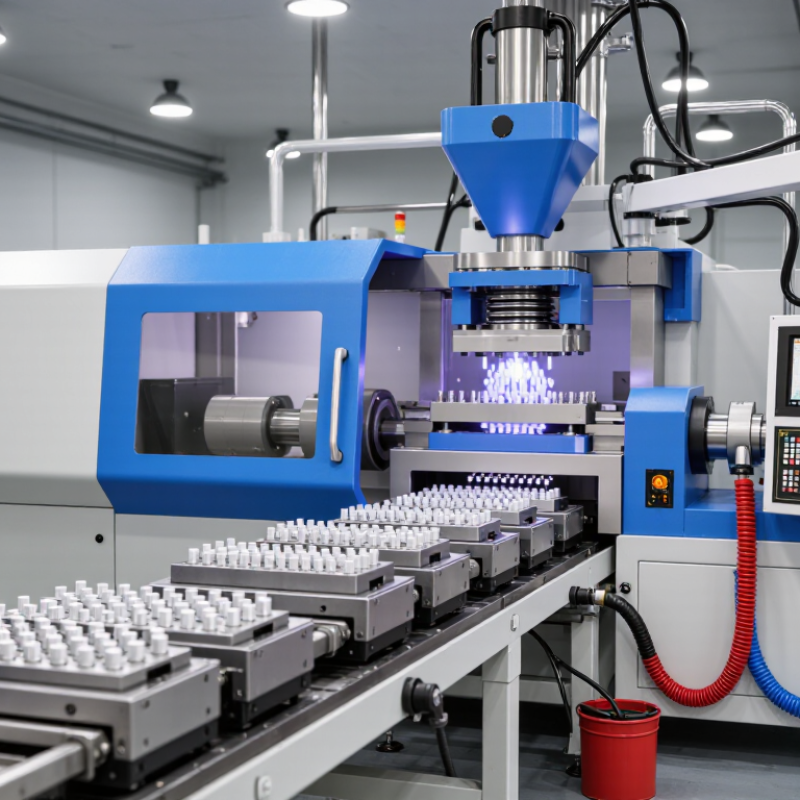
A plastic injection machine melts polymer pellets and pushes the material into a closed mold. After cooling, the mold opens, and ejector pins release the finished part. The cycle repeats with controlled pressure, temperature, speed, and cooling time. That sounds simple. In practice, every setting affects dimensions, surface finish, scrap, and output.
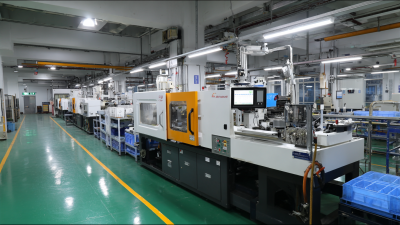
A typical machine includes a hopper, heated barrel, screw, clamping unit, mold, and control system. The screw conveys and plasticizes the material before injection. The clamping unit resists cavity pressure and helps prevent flash along the parting line. For a small workshop, this detail matters. Unstable temperatures or insufficient clamping force can create costly rework. Operators also monitor moisture, shot size, cycle time, and ejection marks.
Industry demand supports the machine’s relevance. Plastics Europe’s Plastics—The Fast Facts 2024 reported 413.8 million tonnes of global plastics production in 2023. Grand View Research estimated the injection molding machine market at approximately USD 10.7 billion in 2023. It forecast continued growth through 2030. These figures do not mean every business needs new equipment. Tooling cost, material selection, maintenance skills, and energy use can change the decision. Advertised cycle speed is not the whole answer. A slower, stable cycle may produce fewer defects. That trade-off is often overlooked.
Why Choose a Plastic Injection Machine for Your Business? - What Is a Plastic Injection Machine?
| Business and Technical Dimension | Typical Data or Industry Information | Business Relevance |
|---|---|---|
| What It Is | A plastic injection machine melts plastic pellets, injects the molten material into a mold under pressure, and holds it until the part cools and solidifies. | It supports repeatable production of molded parts with consistent dimensions and surface quality. |
| Basic Operating Cycle | The main steps are mold closing, plasticizing, injection, packing and holding, cooling, mold opening, and part ejection. | A controlled cycle allows manufacturers to produce the same component repeatedly with limited manual intervention. |
| Clamping Force | Commercial machines commonly range from approximately 20 to more than 4,000 metric tons of clamping force. The required force depends on projected part area, cavity pressure, and mold design. | Correct sizing helps prevent flash, protects the mold, and avoids unnecessary equipment and energy costs. |
| Injection Pressure | Many standard applications operate within an injection-pressure range of roughly 700 to 2,000 bar, while specialized applications may require higher pressure. | Suitable pressure is needed to fill thin walls, long flow paths, and detailed cavities without short shots. |
| Common Thermoplastics | Frequently processed materials include polypropylene, polyethylene, ABS, polystyrene, polyamide, polycarbonate, and thermoplastic elastomers. | Material flexibility enables applications ranging from packaging and household products to automotive and technical components. |
| Typical Cycle Time | Many general-purpose parts have cycle times of approximately 10 to 60 seconds. Thin-wall packaging can cycle faster, while thick or highly engineered parts may require longer cooling. | Shorter stable cycles can increase hourly output, but cooling time and part quality must remain balanced. |
| Production Volume | Injection molding is suitable for medium- to high-volume production, especially when the same design is manufactured repeatedly. | Tooling costs are distributed across a larger number of parts, reducing the average tooling cost per unit as production volume increases. |
| Part Consistency | Modern machines can maintain consistent temperature, pressure, speed, and position when the process is properly set up and monitored. | Stable process control reduces variation, rework, and material waste. |
| Material Utilization | Most of the material is delivered directly into the mold cavity. Runners and sprues may be reground and reused when the material specification and product requirements permit it. | Efficient material use can lower scrap rates and improve production economics. |
| Machine Drive Options | Hydraulic, all-electric, and hybrid machines are available. Electric systems generally provide precise motion control, while hydraulic systems are widely used across different force ranges. | The best choice depends on required precision, cycle speed, maintenance resources, available utilities, and purchase budget. |
| Automation Compatibility | Injection machines can be integrated with robotic part removal, automatic material loading, mold-temperature control, conveyors, inspection systems, and production monitoring software. | Automation can reduce labor requirements, improve workplace safety, and support continuous production. |
| Product Applications | Typical products include closures, containers, electrical housings, medical components, appliance parts, automotive interior parts, toys, and industrial fittings. | The broad application range allows businesses to serve multiple markets using suitable molds and materials. |
| Key Selection Factors | Important factors include clamping force, shot size, injection pressure, platen dimensions, mold height range, tie-bar spacing, control capability, material type, and expected production volume. | Evaluating these specifications before purchase helps prevent capacity limitations and poor process performance. |
| Main Advantages | High repeatability, fast cycle times, suitability for complex geometries, compatibility with many thermoplastics, and strong potential for automation. | These advantages make injection molding practical for businesses seeking scalable and consistent manufacturing. |
| Important Limitations | Molds can require significant upfront investment, design changes may be costly after tooling begins, and the process requires correct temperature, pressure, cooling, and maintenance control. | Early product design review and realistic volume forecasting are essential for achieving a favorable return on investment. |
The figures shown are typical industry ranges. Actual performance depends on machine design, mold construction, material grade, part geometry, and process settings.
Related Posts
-
China Top 10 Plastic Molding Machine Manufacturers?
-
Top Plastic Injection Molding Machine Manufacturers?
-
Global Quality Revolution How Chinese Moulding Plastic Machines Capture International Markets
-
Exploring Innovative Alternatives to Plastic Injection Machines for Modern Manufacturing
-

Addressing Common Challenges with Small Plastic Molding Machines in Production
-

How to Enhance Production Efficiency with Plastic Injection Machines for Optimal ROI