Why Choose a Wall Mounted Battery Harness?
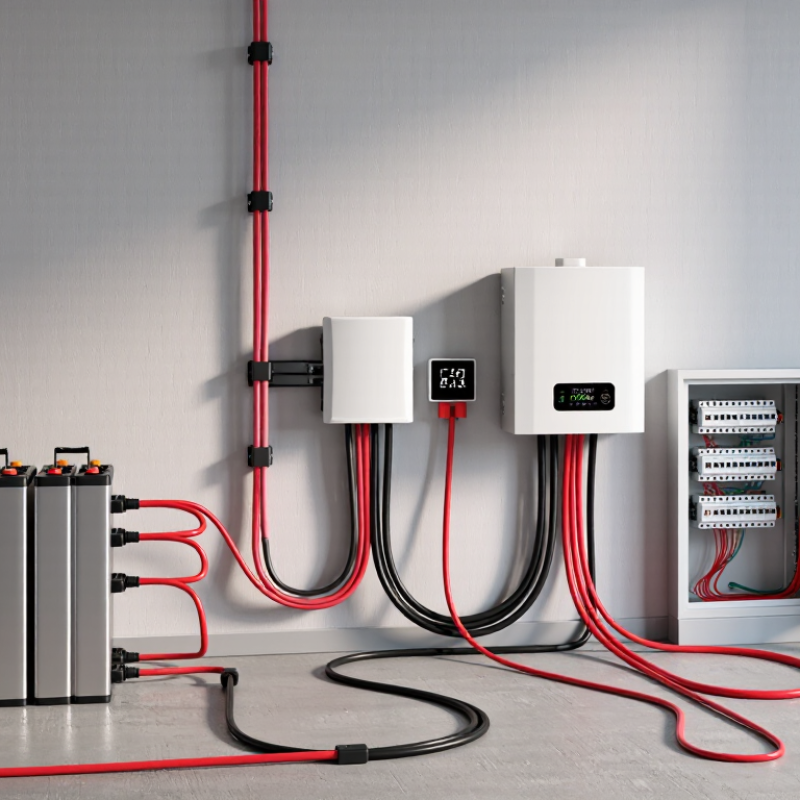
As home energy storage expands, the Wall Mounted Battery Harness deserves closer attention than its modest appearance suggests. It connects batteries, inverters, monitoring devices, and protection equipment inside a compact installation. The right harness can reduce cable clutter, support consistent routing, and make inspection easier behind a wall-mounted cabinet.
The market is moving quickly. The International Energy Agency reported that global battery demand reached about 750 GWh in 2023, while battery storage deployment increased sharply. Its Batteries and Secure Energy Transitions report also identifies storage as essential for integrating more renewable electricity. BloombergNEF reported further growth in stationary storage installations during 2023. These figures show why installation quality now matters beyond individual projects.
Small details matter.
A properly selected harness should match current, voltage, connector type, insulation rating, bend radius, and expected temperature. It should also follow the battery manufacturer’s instructions and applicable electrical standards. A qualified installer can verify crimp quality, torque settings, polarity, and strain relief before energizing the system. A loose terminal may create heat that remains invisible during a short inspection.
Wall mounting offers practical advantages. Cables can stay elevated, organized, and separated from moisture or accidental contact. Technicians may also trace connections faster during maintenance. Yet this solution is not automatically superior. Wall strength, ventilation, fire separation, and service clearance still require careful evaluation. I have seen neat-looking cable layouts hide excessive bending or unsupported weight.
That limitation matters. A Wall Mounted Battery Harness is a structured installation aid, not a substitute for engineering judgment. This article examines where it helps, where it fails, and how reliable selection improves safety, serviceability, and long-term system performance.
What Is a Wall-Mounted Battery Harness? 48 V and 100 Ah Explained
Why Choose a Wall Mounted Battery Harness?
What Is a Wall-Mounted Battery Harness? 48 V and 100 Ah Explained
A wall-mounted battery harness is the protected wiring assembly around a home energy battery. It links the battery cells, battery management system, inverter, fuse, disconnect, and grounding point. Unlike loose cables, it keeps current paths organized against a wall. Good harnesses use correctly sized conductors, secure terminals, strain relief, and insulation suitable for the installation environment. Small details matter.
A 48 V, 100 Ah battery has a nominal capacity of about 4.8 kWh. The calculation is simple: 48 multiplied by 100. Usable energy is lower after reserve settings, conversion losses, temperature effects, and battery aging. A 1,000-watt load could theoretically run for nearly 4.8 hours, but real operation will be shorter. That estimate is useful, not perfect.
The International Energy Agency’s Batteries and Secure Energy Transitions report states that global battery demand reached nearly 750 GWh in 2023. Its analysis also identifies stationary storage as a fast-growing application. This growth increases the need for clear, serviceable wiring layouts. The International Electrotechnical Commission’s installation standards emphasize protection against electric shock, overheating, and mechanical damage. A wall-mounted harness supports these goals by reducing exposed cable movement and simplifying inspection. It does not replace professional design. Cable length, ambient temperature, fault current, and local requirements still need checking. In practice, the neatest installation can still fail if its terminals are under-torqued or its protection device is poorly selected.
How Wall Mounting Supports Compact 5–15 kWh Energy Systems
Why Choose a Wall Mounted Battery Harness?
A wall mounted battery harness helps compact 5–15 kWh energy systems use space more efficiently. Instead of occupying valuable floor area, the battery sits securely against a suitable wall. This can improve access in utility rooms, garages, and small workshops. Clear floor space also makes cleaning and routine inspection easier.
From practical installation experience, the wall must support the battery’s total weight, not just its empty enclosure. Masonry, reinforced framing, and proper anchors usually offer better stability than weak drywall. Cable routes should remain short, protected, and easy to inspect. Adequate clearance matters too, because batteries need appropriate airflow and safe service access. Wall mounting is not always the perfect answer. A poor wall can create vibration, alignment, or maintenance problems.
Tips: Measure the mounting surface twice. Check the battery’s loaded weight, fixing points, and manufacturer clearance requirements. Keep cables away from sharp edges and heat sources. Leave enough room to remove covers without moving nearby equipment. A small installation mistake can become an annoying service issue later. It is worth slowing down.
Why Choose a Wall Mounted Battery Harness? - How Wall Mounting Supports Compact 5–15 kWh Energy Systems
Planning note: Energy figures are calculated from nominal voltage and capacity assumptions. Actual usable energy, power output, current limits, module count, cable sizing, mounting hardware, clearances, and protection requirements depend on the selected equipment and applicable electrical codes. Battery systems should be installed by a qualified professional.
Harness Sizing: Convert 5 kWh at 48 V into Approximately 104 Ah
Why Choose a Wall Mounted Battery Harness?
Harness Sizing: Convert 5 kWh at 48 V into Approximately 104 Ah
A 5 kWh battery at 48 V provides about 104 Ah. The calculation is simple: 5,000 Wh divided by 48 V equals 104.2 Ah. This value describes stored capacity, not guaranteed usable energy. Real systems lose energy through cables, connectors, temperature changes, and inverter efficiency. A wall mounted battery harness should therefore match the battery’s rated current and installation distance.
In practical work, I check continuous current before choosing cable size. Peak loads also matter, especially when motors or compressors start. Short cables may reduce voltage drop, but tight bends can create stress near terminals. Use correctly rated lugs, insulation, strain relief, and overcurrent protection. Every connection should be firmly crimped and inspected. It sounds basic. Loose connections can generate heat. A qualified electrician should verify the design and local requirements.
Tips: Keep the positive and negative cables close together to reduce loop area. Measure the actual cable route, not the wall distance. Leave modest service length, but avoid unnecessary coils. Label both ends clearly. I sometimes allow too little space around the battery, then regret it during maintenance. Recheck polarity with a meter before energizing the system. A careful final inspection is cheaper than correcting a hidden wiring mistake later.
Installation Checks: IP Ratings, Cable Ampacity, and 10-Year Design Life
Why Choose a Wall Mounted Battery Harness?
A wall mounted battery harness keeps heavy cables organized and away from sharp edges. The real advantage appears during installation, not in a showroom. A fixed route reduces strain on terminals and makes later inspections easier. I once underestimated the space needed beside a battery enclosure. That mistake made cable bending unnecessarily difficult. The mount must match the enclosure, cable weight, and service access.
Installation Checks: IP Ratings, Cable Ampacity, and 10-Year Design Life
Start by checking the required IP rating for the installation area. IP54 may suit a protected indoor room with limited dust and moisture. Outdoor or washdown locations may require stronger protection. Do not trust the rating alone. Inspect cable glands, covers, seals, and unused entry points. A small gap can weaken the entire enclosure.
Cable ampacity deserves equal attention. Calculate continuous current, installation temperature, grouping, and allowable voltage drop. A cable that works briefly may overheat during long operation. This step is often rushed. For a 10-year design life, select durable insulation, corrosion-resistant fasteners, and secure strain relief. Recheck terminal torque during commissioning and scheduled maintenance. Leave enough working space for testing tools and replacement parts. I would document these checks with photographs and measured values. The weak point may be a simple gland, not the battery itself. That detail is easy to miss.
Why Choose a Wall Mounted Battery Harness?
Installation checks should confirm enclosure protection, cable ampacity, and long-term durability. The chart shows representative continuous current-carrying capacities for copper conductors installed at 30°C with three loaded conductors in a PVC-insulated cable system. Actual values must be verified against local electrical codes, conductor insulation, ambient temperature, grouping, and installation method.
IP rating:
Select an enclosure rating suitable for the environment. IP6X indicates dust-tight protection; IPX4 protects against splashing water, while IPX5 and IPX6 address water jets.
Cable ampacity:
Choose a conductor with sufficient continuous-current capacity and apply derating for heat, cable grouping, enclosure temperature, and installation conditions.
10-year design life:
Use corrosion-resistant terminals, secure strain relief, UV- and temperature-resistant insulation, and periodic inspection to support a long service life.
Reference framework: IEC 60529 for IP classifications and IEC 60364-5-52 for cable selection and current-carrying considerations.
