
Contract Manufacturing for Injection Molded Plastic Products in North America
(800) 824.0607
An Electric Chair can give a business more control over comfort, positioning, and daily workflow. In a salon, treatment room, or reception area, powered adjustments can help staff set a suitable height or recline angle with less manual effort. The right model should fit the work, not just look impressive in a product photo. Consider who will use it, how often it will move, and whether its controls are simple to reach.
Small details matter. A stable base, wipe-clean upholstery, accessible switches, and clear weight limits can make everyday use more predictable. Ask suppliers for specifications, warranty terms, cleaning guidance, and replacement-part information. If possible, test the chair with staff before buying; a quiet motor and smooth movement are easier to judge in person than on a screen. Comfort is personal. One chair will not suit everyone.
The business case depends on more than the purchase price. Compare expected use, maintenance needs, delivery costs, and the space required when the chair is fully reclined. Check that the floor layout leaves enough room for staff and customers to move safely. A powered chair may support a more flexible service, but it cannot fix poor scheduling or an unsuitable room. That is worth admitting. Choose based on documented needs and real feedback, then review how the chair performs after regular use. A careful decision is often better than buying the most feature-rich option.
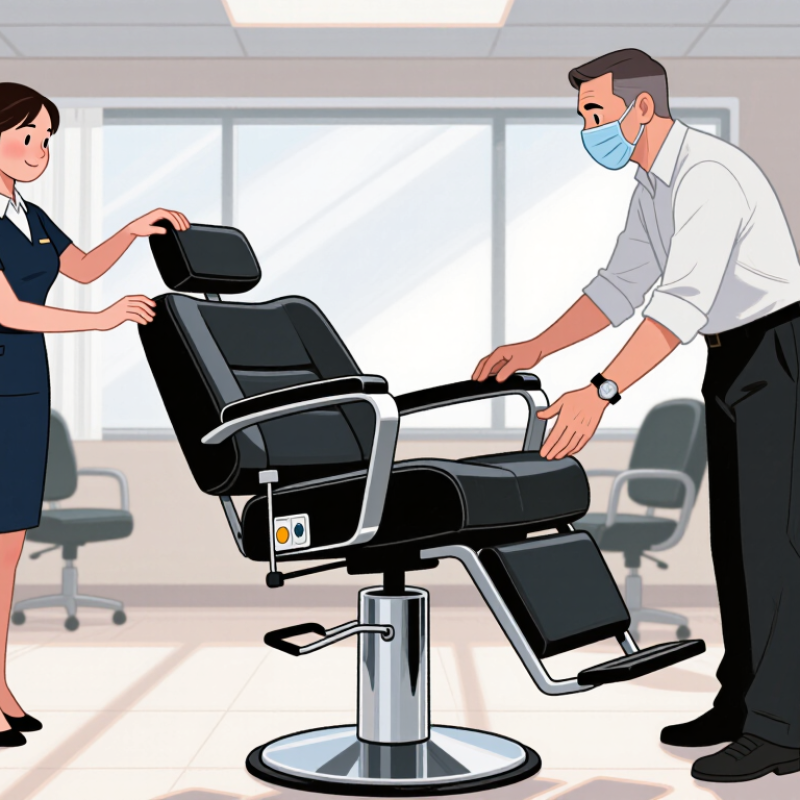
An electric salon chair uses a powered mechanism to raise or lower the seat, rather than relying on a manual hydraulic pedal. In many designs, an electric actuator moves the chair when a stylist presses a hand control or foot switch. The lift helps adjust the client’s position while keeping both hands free for tools. A quiet motor and steady movement matter: sudden jolts can feel unsettling, especially when a client is seated with a cape around their shoulders.
The mechanism usually includes a motor, a lifting column, a stable base, and controls connected by a cable or built-in wiring. The chair’s rated capacity and lift range should suit the services performed and the people using it. Check that the base sits firmly on the floor, and keep the control area clear of hair and spilled products. Small details count. A powered lift can reduce repeated bending, but it does not make poor posture disappear. I have seen how easy it is to focus on the button and overlook the chair’s working height. Regularly inspect cables, controls, and movement, and follow the maker’s care instructions. The lift should feel predictable, not rushed. That is the practical test.
Why Choose an Electric Chair for Your Business?
BLS Projects 7% Growth for Barbers, Hairstylists, and Cosmetologists, 2023–33
The U.S. Bureau of Labor Statistics projects 7% employment growth for barbers, hairstylists, and cosmetologists from 2023 to 2033. That outlook points to continued demand for personal care services, though it cannot guarantee more clients for any one shop. For business owners, comfort and efficient service matter. An electric styling chair can help staff adjust a client’s height with a foot control, rather than repeatedly lifting or repositioning the seat by hand.
Small details count. A steady chair can make it easier to trim around the neckline, apply color, or work with clients who have limited mobility. Before buying, measure the space between stations and check the chair’s weight capacity, adjustment range, and cleaning instructions. Electric models need power access and routine checks. A stuck control would interrupt a busy appointment schedule. I’ve seen how easily equipment plans overlook the outlet location; it is a simple mistake, but an annoying one.
Tips: Test the chair with different clients and staff heights before committing. Keep cords clear of walkways, and inspect controls regularly. Growth is an opportunity, not a promise, so match equipment costs to your actual booking patterns.
Why Choose an Electric Chair for Your Business?
An electric chair with adjustable seat height can make service work smoother. Staff can bring a client closer to a comfortable working level instead of repeatedly bending or reaching. A foot control or hand control allows small adjustments while keeping hands free for tools. That matters when moving between detailed work and client consultation. Less strain is not guaranteed, though; poor setup can still encourage awkward posture.
The U.S. Bureau of Labor Statistics reported 2.6 million nonfatal workplace injury and illness cases in private industry for 2023. This broad figure is not specific to seating, but it reinforces the value of practical workplace design. Height adjustment supports that effort when staff set the chair to suit the task, the client, and their own posture. Check that controls are easy to reach and that the chair stays stable at working height. A small workflow trial can reveal issues that a product checklist misses.
Tips: Before service, adjust the seat so your shoulders stay relaxed and your elbows remain near your sides. Test the control range with different clients. Recheck the setup during longer appointments. BLS data source: Survey of Occupational Injuries and Illnesses, 2023.
| Service situation | How seat-height adjustment helps | Ergonomic alignment to check | Workflow consideration |
|---|---|---|---|
| Work at a fixed-height counter or treatment surface | Raises or lowers the seated user to suit the working surface. | Keep shoulders relaxed and elbows near the body; avoid reaching upward or hunching to work. | Set the height before the service begins, then confirm tools and supplies remain within easy reach. |
| Serve clients of different heights or positions | Allows the chair to be adjusted for the task and client position instead of relying on one fixed seat level. | Choose a working height that supports a neutral posture and a clear view of the service area. | Use a consistent adjustment routine between appointments; check that the chair is stable before use. |
| Alternate between seated tasks and standing tasks | Makes it easier to set the seat at a suitable height when returning to seated work. | When seated, aim for feet supported and thighs approximately parallel to the floor where the setup allows. | Adjust the seat for each working position rather than maintaining an uncomfortable height throughout the shift. |
| Accommodate users with different leg lengths | Provides a way to change seat height for different users. | If the feet do not rest securely on the floor after adjustment, consider a suitable footrest. | Confirm that the available adjustment range suits the intended users and the work surface. |
| Busy appointment-based service | Powered height adjustment can change seat position using the chair’s controls, subject to the model’s operating instructions. | Recheck posture after every adjustment; the correct height depends on the user, task, and workstation. | Allow time for safe adjustment and follow the manufacturer’s instructions and load limits. |
Ergonomic note: Adjustable height helps users fit the chair to the task, but it does not guarantee improved productivity or prevent discomfort. Position the chair and work surface together, keep feet supported, and follow applicable workplace guidance.
When choosing an electric chair for a business, compare its rated weight capacity with the people and equipment it will actually support. Leave a sensible margin rather than buying to the exact limit. Check the operating instructions, too. A chair that moves smoothly during a showroom test may behave differently during a full day of repeated adjustments. Review its duty cycle and any recommended rest periods. Small pauses matter.
Upholstery affects both comfort and daily upkeep. Look closely at seams, corners, and areas that rub against clothing or work surfaces. A smooth, nonporous covering is often easier to wipe down, but confirm which cleaners it can tolerate. Harsh products may dry or crack some materials. Ask how replacement parts are handled. That detail is easy to overlook.
Electrical safety deserves equal attention. Confirm that the chair matches the outlet and power supply specified in its documentation, and inspect the cord and plug for damage. Keep connections away from spills, and avoid unapproved adapters or extension cords. If movement becomes uneven, the control gets warm, or a cable looks worn, stop using the chair and request qualified service. A checklist helps, but it cannot replace careful inspection.
An electric chair’s purchase price is only part of its cost. Measure its actual power draw, then estimate hours in use and your local electricity rate. The U.S. Energy Information Administration reported an average commercial electricity price of 12.75 cents per kilowatt-hour in 2023. For illustration, a 150-watt chair used eight hours daily for 250 days consumes about 300 kWh, or roughly $38 annually at that rate. Small loads still add up. This estimate excludes taxes and demand charges, and the chair may not draw full power continuously.
Maintenance can change the calculation. Track actuator, control, cable, and upholstery issues, and record repair time alongside parts costs. Ask whether warranty coverage includes labor, replacement parts, and service visits; a long warranty with narrow exclusions may offer little practical protection. Keep the written terms. Review them carefully.
Uptime matters when a chair supports paid appointments or customer service. A chair awaiting a part can leave a room unusable, even if its energy bill is modest. Compare expected delivery times for common components and ask how service requests are handled. Record downtime per chair for several months, then estimate lost operating hours using your own schedule and revenue figures. Those records are imperfect, but more useful than assuming every chair runs reliably.