
Contract Manufacturing for Injection Molded Plastic Products in North America
(800) 824.0607
Why Are Power Distribution Transformers Used?
A Power Distribution Transformer performs a quiet but essential task: it changes voltage so electricity can travel through a network and reach homes, shops, and workplaces safely. Near a substation, a transformer may lower the voltage before power enters neighborhood lines. A smaller unit on a pole or concrete pad can reduce it again for local use. That change helps appliances receive usable electricity while limiting losses during transmission.
Transformer engineer James H. Harlow, author of Electric Power Transformer Engineering, offers a valuable technical perspective. A concise summary of that perspective—not a verbatim quotation—is: “Transformers make voltage levels practical for delivering and using electrical power.” The principle is simple. The equipment is not. Windings, insulation, cooling systems, and protective devices must work together under changing loads and weather. A faint hum beside a residential street can mark a device managing that demanding job every hour.
Understanding why these transformers are used also means noticing their limits. They do not generate electricity, and they cannot eliminate every power loss or outage. Their role is to adapt voltage within a larger electrical system. That distinction matters. It can be easy to treat a transformer as an invisible box, yet its condition affects service reliability, equipment protection, and maintenance planning. The details vary by design and location, so broad explanations should not replace site-specific engineering review. A useful starting point is to see the Power Distribution Transformer as a bridge between high-voltage networks and everyday electrical needs.
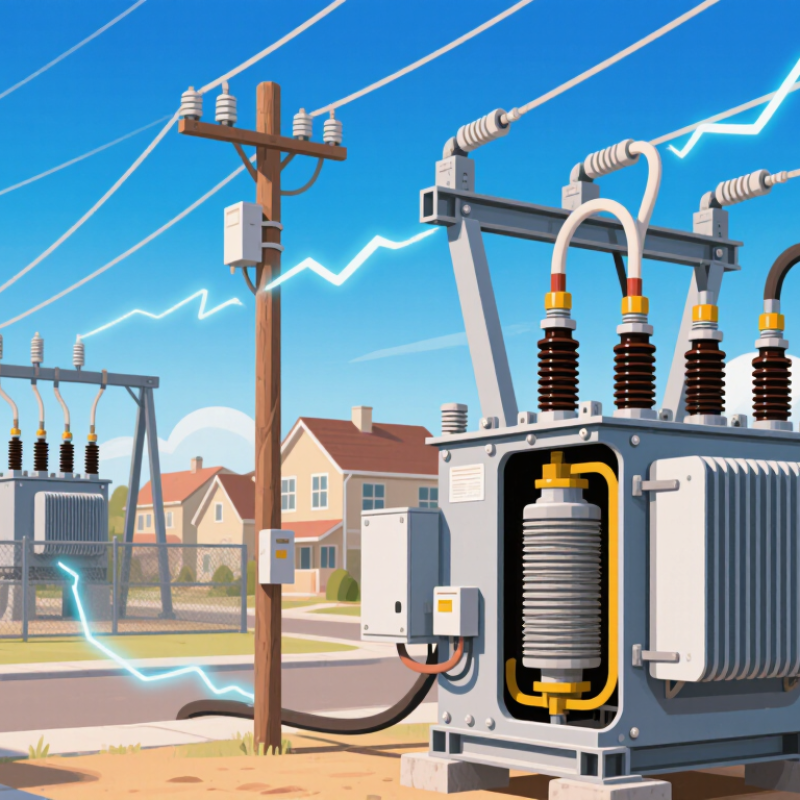
A power distribution transformer transfers electrical energy between circuits and adjusts voltage for local use. It commonly reduces medium-voltage electricity to lower levels suitable for homes, offices, and small businesses. Inside, primary and secondary windings surround a magnetic core. Alternating current in the primary winding creates a changing magnetic field, which induces voltage in the secondary winding. The output voltage depends on the winding turns ratio.
These transformers sit near the final stages of an electricity network, mounted on poles, placed on concrete pads, or housed indoors. Their capacity must match expected demand, including peaks from equipment such as air conditioners or workshop motors. A unit that is poorly sized may run hot or struggle during heavy loads. That matters. Design also accounts for insulation, cooling, weather exposure, and protective equipment. Details vary by installation, so a transformer’s nameplate and technical documents are more reliable than appearance alone.
Tips: Check the rated voltage, capacity, and cooling type before specifying a unit. Keep ventilation paths clear, and arrange inspections through qualified electrical personnel. A quiet hum can be normal, but unusual heat, leaking fluid, or a sudden change in sound deserves attention. Not every odd noise means failure, though.
Power distribution transformers sit near the end of the electrical grid, between medium-voltage feeders and the service lines that reach homes, shops, and small businesses. They reduce voltage to levels suitable for local use. Without this step, electricity would arrive at buildings at a voltage far too high for ordinary equipment.
Picture a neighborhood street: a feeder runs along the road, and a pole-mounted transformer serves nearby homes. In other areas, a compact transformer sits on a concrete pad beside a building or underground cable route. A common North American service is 120/240 volts, though exact voltages vary by region. The transformer’s location helps keep low-voltage wiring runs practical.
The grid diagram looks tidy. Real networks are less so. One transformer may serve several customers, while larger buildings can have dedicated equipment. Utilities choose placement and capacity based on expected demand, cable distance, and local conditions. A small unit can struggle during heavy use; an oversized one adds cost and losses. Distribution transformers are a final voltage step, not the only part of local delivery: switches, protective devices, and meters also help electricity reach customers safely.
Why Are Power Distribution Transformers Used?
How Transformers Reduce Voltage for Local Use
Electricity travels efficiently across long distances at high voltages, but homes and small businesses need much lower supply voltages. A power distribution transformer makes that change near the point of use. It receives power from a medium-voltage feeder and delivers a lower voltage through nearby service lines. The device works by magnetic induction: alternating current in one coil creates a changing magnetic field, which produces voltage in another coil. The coils’ turns ratio determines the voltage change.
The numbers depend on the local network. In many parts of North America, a transformer may supply 120/240 volts to a home, while other regions use different service voltages. Lower voltage is more suitable for ordinary equipment, but it is not harmless; household wiring can still cause serious injury. Transformers also help maintain voltage as demand shifts during the day. The explanation sounds tidy, yet real networks face changing loads, long cables, and occasional voltage drops. A transformer cannot fix every issue by itself.
Tips: Keep clear of transformer cabinets and overhead equipment. Never assume a humming unit is safe to approach. If lights repeatedly dim or flicker, note when it happens and contact a qualified electrician or your utility.
Transformers step voltage down in stages so electricity can travel efficiently over long distances and then be supplied at safer, usable levels nearby. This example shows typical nominal voltages: 115 kV transmission, 13.8 kV primary distribution, and 0.24 kV (240 V) residential service. Actual voltages vary by region and system.
Power distribution transformers lower electricity from local distribution lines to levels used by homes, offices, and small workshops. This voltage change makes everyday power practical. A transformer near a street corner may serve several buildings, while a larger unit can supply a wider area.
Inside, magnetic fields transfer energy between windings without a direct electrical connection. Insulation, protective equipment, and proper grounding help manage heat and electrical faults. They do not remove every risk. Safe operation also depends on correct installation, suitable loading, and routine inspection. A warm transformer can be normal; unusual noise, damage, or persistent overheating deserves attention.
Tips: Keep access areas clear. Never open equipment covers. Report leaks, damaged enclosures, or unusual buzzing to qualified maintenance staff. Do not assume a quiet unit is healthy; inspections can reveal problems before a service interruption.
Reliable service depends on more than the transformer alone. Engineers consider expected demand, peak loads, weather exposure, and backup arrangements when choosing equipment. Even so, forecasts can be imperfect. New buildings or changing usage may increase demand faster than expected. Monitoring load and maintaining connections helps reduce avoidable outages and supports steady power for lights, refrigeration, and essential equipment.
| Dimension | How the Transformer Works | Benefit for Safe, Reliable Power | Typical Practice or Example |
|---|---|---|---|
| Voltage conversion | Reduces medium-voltage electricity on a local distribution feeder to a lower voltage suitable for customer equipment. | Provides usable supply voltages while avoiding the need to deliver medium voltage directly to ordinary buildings and appliances. | Local distribution voltages and customer voltages vary by country and utility. In North America, a common residential supply is 120/240 V; many other systems use about 230/400 V. |
| Local placement | Installed near the loads it serves, such as on a utility pole, on a ground-level pad, or inside a building or substation. | Helps deliver power to nearby customers at the required voltage and can limit the length of low-voltage circuits. | Installation type depends on network design, available space, environmental conditions, and local safety requirements. |
| Electrical isolation | Transfers energy between primary and secondary windings through a magnetic field; the windings are electrically separate in a conventional transformer. | Separates the customer-side circuit from the primary circuit, while grounding and protective devices help manage fault and shock risks. | Isolation does not make equipment safe to touch. Grounding, insulation, enclosures, and correct installation are also essential. |
| Load distribution | Supplies one customer or a group of customers, depending on the transformer and distribution layout. | Divides the network into local service areas, helping utilities plan capacity and respond to localized faults or maintenance needs. | Transformers are selected for expected demand, voltage, phase configuration, and operating conditions. |
| Voltage regulation | Provides a designed secondary voltage; actual voltage can vary with load, upstream voltage, and transformer impedance. | Supports equipment operation within its intended voltage range when the wider distribution system is properly designed and maintained. | Utilities monitor and manage voltage using network design and equipment such as voltage regulators or transformer taps where appropriate. |
| Efficiency and heat | Transfers power with some energy loss, mainly as heat in the windings and magnetic core. | Efficient designs reduce wasted energy and help limit heat, supporting dependable operation over the transformer's service life. | Transformers may use air cooling or insulating liquid for cooling and insulation; the design depends on the unit and installation. |
| Fault protection | Works with fuses, circuit breakers, surge protection, and grounding systems that detect or limit specified abnormal conditions. | Protective devices can help isolate faults and reduce damage or hazards, although protection depends on correct coordination and maintenance. | Protection arrangements vary by transformer type, network design, and applicable electrical codes. |
| Service continuity | Forms a key connection between the distribution feeder and customer service circuits. | Routine inspection, condition monitoring, suitable loading, and timely repair or replacement help reduce outages. | Reliability also depends on the surrounding network, weather, vegetation management, and other equipment—not on the transformer alone. |
Note: Voltage levels, installation practices, and protection requirements differ by region and utility. Electrical equipment should be installed, operated, and maintained by qualified personnel in accordance with applicable codes.
Power distribution transformers are common wherever electricity moves from local networks into usable building-level supply. In residential areas, pole-mounted units often serve nearby homes, while ground-mounted units sit in enclosures beside sidewalks or parking areas. They reduce medium-voltage electricity to levels suitable for household circuits. Quietly, they do a lot.
Commercial sites use them near offices, shops, schools, and hospitals, where lighting, lifts, computers, and heating systems create changing demand. Larger facilities may have indoor transformer rooms or dedicated outdoor substations.
Factories need units sized for motors and production equipment, while farms may use them for barns, irrigation pumps, and refrigerated storage. They also serve water-treatment plants, transit facilities, and other public infrastructure.
Placement depends on electrical load, available space, maintenance access, and protection from weather or vehicle impact. A transformer near a building can shorten low-voltage cable runs, but it still needs safe clearances and ventilation.
Not every site is simple. Older streets, growing demand, and limited land can make location a compromise, so engineers assess real load patterns rather than relying on a standard layout. It is less tidy on a map, but often more practical.