Contract Manufacturing for Injection Molded Plastic Products in North America
(800) 824.0607
Choosing a China best all electric injection molding machine supplier requires more than comparing catalog prices. It requires examining the machine behind the sales promise. A reliable supplier should demonstrate stable performance, transparent specifications, and practical after-sales support.
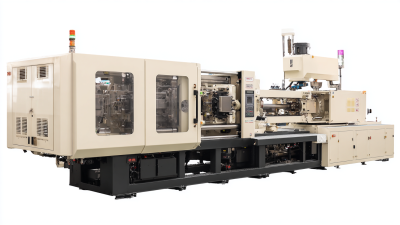
An all electric injection molding machine uses servo-driven movements instead of conventional hydraulic systems. This design can reduce energy consumption, improve repeatability, and create a cleaner production area. It can also deliver precise injection speed, pressure, and position control. These advantages matter when producing medical components, electronic housings, packaging parts, and automotive interiors.
Dr. David Kazmer, an injection molding expert and author, describes the field clearly: “Injection molding is a science, but it is also an art.” His statement remains useful when evaluating Chinese manufacturers. Technical data matters. Practical experience matters more than many brochures suggest.
A dependable supplier should provide factory testing, mold-trial records, electrical documentation, and measurable energy data. Ask about screw design, platen rigidity, controller response, clamping accuracy, and spare-parts availability. Visit the production floor when possible. Look closely at wiring, lubrication points, safety guards, and assembly discipline.
The lowest quotation may hide future costs. Sometimes, it does. A machine can look impressive during a demonstration yet struggle with a difficult mold or unstable material. That weakness deserves attention.
The strongest Chinese suppliers combine engineering experience with export service, operator training, and responsive maintenance. Still, no supplier is perfect. Buyers should question claims, verify references, and compare total ownership costs. The right decision balances precision, efficiency, reliability, and honest technical communication.
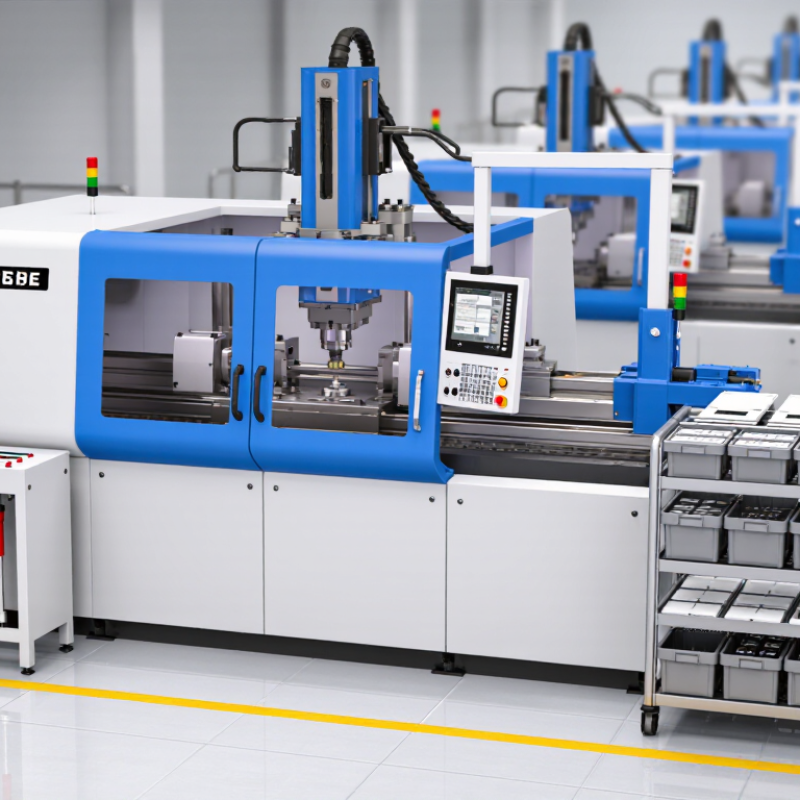
China’s all-electric injection molding machine industry is moving from niche adoption toward broader precision manufacturing.
The China Plastics Machinery Industry Association reports continued investment in automation, servo systems, and energy-saving equipment across domestic factories. Fortune Business Insights valued the global injection molding machine market at approximately USD 15.39 billion in 2023. Its forecast reaches about USD 20.73 billion by 2032, supported by packaging, medical, electronics, and automotive demand.
All-electric machines replace hydraulic motion with servo-driven axes. This design can deliver cleaner operation, repeatable injection control, and lower idle energy use. In production trials, buyers should measure kilowatt-hours per kilogram, cycle stability, and rejected parts. Not just the machine price. A stable 0.01-millimeter control target may matter more than a larger motor. Short cycles expose weak cooling design quickly. So does inconsistent resin drying.
The International Energy Agency identifies industrial efficiency as a major pathway for reducing electricity demand. Yet, the electric label can mislead. Actual savings depend on mold design, material temperature, factory tariffs, and operator settings. This is often overlooked. A reliable China-based supplier should provide recorded test data, maintenance schedules, electrical specifications, and application references. Factory acceptance testing remains essential, especially for thin-wall packaging and high-speed electronic components. Some suppliers still present laboratory figures without production evidence. Buyers should question those figures.
All-electric injection molding machines replace hydraulic actuation with servo-driven electric axes. Each axis uses a motor, ball screw, and feedback sensor. The controller coordinates plasticizing, injection, clamping, and ejection. Position accuracy comes from continuous encoder feedback, not operator guesswork. In factory trials, stable motion often produces more consistent shot weights. This matters when thin walls expose small process errors.
During plasticizing, the screw rotates under servo control and meters melt volume. A separate electric drive moves the screw forward at a programmed speed. The clamping motor then builds force through a mechanical transmission. It holds the mold closed while pressure rises inside the cavity.
Cooling time, screw recovery, and pressure limits must match the material. Poor tuning wastes energy. It also creates flash, sink marks, or incomplete filling.
Experienced technicians check encoder calibration, lubrication, mold alignment, and temperature stability before judging performance. They record cycle data rather than trusting one attractive sample. Energy use is usually lower because motors draw power mainly during movement. Noise and oil-related maintenance can also decrease.
Still, all-electric systems are not automatically perfect. Sensitive electronics need clean power and controlled cabinet temperatures. A rushed setup can hide repeatability problems. Small errors become visible. Reliable operation comes from disciplined commissioning, realistic tolerances, and regular inspection.
China Best All Electric Injection Molding Machine Supplier
Key Machine Types, Specifications, and Performance Features
All-electric injection molding machines use independent servo motors for clamping, injection, plasticizing, and ejection. They deliver clean operation, repeatable motion, and precise control for medical, electronics, and thin-wall parts. Hydraulic machines remain practical for heavy molds and high clamping forces. Hybrid models combine hydraulic clamping with electric injection, balancing cost and accuracy.
Clamping force is the first specification to check. A small machine may provide 50–150 tonnes, while automotive applications can exceed 1,000 tonnes.
Injection speed, screw diameter, shot weight, and mold dimensions must match the material and product design. Poor matching causes flash, short shots, or unnecessary energy use. It happens often.
Grand View Research estimated the global injection molding machine market at approximately USD 15.4 billion in 2023. Its 2024 assessment projects a 4.6% compound annual growth rate through 2030. The International Energy Agency reports that electric motor systems consume roughly 46% of global electricity. Efficient servo systems therefore deserve serious evaluation, not casual marketing claims.
Look for energy monitoring, closed-loop pressure control, fast dry-cycle performance, and repeatability data. EUROMAP 60.1 measurement methods can improve comparison between suppliers. In practice, factory trials still matter. A specification sheet cannot reveal every weakness.
Evaluating a China-based all-electric injection molding machine supplier requires more than checking the lowest quotation. Measure energy use per kilogram, repeatability, service response, and spare-part availability. The U.S. Department of Energy reports that efficient injection molding upgrades can reduce energy consumption by roughly 10% to 50%, depending on machine condition and process settings. Ask suppliers for measured data, not attractive estimates.
Request factory evidence. Review motor efficiency records, controller specifications, mold trial videos, and inspection reports from recent machines. ISO 9001 certification supports process control, but it does not guarantee molding quality. A practical audit should include screw recovery time, pressure stability, noise level, and part-weight variation across repeated cycles. Small details matter. Request raw test records.
EUROMAP market reports show continuing demand for energy-efficient plastics machinery, yet supplier claims can still be incomplete. Check whether the quoted power figure excludes heaters, dryers, or auxiliary equipment. That mistake changes the real operating cost. I would also inspect the electrical cabinet, cable labeling, safety circuits, and software backup procedure. Some suppliers respond quickly before payment, then slowly after installation. Test this risk with technical questions and a written service-level agreement. A factory visit is valuable, although one visit cannot prove long-term reliability. Review customer references, warranty limits, training coverage, and local technician access before approving the purchase.
This practical procurement framework assigns a total evaluation weight of 100% across the factors that most affect the long-term value of an all-electric injection molding machine supplier. Total cost of ownership and energy efficiency receive the highest weighting because electric machines can reduce hydraulic-system losses, while precision, service capability, integration, delivery, and compliance help determine production stability and project risk.
China Best All Electric Injection Molding Machine Supplier
Applications, Quality Standards, and After-Sales Support
A capable Chinese all electric injection molding machine supplier should understand the factory floor, not only machine specifications. These machines serve packaging, medical components, electronics housings, automotive fittings, and precision consumer products. Servo-driven systems can provide stable speed, repeatable pressure, and lower energy use. Small tolerances matter. Application testing should use the customer’s actual mold and material. A serious supplier records cycle time, injection pressure, part weight, cooling performance, and surface defects.
Quality control should cover design reviews, electrical safety, component traceability, assembly checks, and final run tests. ISO 9001-based procedures can improve consistency, while required conformity documents support local compliance. Buyers should request inspection records, manuals, spare-parts lists, and clear acceptance criteria. Ask difficult questions early. No factory is perfect. Complex molds may reveal problems during installation, and honest communication matters more than impressive brochures.
After-sales support shows whether a supplier is dependable. Remote diagnosis, video guidance, multilingual manuals, and trained service engineers can reduce downtime. Response times should be written into the contract, along with warranty coverage and replacement-part availability. Operators also need practical training, including mold setup, maintenance, lubrication, and fault recovery. Support can improve, but it is rarely flawless. Regular feedback helps expose weak instructions and prevent repeated mistakes.
| Category | Data Dimension | Typical Specification or Requirement | Relevant Application or Standard | Verification or Support Evidence |
|---|---|---|---|---|
| Machine Configuration | Drive system | Independent servo-electric drives for injection, plasticizing, mold opening and closing, and ejection. | Suitable for precision molding, cleanroom production, and applications requiring repeatable motion control. | Motion calibration, dry-cycle testing, and recorded process repeatability results. |
| Machine Configuration | Clamping force range | Common commercial configurations range from approximately 400 kN to more than 10,000 kN, depending on model and mold size. | Small medical components through large automotive and household parts. | Clamping-force test records, platen parallelism inspection, and mold-fit confirmation. |
| Applications | Automotive components | High-repeatability molding for interior trim, electrical connectors, clips, housings, and selected structural plastic parts. | Engineering thermoplastics such as PP, ABS, PA, PC, POM, and glass-fiber-reinforced grades. | Sample-part inspection, dimensional reports, and process capability records where required. |
| Applications | Medical and laboratory products | Low-contamination production of syringes, pipette components, diagnostic housings, caps, and disposable laboratory parts. | Cleanroom-compatible layouts, validated process controls, and medical-grade material traceability when applicable. | Factory acceptance testing, surface-finish checks, material certificates, and documented cleaning procedures. |
| Applications | Consumer electronics | Thin-wall housings, connectors, buttons, battery-related plastic components, and precision enclosures. | Fast injection response, accurate pressure control, and stable cycle-to-cycle operation. | Short-run validation, dimensional sampling, and automated alarm-function testing. |
| Applications | Packaging and household goods | Caps, closures, containers, storage products, appliance parts, and general-purpose molded goods. | High-cycle operation with material- and mold-specific screw, barrel, and cooling configurations. | Cycle-time records, continuous-run testing, and inspection of molded samples. |
| Quality Standards | Injection molding machine safety | Design and safety verification aligned with ISO 20430:2020, including guarding, interlocks, emergency stops, and control-system safety functions. | Applicable to injection molding machines and their associated safety systems. | Risk assessment, safety-circuit testing, and documented inspection records. |
| Quality Standards | Electrical equipment | Electrical design and testing based on IEC 60204-1 or applicable national equivalents, including protection, wiring, grounding, and control panels. | Industrial machinery supplied for domestic or international production sites. | Insulation-resistance, grounding-continuity, voltage, and functional tests. |
| Quality Standards | Quality management | Manufacturing controls organized under ISO 9001 quality-management principles, including document control, corrective action, and process monitoring. | Machine assembly, purchased components, inspection, testing, and delivery processes. | Quality records, supplier evaluation, inspection plans, and nonconformance reports. |
| Quality Standards | Process repeatability | Repeatability depends on machine model, material, mold, and process settings; verification should use defined shot-weight, pressure, speed, and dimensional tolerances. | Precision parts, multi-cavity molds, and automated production cells. | Statistical sampling, shot-weight checks, dimensional inspection, and customer-approved trial runs. |
| Pre-Delivery Service | Factory acceptance testing | Testing may include dry-cycle operation, safety functions, injection performance, mold installation, sample production, and control-system checks. | Recommended before shipment for customized machines and integrated automation. | Signed FAT checklist, test videos, sample parts, and inspection documentation. |
| After-Sales Support | Installation and commissioning | Site installation guidance, utility checks, machine leveling, parameter setup, mold trial support, and operator training. | Useful for new production lines, overseas installations, and automated cells. | Commissioning report, training attendance record, and approved start-up parameters. |
| After-Sales Support | Remote technical assistance | Troubleshooting through manuals, diagnostic logs, photographs, video calls, and remote access where securely permitted. | Alarm analysis, parameter review, software guidance, and maintenance questions. | Service ticket records, troubleshooting instructions, and corrective-action reports. |
| After-Sales Support | Spare-parts availability | Recommended spare parts include seals, sensors, heaters, filters, relays, fuses, lubrication components, and commonly replaced electrical items. | Planned maintenance and reduction of downtime caused by routine component replacement. | Parts list, part-number cross-reference, storage recommendations, and quotation records. |
| After-Sales Support | Warranty and maintenance | Warranty duration, covered parts, exclusions, preventive-maintenance intervals, and service response terms should be defined in the sales contract. | Protects both parties by clarifying responsibilities for installation, operation, consumables, and repairs. | Written warranty certificate, maintenance schedule, service procedure, and escalation contacts. |