Contract Manufacturing for Injection Molded Plastic Products in North America
(800) 824.0607
Buying an automatic injection molding machine in 2026 is not simply a matter of choosing the fastest press. The decision affects part quality, labor needs, energy use, and future production flexibility. PlasticsEurope’s Plastics—the Fast Facts 2024 report estimates global plastics production reached 413.8 million tonnes in 2023. That scale keeps pressure on manufacturers to produce consistently, while controlling waste and cost.
Automation is part of that shift. The International Federation of Robotics reported 541,302 industrial robots were installed worldwide in 2023. This figure covers many industries, not injection molding alone. Still, it shows how widely manufacturers are investing in automated production. The right machine must fit the actual job: resin type, shot size, mold dimensions, cycle time, and planned output. A cell producing small medical housings may need different clamping force and handling equipment than one molding large automotive components. Details matter.
Not just speed.
This guide explains how to compare machine types, calculate capacity, assess energy and automation features, and evaluate suppliers. It also considers service access, spare parts, training, and the total cost of ownership—not only the quoted purchase price. Industry reports offer useful context, but they cannot select a machine for your factory. Nor should one attractive cycle-time claim settle the decision. Real production conditions can be less tidy than a brochure suggests. A careful buyer should verify specifications against sample runs, mold trials, and realistic operating assumptions before committing.
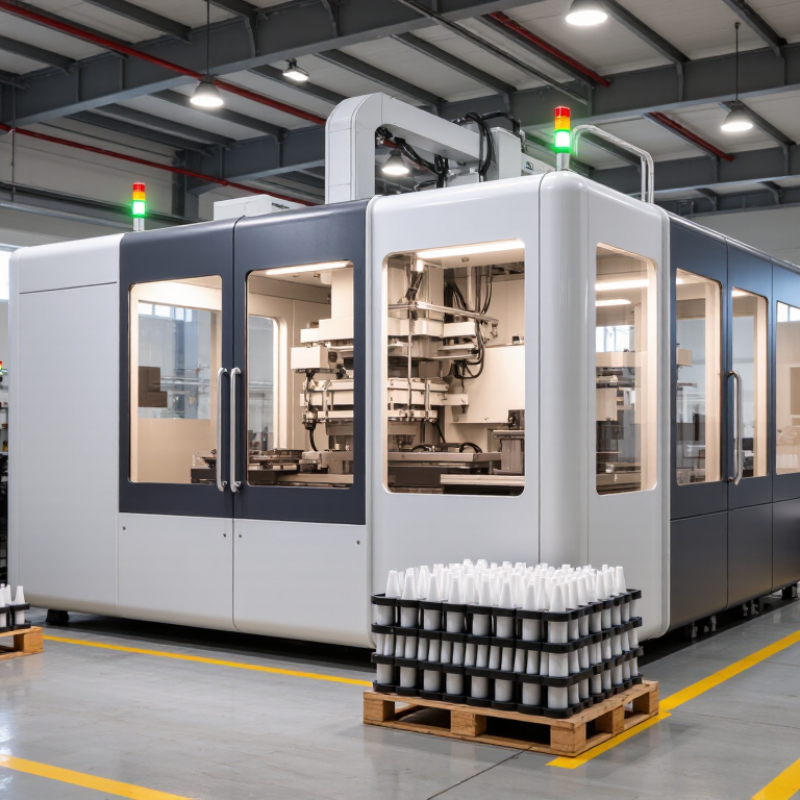
Before requesting machine quotations, translate the order book into a cycle-by-cycle production plan. Record annual demand, peak monthly volume, shift hours, target cycle time, cavity count, resin type, and acceptable scrap. Note the largest mold’s dimensions and weight, plus the required clamp force and shot capacity. PlasticsEurope’s Plastics—The Fast Facts 2024 reports global plastics production of 413.8 million tonnes in 2023. That scale signals a large industry, not a forecast for your factory. Demand first. A machine sized for an optimistic forecast can sit idle, while one sized only for today’s average may miss seasonal peaks.
Set a total installed budget, not just a machine purchase ceiling. Include the mold, robot, dryer, chiller, installation, operator training, energy, maintenance, and spare parts. Grand View Research estimated the injection molding machine market at USD 10.9 billion in 2023 and projected 4.5% annual growth through 2030; market growth alone does not prove a machine will pay back. Compare options using cost per acceptable part and realistic utilization. Ask suppliers to run your actual mold and resin, then inspect cycle time, part weight, and rejects. That estimate may still be wrong. Leave room for installation surprises and changing orders; a spreadsheet rarely captures every shop-floor interruption.
Start with the material, part geometry, and expected production rate. Hydraulic machines suit many demanding applications, while electric models can offer precise movement and lower energy use. Hybrid machines combine features of both. The right choice depends on your cycle, maintenance capacity, and quality targets—not a trend. Ask suppliers to explain how the machine performs with your actual mold and resin.
Clamping force should match the projected area of the molded parts and the pressure needed to fill them. A rough estimate can help narrow options, but it is not a final specification. Resin behavior, gate design, cavity count, and mold condition all matter. Too little force may cause flash along the parting line. Too much can stress the mold and increase operating costs. Do not guess.
Check more than the tonnage figure. Confirm tie-bar spacing, platen dimensions, mold thickness range, and shot capacity. A mold that fits the clamp may still exceed the machine’s practical shot range. During a trial, inspect parts for flash, short shots, and uneven filling, then review cycle stability. I would revisit early estimates after testing; calculations can look reassuring on paper and still miss a detail in production.
How to Buy an Automatic Injection Molding Machine in 2026?
Compare Automation, Energy Use, and Factory Compatibility
Buying an automatic injection molding machine means checking more than its advertised cycle time. Match the automation to your actual workflow: a robot, conveyor, or part separator may reduce handling, but only if it fits your molds and downstream process. Ask suppliers to demonstrate a representative production cycle, including part removal and mold changes. Watch for bottlenecks. A fast press cannot fix a slow packing station.
Compare energy use under similar conditions. Rated power alone can be misleading; request consumption data for a comparable mold, material, and cycle. Review heating, cooling, and hydraulic requirements, then estimate operating costs using your local energy rate. Small differences per cycle add up across long shifts, though real savings depend on production and setup.
Tips: Measure doorways, aisle widths, ceiling clearance, and floor capacity before ordering. Confirm electrical supply, cooling-water connections, and control-system interfaces. Put trial conditions and acceptance criteria in writing. One detail is easy to miss: installation space for the robot may interfere with mold access. Double-check the layout with operators, not just the floor plan.
| Configuration | Typical Clamp-Force Range | Automation Fit | Indicative Machine Energy Use | Factory Compatibility Checks | Suitable Applications | Key Buying Checks |
|---|---|---|---|---|---|---|
| All-electric, small-to-medium press | Approximately 50–200 metric tons | Well suited to repeatable robotic part removal, conveyor handling, and integrated inspection. Confirm robot interface, safety interlocks, and available space around the platens. | About 0.4–0.9 kWh per kg of molded parts as an initial planning range. Actual use depends on resin, cycle time, part weight, and process settings. | Verify supply voltage, phase, frequency, and peak electrical demand against the machine nameplate. Check cooling-water capacity, floor loading, delivery access, and robot-cell footprint. | Precision parts, connectors, medical components, and other applications where repeatability and clean operation are priorities. | Request a production trial using the intended mold and material. Compare cycle time, reject rate, energy data, and required service access. |
| Servo-hydraulic, medium press | Approximately 150–400 metric tons | Can support automatic take-out, conveyor transfer, and in-mold or post-mold inspection. Confirm the controller supports the required robot signals and mold-protection functions. | About 0.7–1.3 kWh per kg of molded parts as an initial planning range. Energy demand varies with hydraulic activity, cycle profile, and auxiliary equipment. | Check electrical capacity and hydraulic cooling requirements. Confirm available floor area, foundation and floor-load limits, water connections, and compressed-air needs for auxiliaries. | General-purpose components, household products, automotive parts, and production with a mix of mold sizes. | Compare energy use at the intended operating point, not only at idle. Review hydraulic-system maintenance requirements and the availability of trained technicians. |
| Hybrid press, medium-to-large | Approximately 200–600 metric tons | Suitable for automated take-out and handling while combining electric and hydraulic functions. Check robot reach, cycle-time coordination, and safe access for mold changes. | About 0.6–1.2 kWh per kg of molded parts as an initial planning range. The result depends on which motions are electric or hydraulic and on the production cycle. | Confirm peak electrical load, cooling-water flow and temperature, machine height, transport route, and floor capacity. Allow room for robots, guarding, and maintenance access. | Applications requiring a balance of repeatable motion, substantial clamp force, and flexible process capability. | Ask for energy and cycle-time data from a comparable mold. Check what is included in quoted utility figures and whether auxiliary equipment is included. |
| Large servo-hydraulic press | Approximately 400–1,000+ metric tons | Often used with robotic part removal, conveyors, and centralized material handling. Plan the full cell layout, including guarding, mold carts, and access for maintenance. | About 0.8–1.5 kWh per kg of molded parts as an initial planning range. Large parts, long hold times, and intensive hydraulic use can change consumption significantly. | Obtain a site review for electrical service, cooling capacity, floor loading, foundations, ceiling height, and delivery access. Check transformer and water-system requirements. | Large housings, bins, automotive components, and other parts needing high clamp force or large platen capacity. | Confirm mold dimensions and weight limits, tie-bar spacing, platen dimensions, injection capacity, and the feasibility of installing and servicing the machine. |
| Two-platen, large-tonnage press | Approximately 600–3,000+ metric tons | Can be integrated into automated cells, but robot selection and safe access must account for the large mold area and machine layout. | Consumption is highly process-dependent; obtain a measured or guaranteed figure for the proposed mold and cycle rather than relying on a generic estimate. | Check building height, floor and foundation capacity, crane capacity, shipping route, electrical demand, cooling-water supply, and space for mold handling. | Very large molded parts and high-clamp-force applications where floor-space or mold-access considerations influence the machine layout. | Review mold-opening stroke, tie-bar or platen arrangement, mold-change method, installation plan, and utility requirements with the factory team. |
| Planning note | Clamp-force bands and energy figures are broad comparison guides, not specifications or guarantees. Energy figures are indicative machine-level planning ranges; boundaries and measurement methods vary, and robots, dryers, chillers, conveyors, and other auxiliaries may add substantial consumption. Before purchase, compare like-for-like trials using the intended mold, resin, part weight, cycle time, and quality target, and confirm all site requirements against the selected machine documentation. | |||||
When comparing automatic injection molding machines, assess the supplier’s engineering support as carefully as the quoted price. Ask for cycle-time data using your actual resin, mold, and part requirements; request a sample run or documented acceptance test. Check spare-parts lead times, technician availability, training, and warranty exclusions. A polished demonstration is useful, but production conditions are less forgiving.
Safety and energy use belong in the same evaluation. ISO 20430:2020 sets safety requirements for injection molding machines; verify guarding, interlocks, emergency stops, and documented risk assessments against the standard. The U.S. Occupational Safety and Health Administration’s machine-guarding rule, 29 CFR 1910.212, is another useful reference for U.S. facilities. The International Energy Agency’s Energy Efficiency 2023 report estimates that industry accounts for about 37% of global energy consumption. That figure is not a machine-level benchmark, so request measured energy data for comparable operating cycles. Include electricity, maintenance, installation, tooling changes, and downtime in your total cost of ownership.
Tips: Build a five-year cost sheet. Compare quotes using the same operating hours and electricity rate. Ask suppliers to explain assumptions in writing. Walk the machine’s service access yourself; a cramped panel can turn a quick repair into lost production. One estimate may still be imperfect—revisit it after trial runs and operator feedback.
Inspect, Test, Purchase, and Commission the Machine
Inspect the machine against your actual production needs, not a sales brochure. Check platen condition, tie bars, clamp movement, guards, and hydraulic or electrical connections. Review service records and confirm which mold interfaces, accessories, and manuals are included. Small gaps matter. Run a trial with your intended resin and mold. Track cycle time, part weight, temperature stability, alarms, and visible flash across repeated cycles. Ask an operator to change settings and explain the controls. A smooth demonstration is useful, but it cannot reveal every production problem.
Tips: Bring a sample mold, resin specification, and written acceptance criteria. Photograph the machine’s condition before shipment. Ask who pays if the agreed test results are not met.
Before purchase, put performance targets, delivery terms, installation scope, training, warranty coverage, and spare-parts availability in writing. At the site, verify floor capacity, power, cooling water, and safe access before unloading. During commissioning, check machine level, mold alignment, and safety interlocks. Then run the production mold and record stable process settings. Keep those records for future troubleshooting. Do not rush signoff. A detail buyers sometimes miss is operator comfort; awkward access can slow routine work. Even a careful checklist has limits, so leave time for adjustments after the first production run.